Audi charging hub: flexible, sustainable, convenient
missing translation: fa.article-intro.reading-time – 06/06/2023
At the heart of the concept are the PowerCubes - modular container cubes that, in addition to a fast-charging infrastructure, also contain used, reconditioned lithium-ion batteries, also known as second-life batteries.
Audi e-tron GT quattro: Power consumption (combined) in kWh/100 km: 21.6–19.6 CO₂ emissions (combined) in g/km: 0 CO₂ emission class: A
At the heart of the concept are the PowerCubes - modular container cubes that, in addition to a fast-charging infrastructure, also contain used, reconditioned lithium-ion batteries, also known as second-life batteries.
Audi e-tron GT quattro: Power consumption (combined) in kWh/100 km: 21.6–19.6 CO₂ emissions (combined) in g/km: 0 CO₂ emission class: A
First Nuremberg now Berlin, Salzburg, Munich, Frankfurt, Bremen, Kiefersfelden and Düsseldorf:
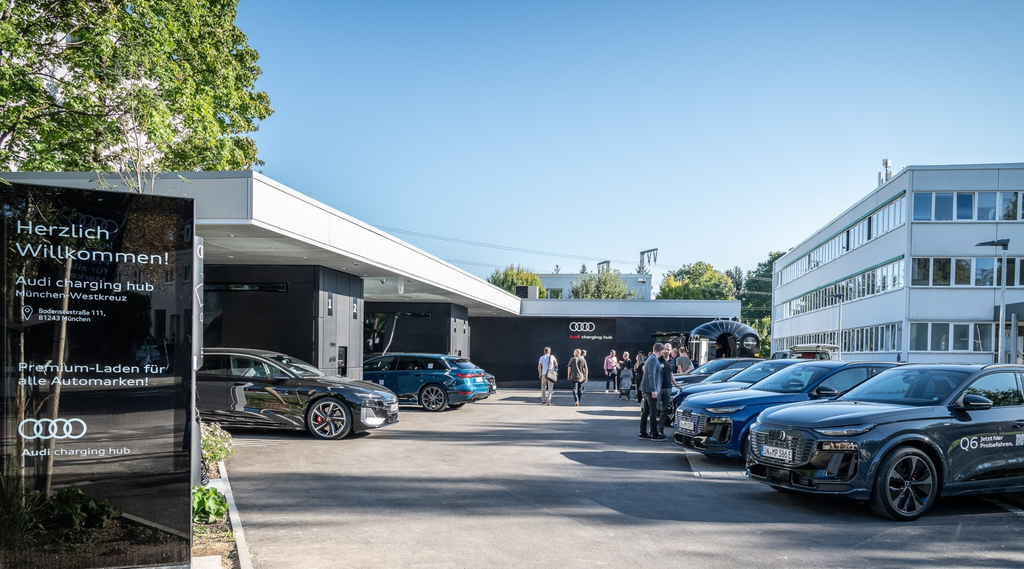
The flexible and modular charging concept of the Audi charging hub is proving popular. Electric vehicle drivers appreciate the convenient fast-charging station in the city centre with reservable charging spots.
Loyal users: more than half return to the charging station
In Nuremberg, where the Audi charging hub has been operating since December 2021, more than half of users regularly charge their cars at the charging station. Audi registers an average of more than 30 charging sessions, totaling over 1,000 kWh per day. On top of that, an average of 35 customers visit the approximately 200-square-meter lounge every day, which includes a 40-square-meter terrace over the charging cubes. Audi customers are increasingly using the app to reserve a charging spot for their electric car. The lounge services are frequently taken advantage of as well. The offerings include a changing station for micro-mobility batteries, such as those used for electric scooters, as well as a fixed dispenser for windscreen washer fluid.
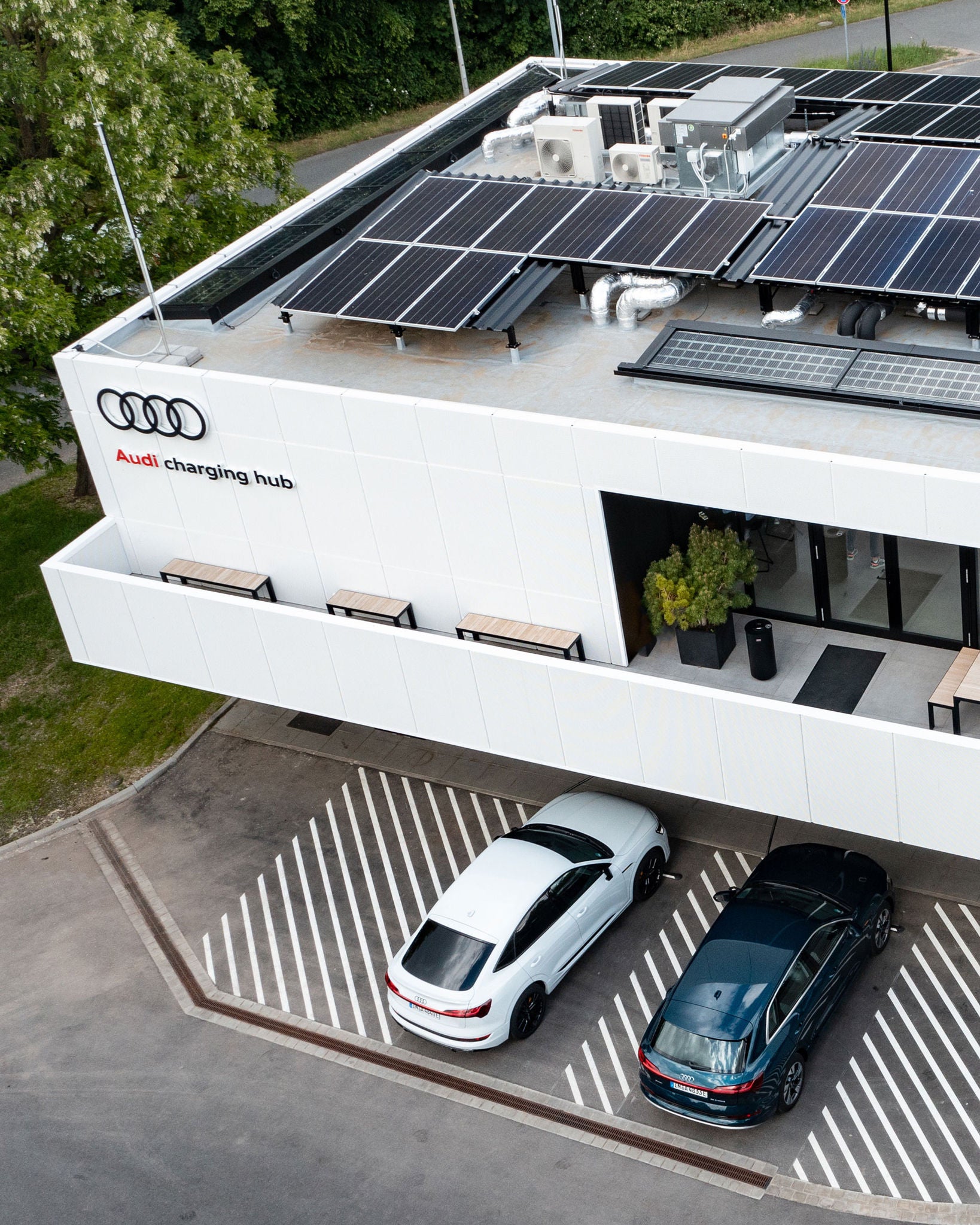
In Nuremberg, up to six e-cars can be charged simultaneously. A green power contract ensures that only electricity from sustainable sources is used. Photovoltaic modules on the roof provide additional green energy. Audi e-tron Sportback:Power consumption (combined) in kWh/100 km: 25.9–21.1CO₂ emissions (combined) in g/km: 0CO₂ emission class: A Audi e-tron:Power consumption (combined) in kWh/100 km: 26.1–21.7CO₂ emissions (combined) in g/km: 0CO₂ emission class: A
Fast-charging station based on a smart, sustainable charging infrastructure
PowerCubes serve as energy storage in Nuremberg, as they will at all future Audi charging hub locations. These flexible container cubes can be built up and dismantled on short notice, and each unit offers two fast-charging points. Second-life batteries – that is, used lithium-ion batteries from former Audi test vehicles – serve as energy storage and provide electricity. The Nuremberg location only needs a 200-kW connection to the low-voltage grid to continually fill the storage modules thanks to its 2.45 MWh buffer storage. Audi can consequently offer sustainable fast-charging even in places where the electricity grid isn’t sufficient to operate six HPC charging points at up to 300 kW. Solar panels on the roof provide up to 30 kW of additional green energy in Nuremberg.
Exclusive service offerings in the immediate vicinity
Audi has learned from its experiences at the pilot location when it comes to charging convenience. At all other locations customers will be able to use a modified swivel arm to charge their cars at up to 400 kW, depending on the location. The operating displays at the charging points will be height-adjustable, and the areas between the cubes and vehicles will be wide enough for wheelchair users. Instead of a lounge, Audi will provide a curated range of service offering around the hub at the compact locations with four charging points. On two 55-inch screens, customers can find information to a wide range of amenities, including shopping centres, restaurants and gyms.
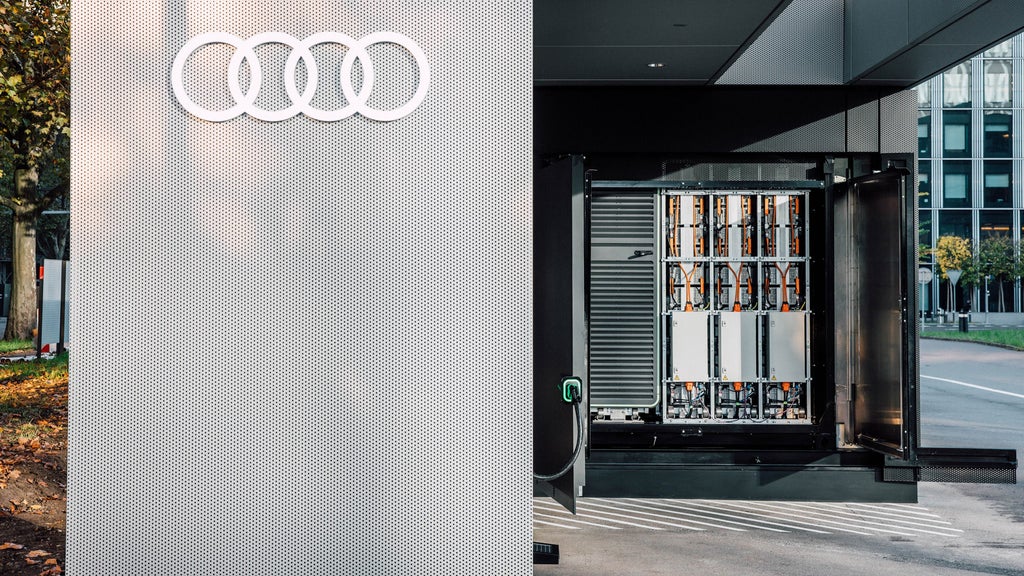
A more compact version of the Audi charging hub, also based on the modular principle, will be used in Frankfurt, Berlin, Bremen, Düsseldorf, Munich and Kiefersfelden. This allows various sizes of charging hub to be realized with and without a lounge.
A more compact version of the Audi charging hub, also based on the modular principle, will be used in Frankfurt, Berlin, Bremen, Düsseldorf, Munich and Kiefersfelden. This allows various sizes of charging hub to be realized with and without a lounge.