Audi Production Lab: where the future is made
missing translation: fa.article-intro.reading-time – 02/25/2026
With passion and a pioneering spirit, Audi Production Lab is on the hunt for innovations in vehicle production. In this interview, Head of P-Lab Henning Löser provides fascinating insights into projects that could change the future of vehicle construction.
Henning Löser, Audi is researching innovations for the future of vehicle production. Automobilwoche, a German automotive industry magazine, once referred to the team as “Die Andersmacher,” or “the ones who do things differently.” What is so unusual about the work going on at Audi Production Lab, or P-Lab for short?
At P-Lab, we purposefully create laboratory conditions in the real world. This makes our approach unique: we develop and test production technologies where they will later be used – right where production and technical development happen. This allows us to evaluate innovations under real production conditions at an early stage. We can enhance them together with the teams on site to make them stable, scalable, and suitable for series production.
This proximity is crucial for us. It shortens distances, speeds up decisions, and ensures that good ideas quickly find their way into the plants.
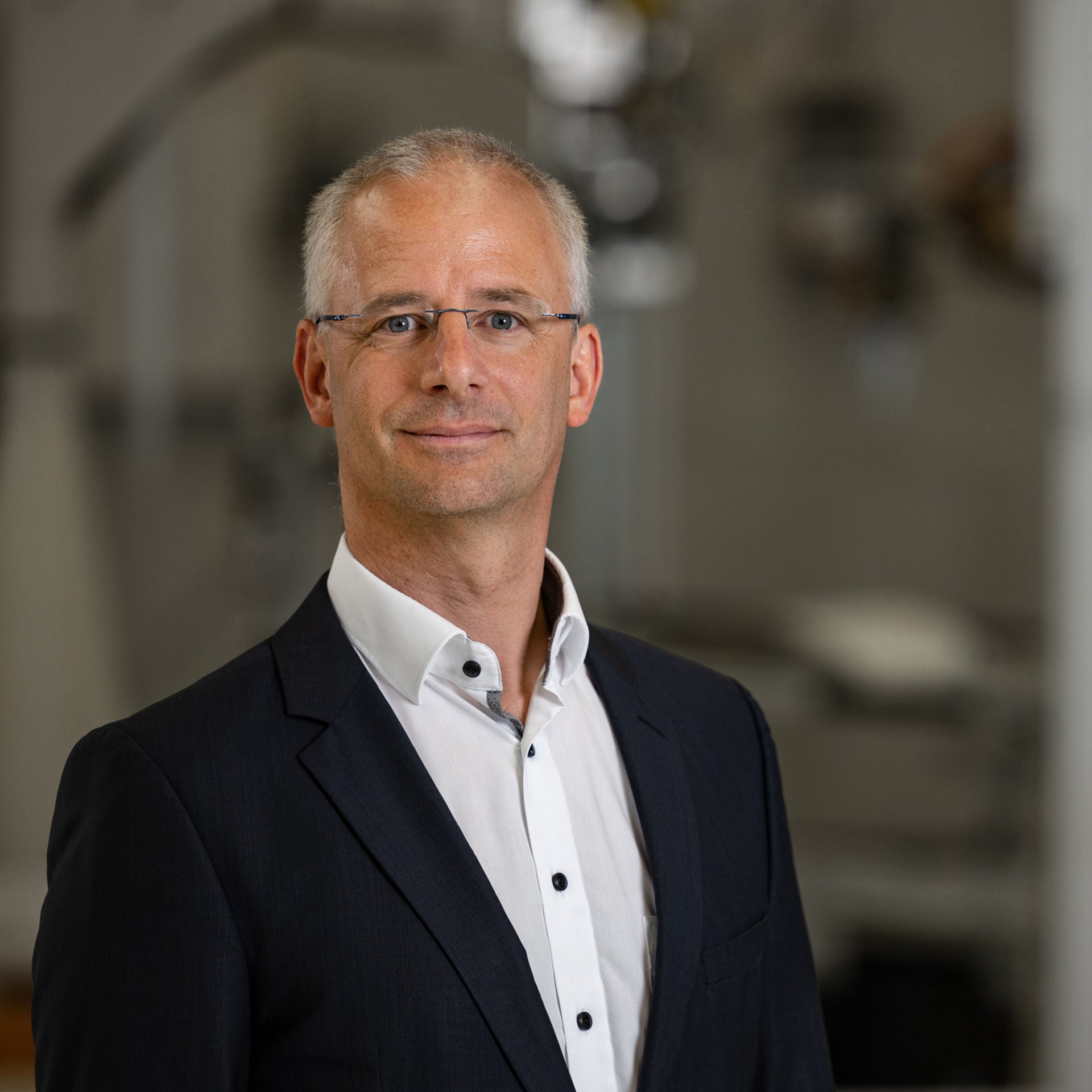
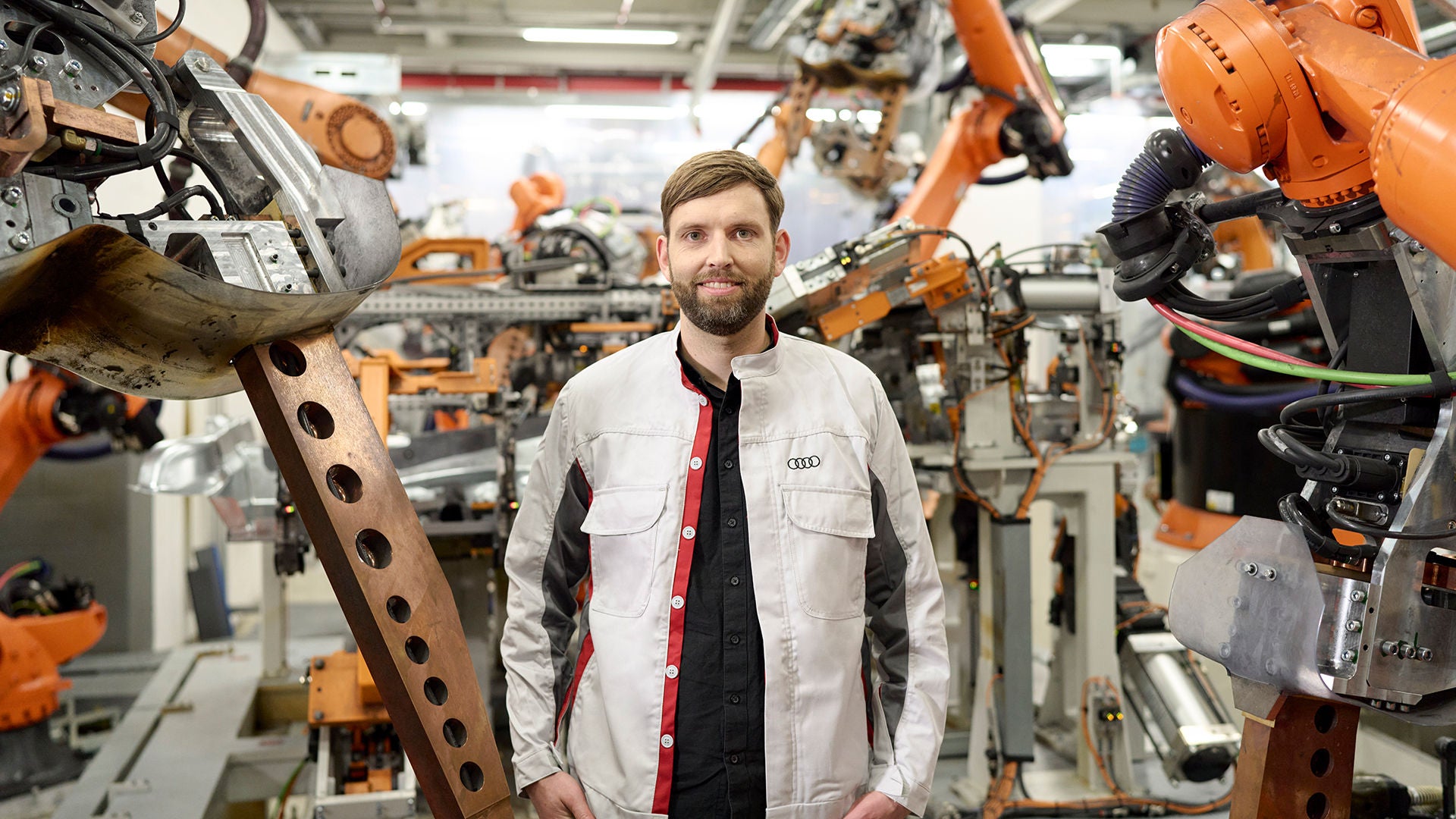
Henning Löser is Head of Audi Production Lab.
Audi P-Lab has grown continuously since it was founded in 2012. How is the team set up today – and what does its evolution mean for Audi’s production innovation?
The team at Audi Production Lab has grown significantly since it was founded: today, more than 20 employees work at P-Lab – joined by many colleagues from production and logistics who link up with us on a project-by-project basis. This mix of a specialized core team and knowledge from the plants is what makes our work so effective.
We don’t develop innovations for production, but with production. We aim to identify new technologies at an early stage, test them under real conditions, and bring them into series production so that they benefit the entire organization. This is essential for the future viability of our production.
“We embrace a culture of ideas at P-Lab”
Why is a dedicated laboratory needed to optimize production processes? Can’t new ideas simply be tried out while series production is underway?
In large-scale production, processes have to be extremely stable and efficient – it’s not an ideal setting for experiments. That’s why we need a space like P-Lab where we can be bold and try things out. Many experiments might not work immediately. Out of 1,000 attempts, 999 might fail, and only the thousandth will succeed. But it is precisely these learning loops that are crucial to achieving breakthroughs that we can then translate into robust production processes. We see ourselves as translators between innovation culture and production reality. We want to take ideas from first proof of concept to a round-the-clock production process.
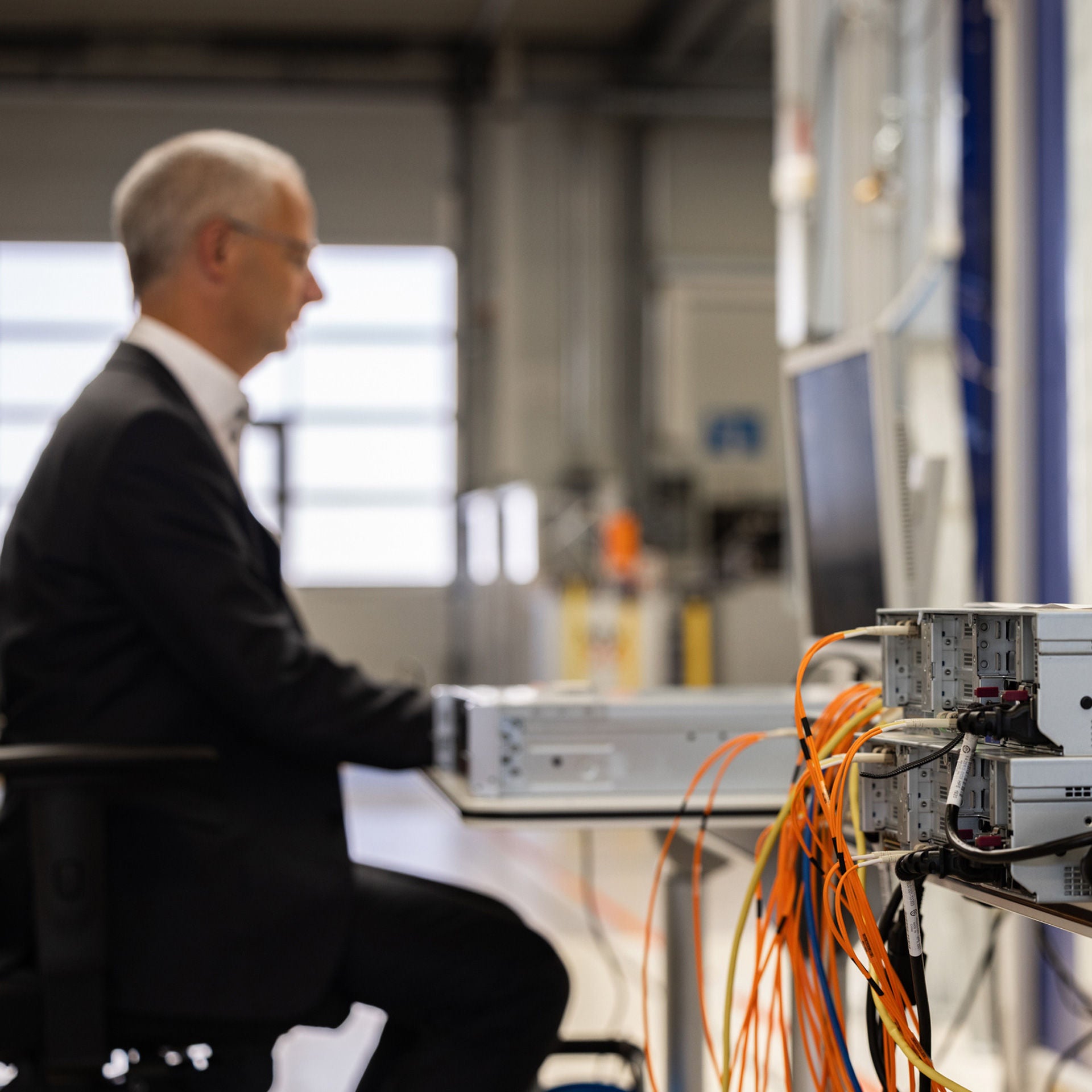
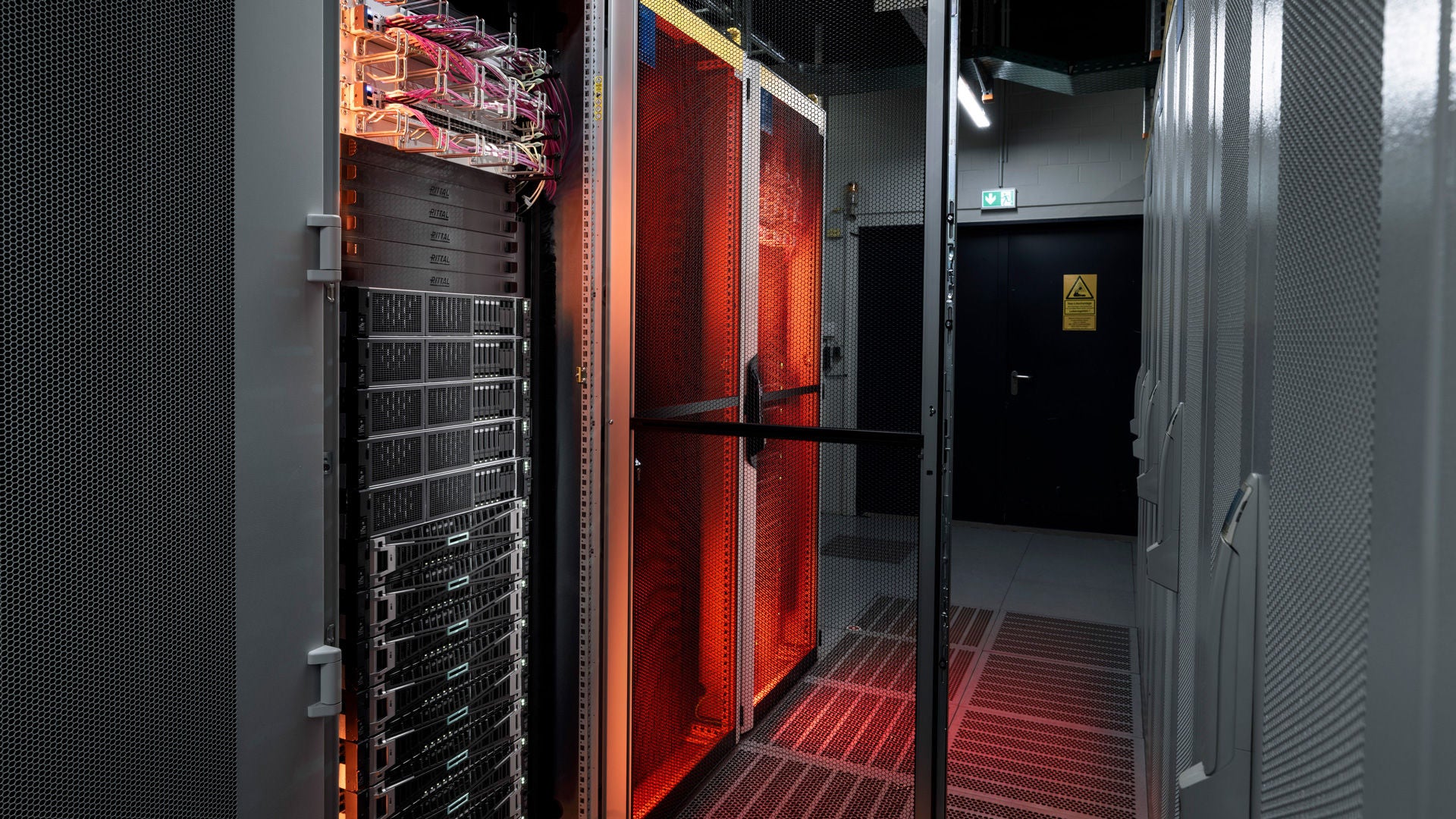
Cables run from a server: the local server solution Edge Cloud 4 Production (EC4P) is the basis for Audi’s flexible and data-driven production. Henning Löser, Head of Audi Production Lab, sits in the background.
Audi has put EdgeCloud4Production (EC4P) into operation in large-scale production. A virtual programmable logic controller (vPLC) from Siemens on the Edge Cloud 4 Production platform ensures fully connected factory automation. The complete system was developed at P-Lab. What is the solution all about and what are its benefits?
Edge Cloud 4 Production is another milestone for data-driven production. It makes it possible to virtualize controllers and monitor processes in real time from any location. The virtual PLC is one of the most visible results of our work. It shows how we can combine traditional automation with modern IT architecture.
The benefits of this are more flexibility, less hardware dependency, and faster updates. We also reduce hardware costs. For example, production requires less hardware physically connected to the machines. This lowers costs, not only for acquisition but also for maintenance. The software can be managed and updated centrally, allowing us to import new functions more quickly and use resources more efficiently. We are thus laying the foundations for highly connected, software-driven production. The interest from all over the world shows the relevance of this approach for the entire industry.
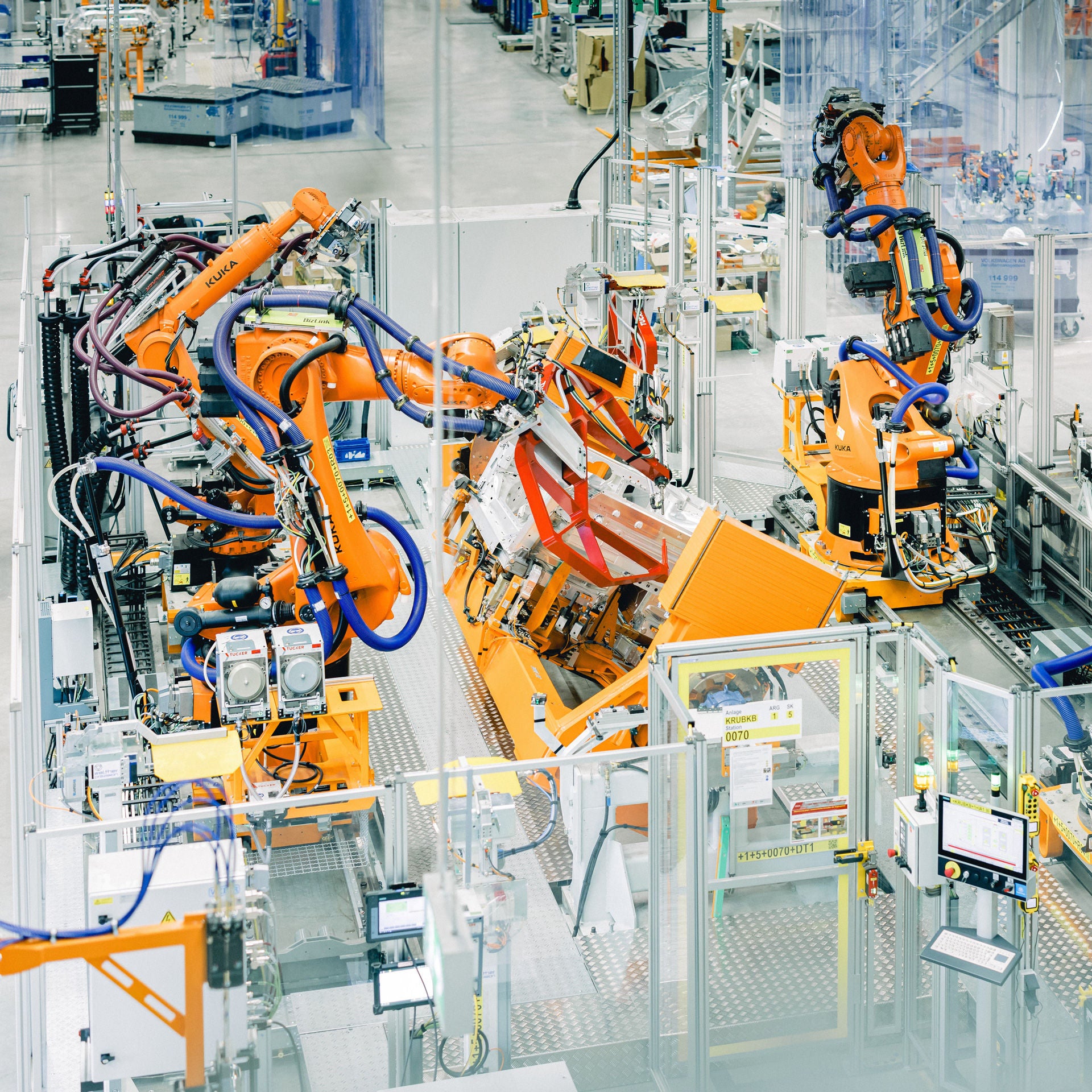
Virtually controlled production at Böllinger Höfe enables flexible, data-driven production.
“Pretty slides setting out theories are of no use to us in production“
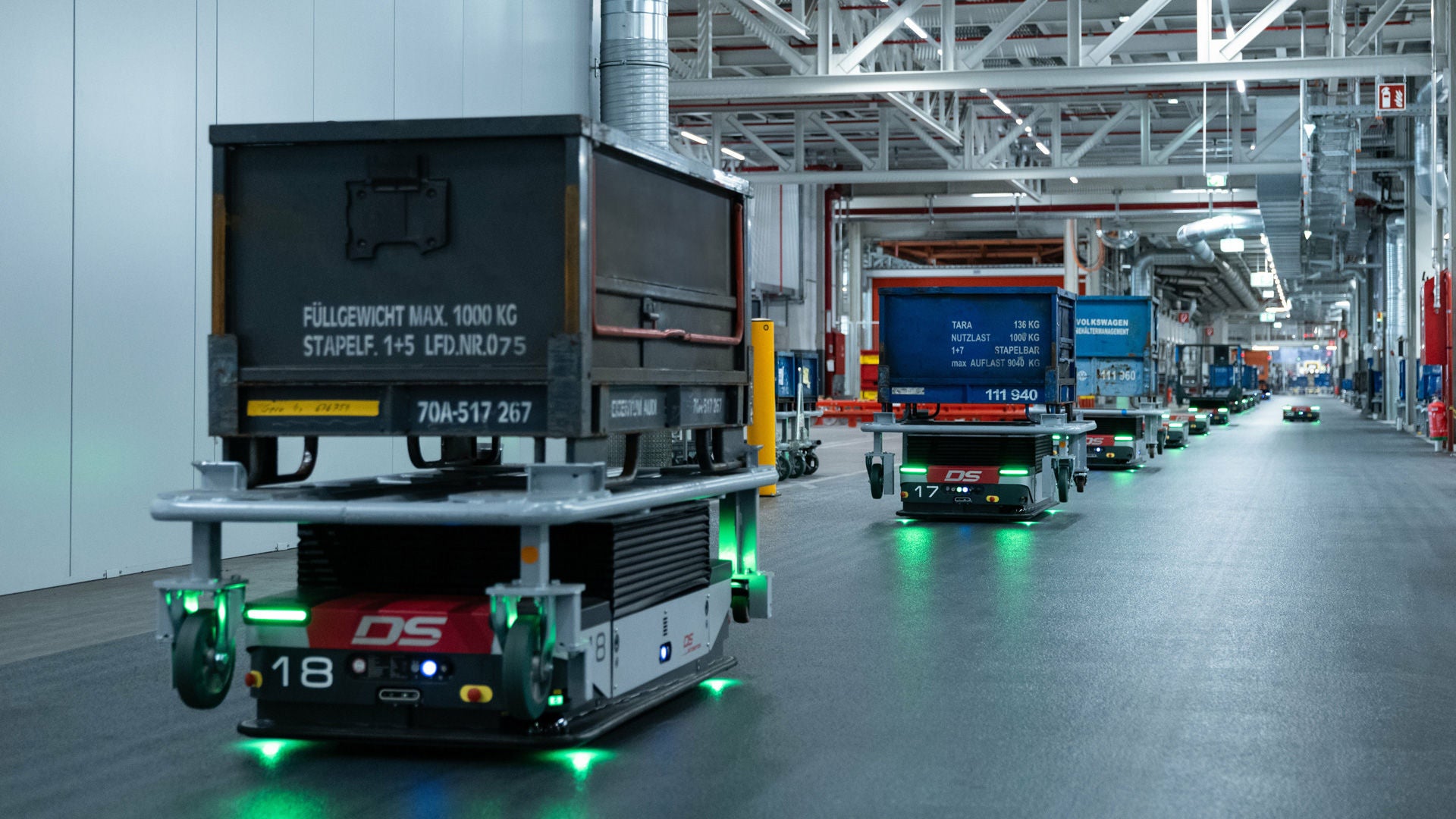
Automated guided vehicles drive through a production hall in Neckarsulm.
Which P-Lab projects are you particularly proud of?
EdgeCloud4Production is definitely one of them. It’s one of the best-known projects that we have undertaken at P-Lab.
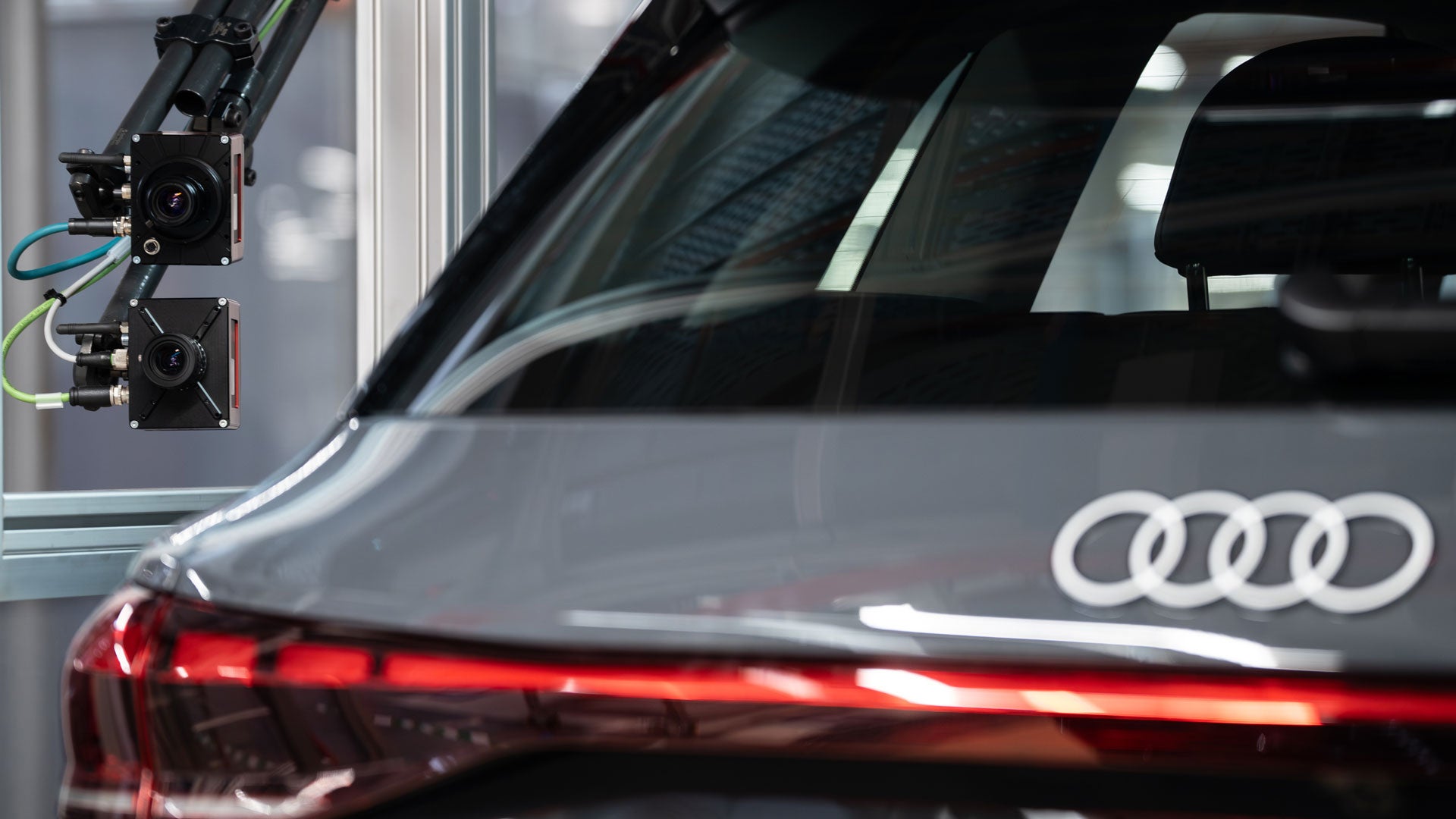
We have also launched projects with artificial intelligence. At several locations, AI checks the quality of weld spots in body construction, for example. We have also intensively tested the 5G data network with our own test station. We then contributed our findings to the 5G Alliance for Connected Industries and Automation (5G-ACIA) – and helped formulate what the industry needs. We have also gained new insights into human–robot collaboration and the use of big data.
We have also matured some solutions to the point that we were able to evaluate them in depth with the relevant specialist departments. This includes modular assembly, for example, where we developed a brand-new production concept. After a cost-effectiveness analysis, however, we decided that implementation would not bring the added value that we had initially hoped for.
How does P-Lab differ from other think tanks within the company?
We focus specifically on all things production optimization. P-Lab is a vital part of the Automotive Initiative 2025 (AI25), an innovation network for digital transformation in the automotive industry. For example, we are searching for and testing applications with artificial intelligence (AI) in automation technology or for controlling robots. Sometimes, we’ll stumble on an interesting idea for the product, i.e., the vehicle itself, and we pass those on. What’s more, we physically test everything. We have to literally get to grips with things. Pretty slides setting out theories are of no use to us in production. What we need is steel, sheet metal, and the ability to actually build a car. Initially, no one is an expert in a new process. We only get anywhere through assembly and trial and error.
What are you and your team at P-Lab currently working on?
We are currently working on several exciting projects to make production more efficient and sustainable. One focus is artificial intelligence and robotics: we are testing how robots can be used in flexible environments – not just in perfectly planned workflows. Robots should no longer be laboriously programmed but simply “taught.” This would allow many processes to be automated more cost-effectively.
In addition, we are investigating whether direct current can be used instead of alternating current in production – this would save energy and reduce carbon emissions. We are also developing new logistics and assembly systems that combine AI and robotics to make production even smarter.
One project that we are particularly excited about is largely automated wiring loom production and installation in the vehicle. We are working on this as part of the future-oriented Next2OEM project with several partners – from the supplier to installation in the factory. This is remarkable because, to date, wiring loom production in the industry has been automated at a rate of just a few percent. A demonstrator funded by the German Federal Ministry for Economic Affairs and Energy has been created in Ingolstadt that maps the entire process chain from production and integrated pre-assembly to automated installation – controlled by a central system.
The benefits are considerable: less logistical effort, greater process reliability, and significantly faster reactions to changes – minutes instead of weeks. The next step is to incorporate the knowledge gained into the large-scale production of future vehicle projects.
This project is an example of what P-Lab is all about: rethinking complex, traditionally manual tasks with digital, data-driven, and automated approaches – to make production fit for the future.
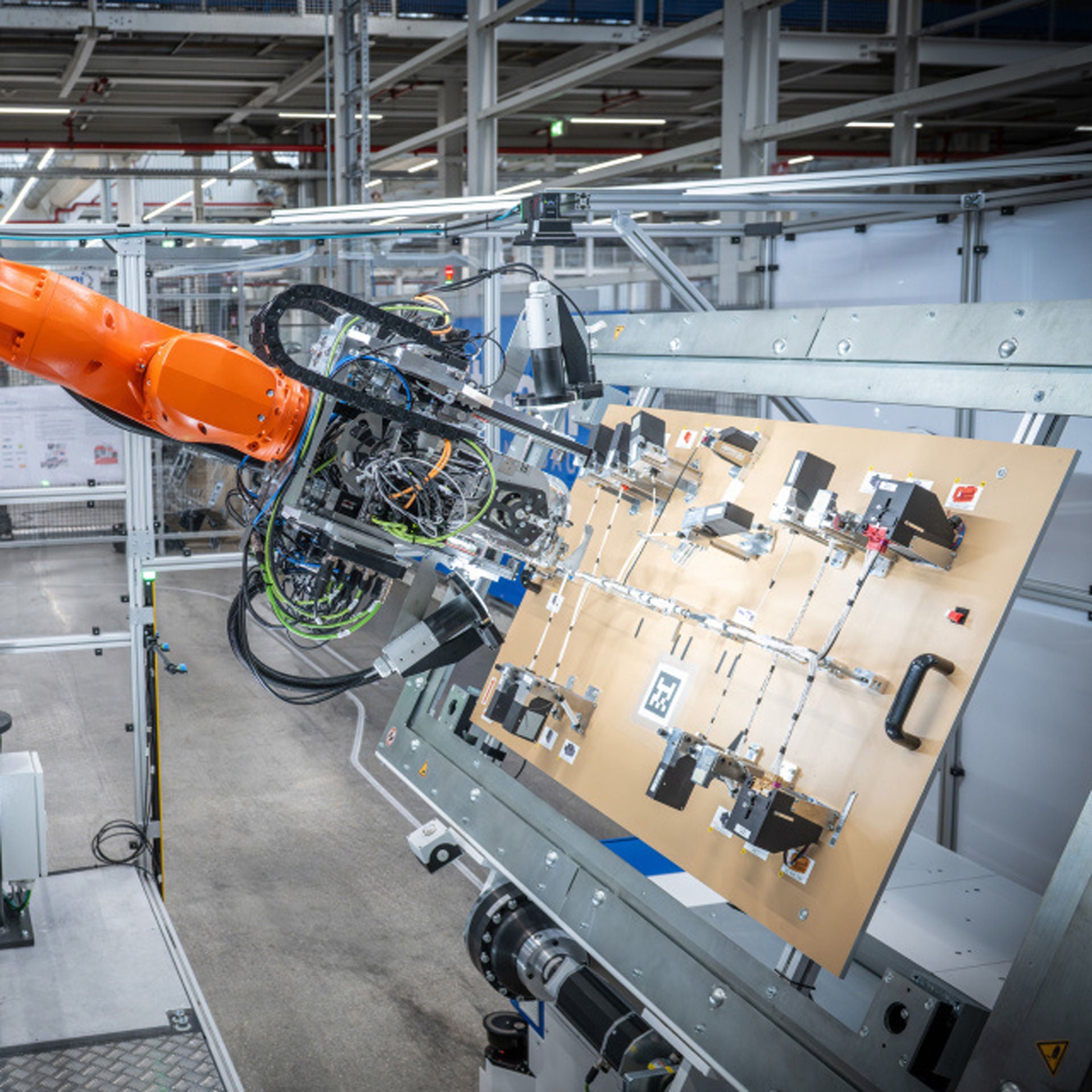
In the Next2OEM future project, Audi is working with ten partners at its Ingolstadt site to demonstrate how the production and assembly of a cable harness can be completely digitized and automated—from the supplier to installation at the plant.
“We anticipate groundbreaking innovations”
In your opinion, what will be the greatest challenges in production and logistics going forward?
It’s becoming increasingly difficult to predict what we will need in the future. In the literature, colleagues speak of volatile – i.e., extremely erratic and unpredictable – development. However, it is safe to say that a lot more change is coming as a result of digitalization. In production especially, we anticipate groundbreaking innovations that we cannot even foresee today thanks to advances in sensor, control, and semiconductor technology, software, and AI. This promises great opportunities but also challenges. Because we don’t have a crystal ball, we have to stay flexible, keep an open mind, and never stop learning. We must always be curious about the world around us. At Audi, we are well positioned for this with training plans, education, and the Audi Academy.
What inspires you personally to stay creative and innovative?
I am fascinated by all things technical in my private life as well. I read and research a lot, and I like to try new things in order to understand them. I’m currently programming a maker project using AI coding assistants, and I’m really impressed by the help they provide. I also sometimes leave reality behind and take inspiration from science-fiction novels and movies. Many of the technologies they describe are close to being implemented today – and that’s what fascinates me.