Employees & corporate culture
Fair working conditions and modern working forms
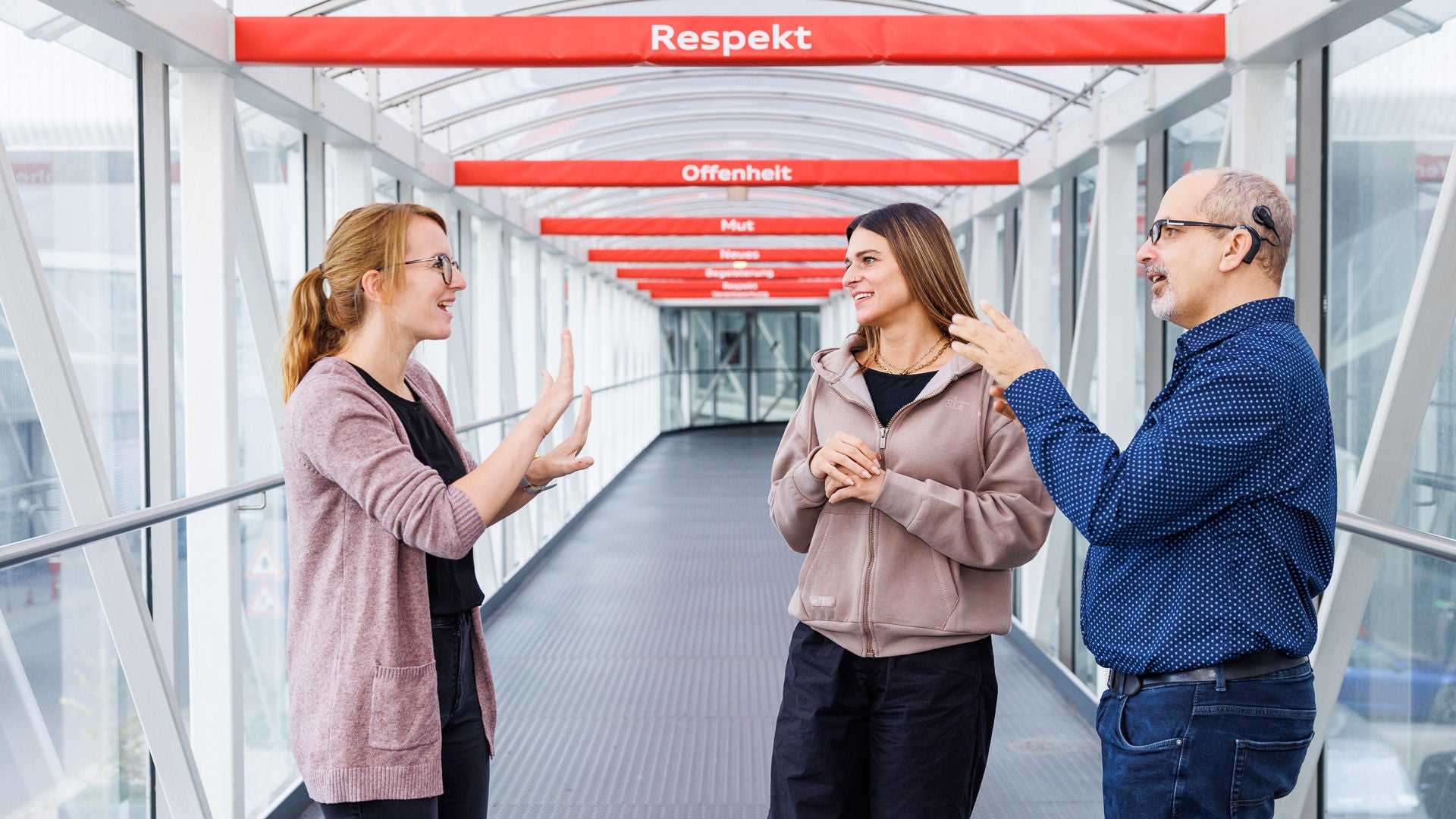
At the heart of the AUDI AG working world are its employees. Fair working conditions and modern collaborative models are the foundation for high job satisfaction and thus create the basis for a strong company performance and sustained success.


Fair working conditions and modern working forms in figures (2025)
Number of permanent employees, Audi Group
Total training hours completed
Transformation-related training hours
Corporate culture and equal opportunities
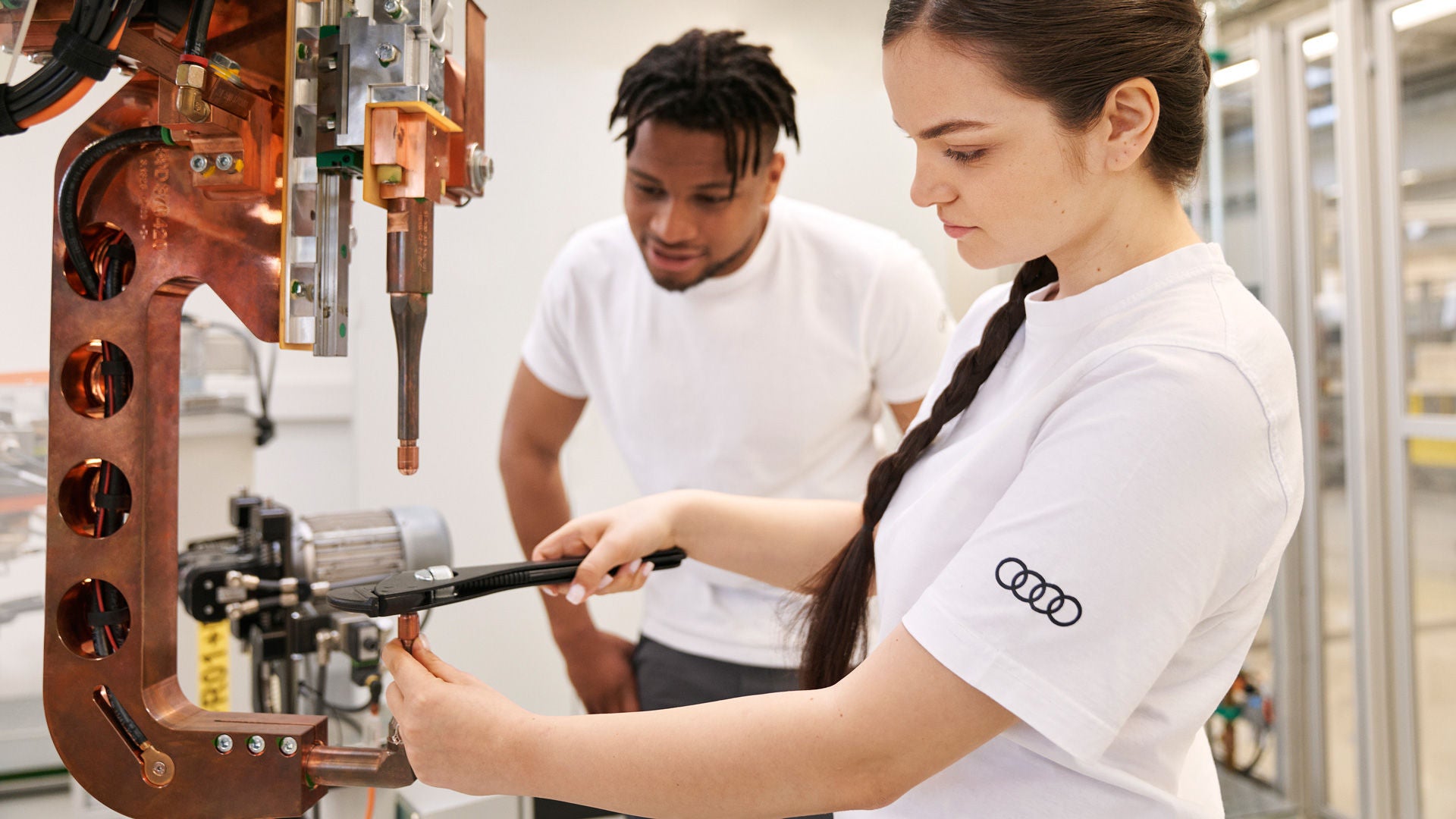
Many people are familiar with the Audi brand and its models. Yet, the company is more than its products. Audi places people with all their facets at the center of attention. Shared values and the strong Audi team form the foundation of the corporate culture.




Corporate culture and equal opportunities in figures (2025)
Employees in the Audi Group
%
Proportion of women in the Audi Group
%
Audi Ideas Program: implementation quota
ESG engagement made measurable: more key figures from the areas of Environmental, Social and Governance can be found in the Audi Report 2025.
Management approach
Major effects and how they influence strategy and the business model
The Audi materiality analysis identified positive and negative impacts of fair working conditions, modern working forms and a corporate culture that is lived in practice. The effects as well as the opportunities and risks relate to the company itself.
Fair working conditions and modern working forms are critical success factors for the sustained corporate development of Audi and contribute enormously to the satisfaction of the workforce. They are an important prerequisite for retaining productive and qualified employees in the long term, despite the shortage of skilled workers and international competition. Qualified and motivated employees can have an impact on the company’s productivity, financial success, ability to innovate and thus ultimately on customer satisfaction and the company’s image. Excessive staff turnover due to inadequate employer attractiveness, on the other hand, could lead to production downtime or the loss of important expertise, for example, and increase recruitment costs.
Established measures
Company benefits and additional agreements, such as the company pension scheme, medical care, leave funded from the time asset bond as well as leasing and purchase benefits for Audi vehicles, apply to all employees. In addition, an employment guarantee is offered for employees at German sites up to the end of 2033, which was approved under the Audi agreement for the future between the company and the Works Council.
Employment contracts at AUDI AG are essentially permanent. Some exceptions are made, for instance for student employees.
Developing its workforce is a key priority for AUDI AG. At least once a year, therefore, staff and their supervisors sit down to discuss professional development opportunities and other training options as part of the employee development dialogue. This is true for all employees (with variable, performance-based pay as well as those not covered by collective wage agreements).
Flexible working: Audi has developed modern project houses with individually usable concept rooms and modern equipment in order to encourage interdepartmental cooperation and sustainably strengthen dialogue between teams. And for tasks that can be easily completed from home, there is the additional option of mobile working. Audi thus offers the best of both worlds: the dynamics of effective collaboration in the office and the flexibility of working from home.
Corporate culture and equal opportunities are crucial to a company’s entrepreneurial and economic success. Companies that promote a positive corporate culture and equal opportunities for all can benefit from higher productivity and an enhanced image. They create an inclusive working environment – one in which all employees, regardless of personal characteristics such as gender, have the same opportunities to contribute their skills and talents. This increases employee satisfaction and promotes innovation. Neglecting these issues, on the other hand, can lead to dissatisfaction, causing the company to lose employees along with their expertise, innovative strength and productivity. Another risk is that the potential offered by diverse and integrative teams is not utilized – with negative effects on a company’s economic success. What’s more, ignoring these topics also carries a legal risk.
Formal embedding
Employment and working conditions at Audi are governed by guidelines and policies, such as the Audi Code of Conduct, and various corporate policies and works agreements in addition to national and international regulations. These regulations apply equally to all Audi employees.
One of the overarching goals anchored in the regenerate+ sustainability strategy of the Volkswagen Group is to be a socially responsible employer for the workforce. The strategy describes the path to a sustainable future that focuses from an employee perspective on a safe and healthy working environment, a diverse, inclusive and discrimination-free culture, attractive jobs, fair pay and good development opportunities for long-term training of the workforce.
But the Audi Group also champions these causes outside the company: The Code of Conduct for Business Partners, for example, lays down requirements for employment and working conditions in the supply chain.
The corporate culture at Audi is based on the corporate values of trust, responsibility, courage and enthusiasm. In addition, various guidelines create a common understanding of culture and values within the company. These include, among others, the Volkswagen Group Essentials, the Audi Code of Conduct, the Statement of Principle on Diversity & Inclusion, the Volkswagen Group Policy on HR Compliance and the Volkswagen Group Charters on Labor Relations, Vocational Training and Temporary Work.
Company co-determination
Company co-determination is an integral part of the Audi corporate culture and an expression of entrepreneurial self-image. The interests and perspectives of the workforce feed into decisions and measures at AUDI AG on working conditions and employee affairs. This is done via various channels and established procedures such as constructive and cooperative dialogue and active participation of employees.
As a company headquartered in Germany, AUDI AG is subject to the legal requirements of the Works Constitution Act (BetrVG). This act regulates co-determination obligations and defines when and to what extent employee representatives are involved in decision-making at AUDI AG. The company also pledges to inform employees about operational changes, such as business restructuring, at an early stage.
Process to remediate negative impacts and grievance channels
In addition to company co-determination, the role of managers is critical for the culture of a company. The strategic training initiative “Leadership next” was therefore established in order to advance the development of leadership culture in the company. The goal is to align leadership style and mindset in such a way that the corporate strategy can be successfully implemented and the transformation actively shaped. The training is being rolled out at present.
A further central cornerstone of corporate culture is an open feedback culture. An environment in which all employees can bring their respective strengths to the fore. Regular surveys give employees the opportunity to share their opinion on relevant company issues or specific events or processes and in this way actively contribute to shaping the future of the company.
Furthermore, all employees of AUDI AG have access to several (anonymous) grievance channels, including the anonymous Whistleblower System.
Employees are urged to report potential misconduct since the company does not tolerate misconduct of any kind, whether it be workplace harassment or other improper behavior. Compliance with legal provisions, internal company policies and codes of conduct is a top priority for AUDI AG. All reported concerns are investigated and appropriate solutions sought, regardless of the reporting channel used. At the end of this process, the whistleblower is informed whether or not a regulatory violation was identified.
If shortcomings are discovered as a result of a complaint, countermeasures are taken immediately – in compliance with national regulations – and their implementation is monitored in order to eliminate potential or actual negative effects and to prevent a recurrence.

Occupational health and safety
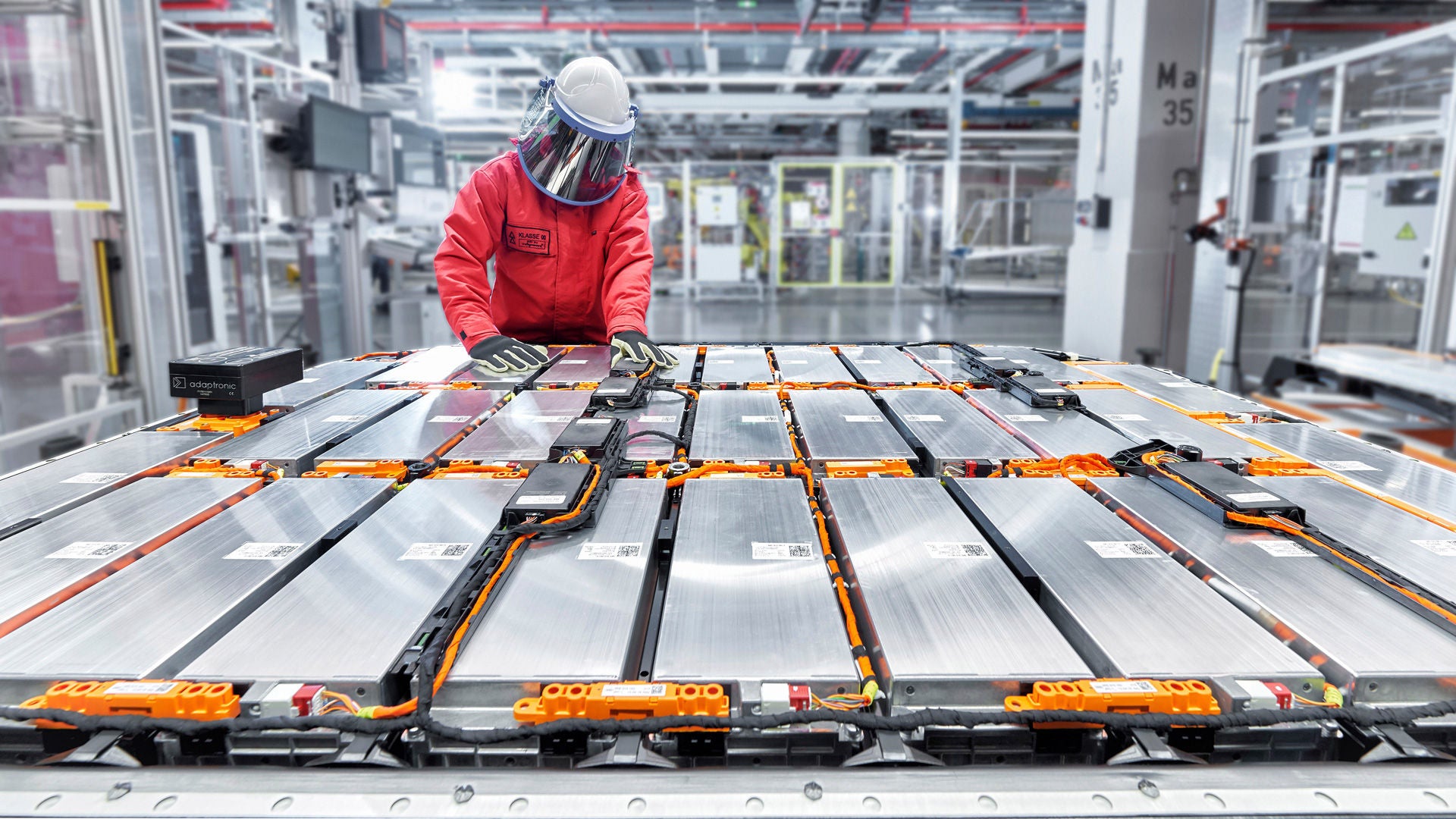
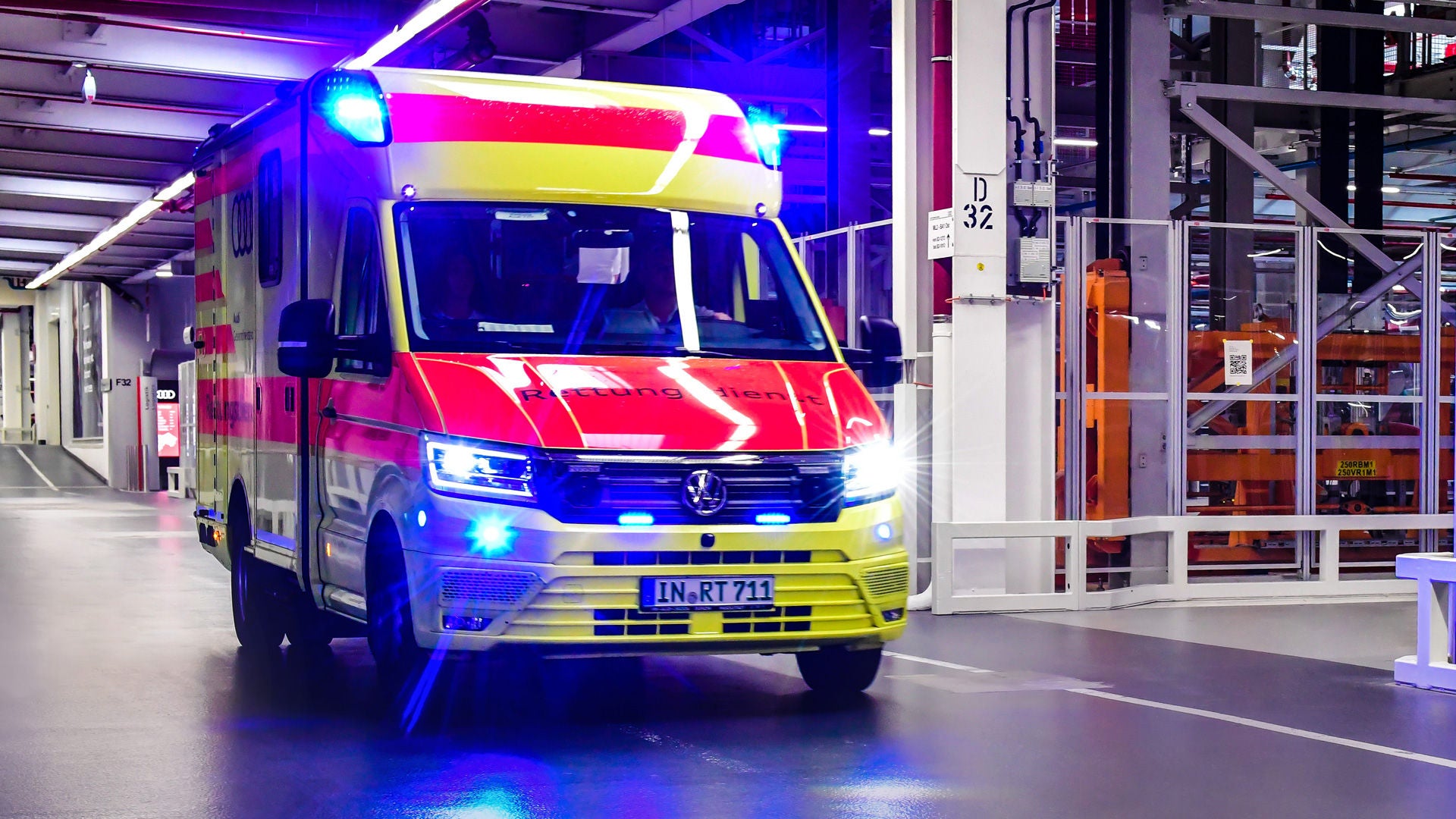
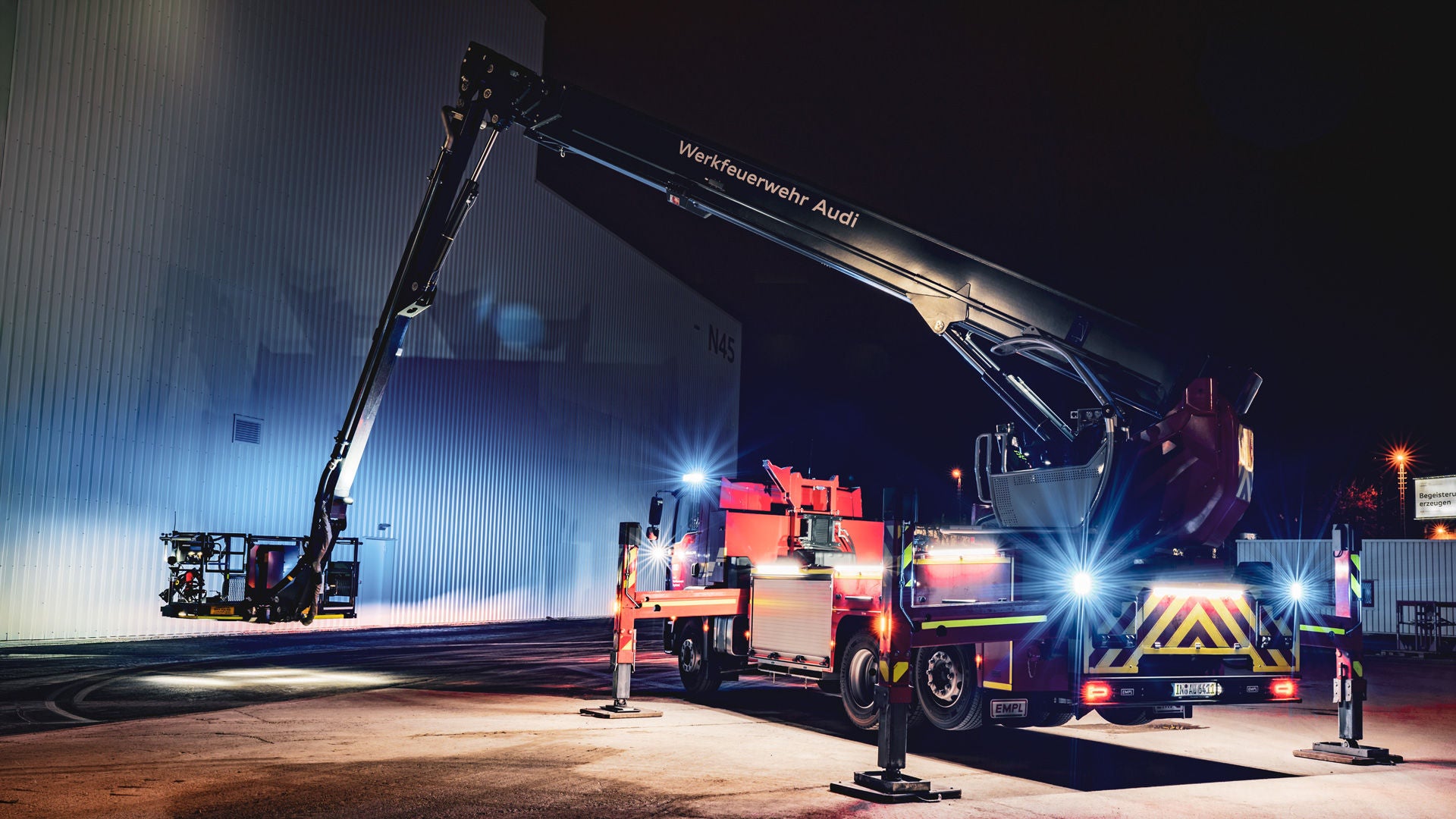
Safety and health are top priorities for Audi: Preventive measures, ergonomically designed workplaces, targeted mental health services and comprehensive emergency preparedness ensure the protection and well-being of employees.

Learn more
The Audi Checkup is a key element of the comprehensive prevention program that Audi has offered since as far back as 2006. It allows employees to obtain a comprehensive overview of their health at regular intervals and using the most modern diagnostics, thus allowing both acute and potentially developing conditions to be detected. Employees can also take advantage of the Mental Health Checkup and consult with psychologists to reflect on their mental well-being. The aim is to be able to detect psychological stresses and anomalies at an early stage and to help those affected by providing them with recommendations and resources.
Occupational health and safety in figures (2025)
Employees covered by health and safety management system
Safety officers ensuring occupational health and safety
First-aiders received basic and further training
ESG engagement made measurable: more key figures from the areas of Environmental, Social and Governance can be found in the Audi Report 2025.
Management approach to occupational health and safety
AUDI AG believes that motivated and high-performing employees are the key to sustainable success. A comprehensive system for occupational health and safety makes a critical contribution toward achieving this goal and is therefore a high priority for the company.
Occupational health and safety play an important role in today’s working world. More than ever, employees expect their employer to provide a safe and healthy working environment. If this is not provided, the company may not succeed in attracting and retaining the required qualified skilled workers. Satisfied, healthy and therefore productive employees, on the other hand, can reach their full potential, stay with the company for longer and therefore contribute to the long-term success of a company.
This applies in particular to industrial manufacturing companies such as AUDI AG where part of the workforce performs physically strenuous tasks and faces particular dangers, for example when working with hazardous substances or on highly automated machines. The absence of protective measures or insufficient instructions would endanger the health of the employees.
Guidelines and concepts relating to occupational health and safety
AUDI AG is responsible for protecting its workforce and creating a safe and health-promoting working environment in line with current national and European laws and regulations.
This is reflected in various guidelines that apply to all employees. These guidelines set out the responsibilities for occupational health and safety and define fundamental requirements and objectives for occupational health and safety management. These include specific operating and work instructions as well as the corporate policies “Occupational Safety” and “Occupational Health/Corporate Health.” In addition, occupational health and safety are anchored in the Audi Code of Conduct and in the Common Corporate Policy.
These guidelines and frameworks serve to implement and ensure compliance with the applicable national and European laws and regulations on occupational health and safety. They also take into account international standards such as the United Nations Guiding Principles on Business and Human Rights, the Declaration of the International Labor Organization (ILO) on Fundamental Principles and Rights at Work and the 10 principles of the UN Global Compact.
In addition, they implement national and European laws, regulations and directives on occupational health and safety and the requirements of ISO 45001, an internationally recognized standard for occupational safety management systems. All Audi manufacturing companies with more than 1,000 own employees use ISO 45001 as the minimum requirement for their occupational health and safety management system.
To promote occupational health and safety, Audi introduced the ISO 45001 management system at its production locations (excl. Bentley). Following successful initial certification of AUDI AG in December 2025, more than 90 percent of the workforce of the Audi Group are now included in an externally audited management system.
The Board of Management is responsible for compliance with the regulations. Furthermore, each operations leader is responsible for occupational safety in their supervisory and functional area, with the assistance of safety officers.
Continuous development
Continuous development of occupational health and safety is very important for AUDI AG. Therefore, important key figures are monitored regularly and, if required, measures are developed. Moreover, the Works Council,* management, HR and the employees are involved in the continuous improvement of occupational health and safety. Clear requirements have also been defined for external firms that work at AUDI AG sites.
Recording workplace accidents
Workplace accidents are continuously recorded, monitored and evaluated at AUDI AG for all organization units to ensure a safe working environment. Important key figures include the number of recordable work-related accidents among employees or the incidence of workplace accidents resulting in lost working hours in the workforce (LTIFR). The LTIFR at AUDI AG in the last three years amounted to: 5.6 (2023), 5.6 (2024) and 5.8 (2025) events/million hours.