Dakar Rally
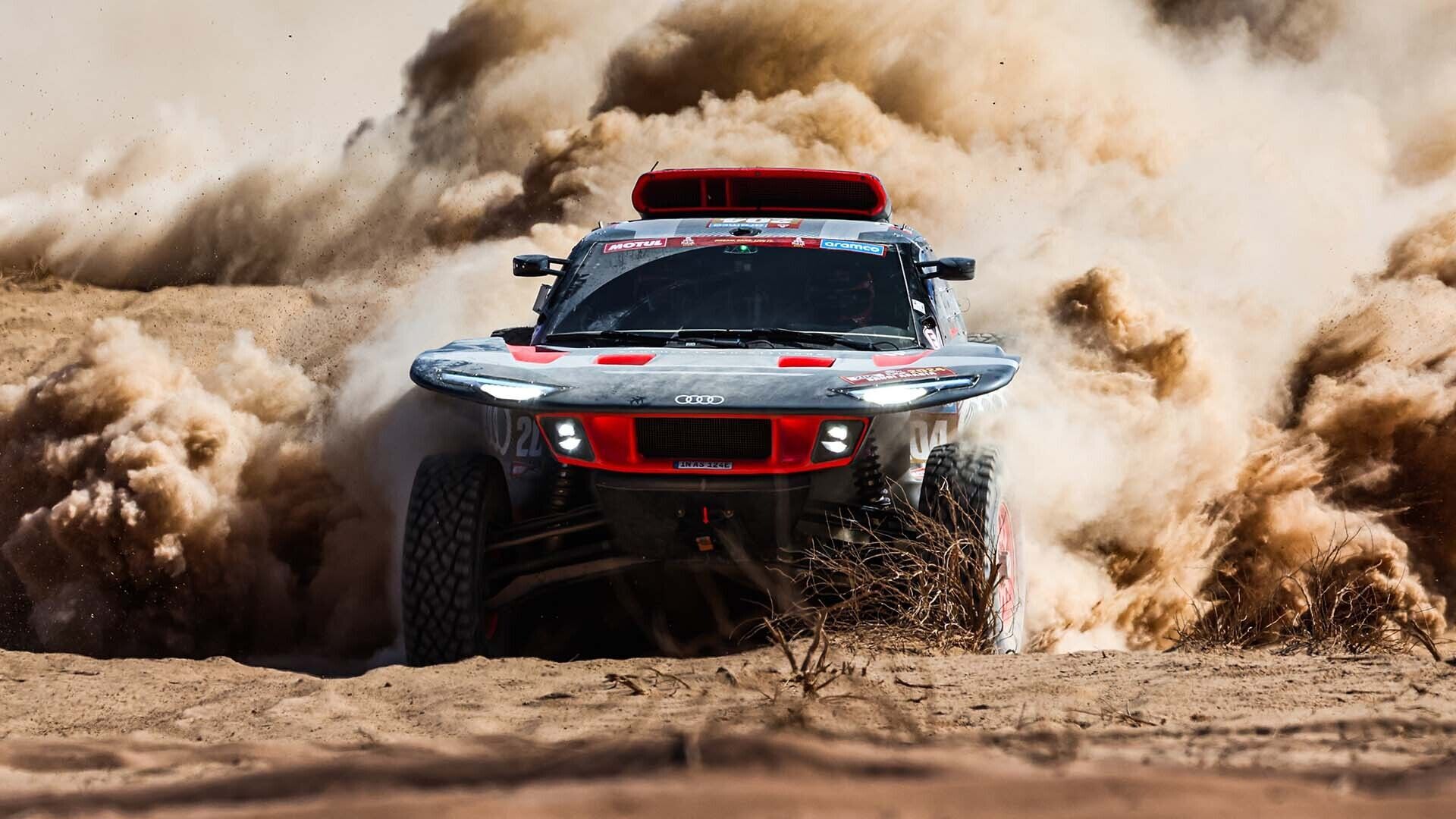
Winning the world’s toughest desert rally with an electric drivetrain was a much more unpredictable challenge than using electrified drivestrains in circuit racing. Audi took on this daunting task with a special concept. The engineering team used the drivetrain technologies from Formula E and DTM to establish the RS Q e-tron as a competitive and innovative rally car. In 2024, the brand achieved the first victory for an alternative drivetrain at the Dakar Rally.
Unforgiving environment
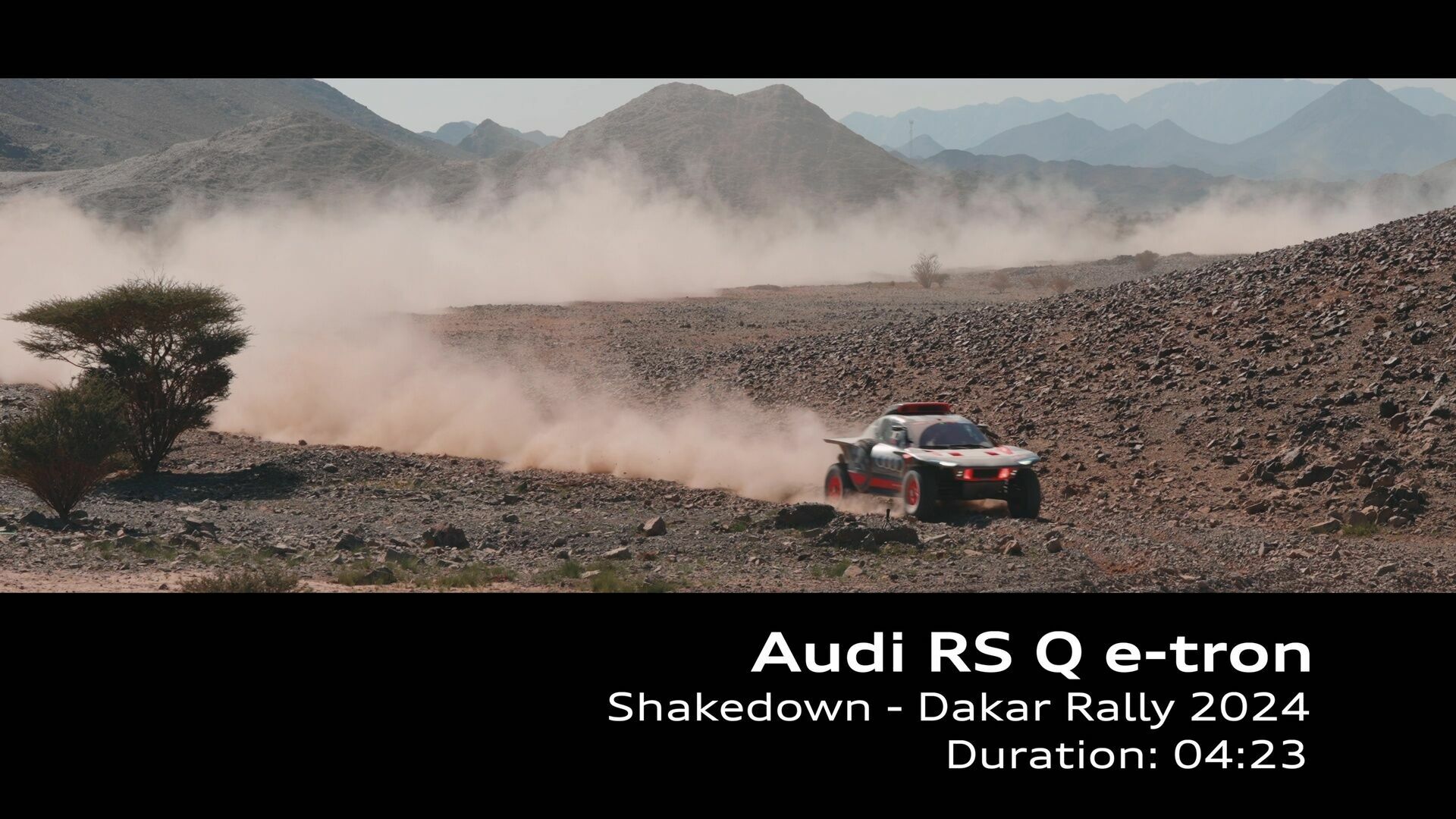
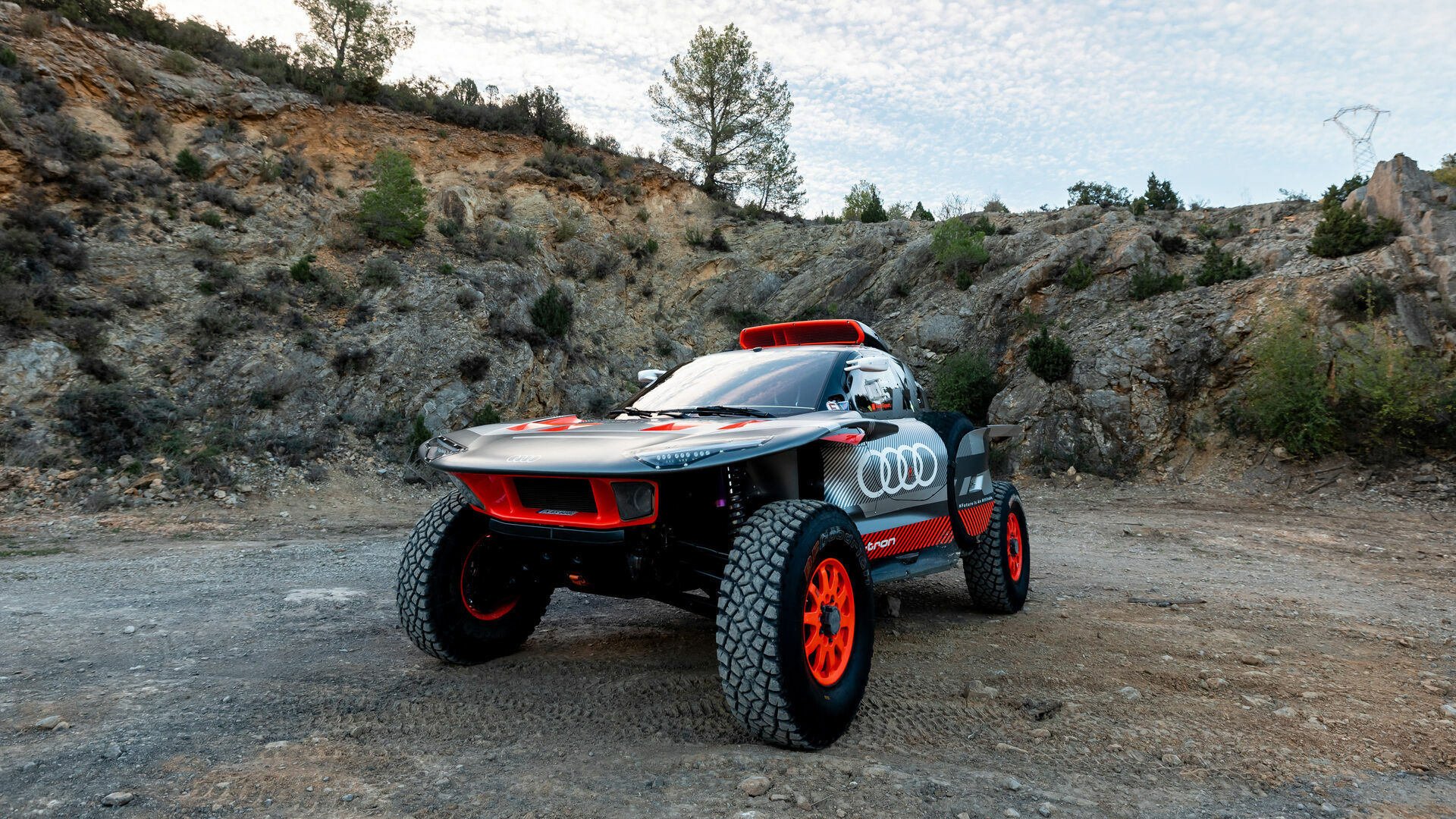
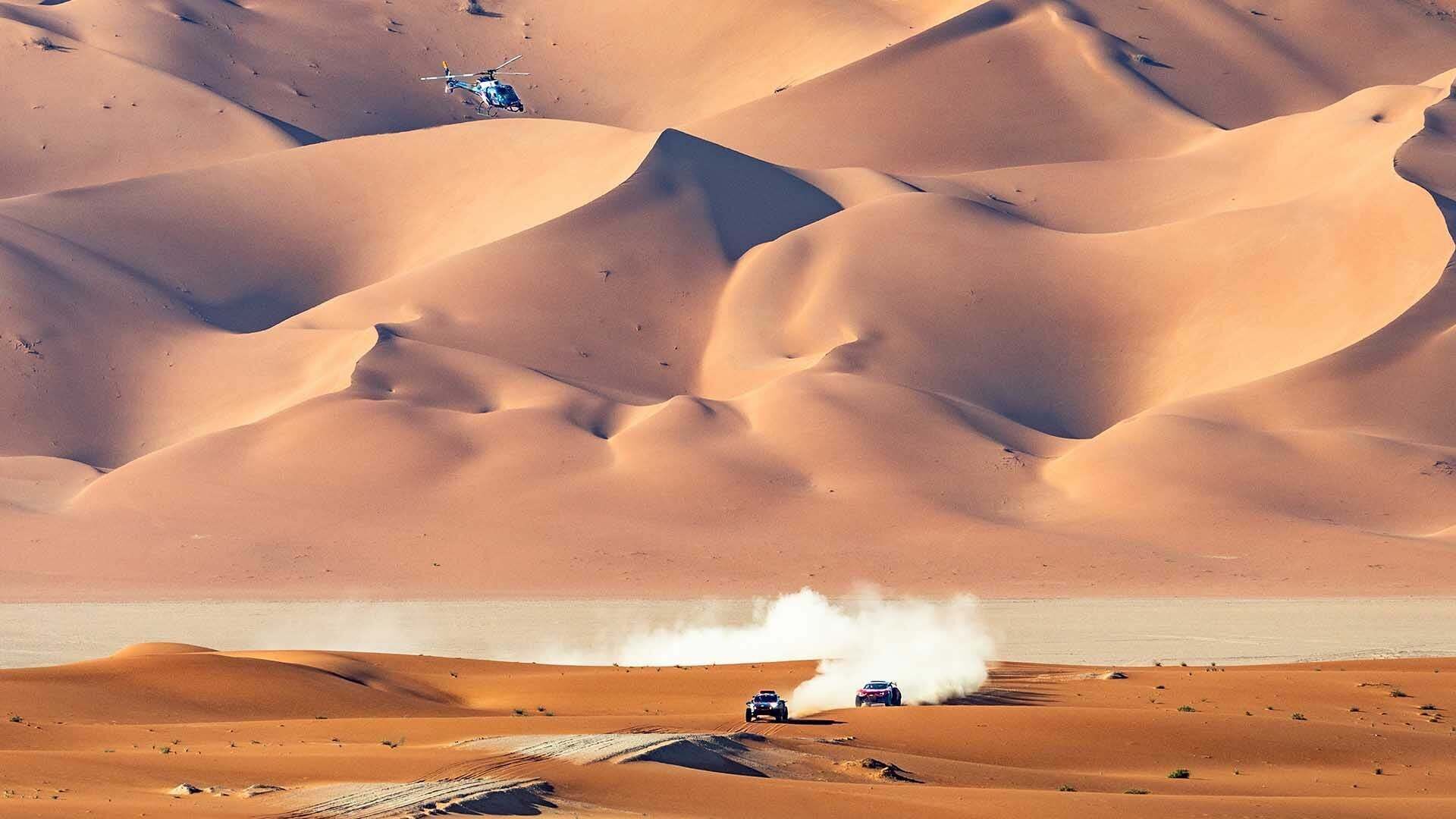
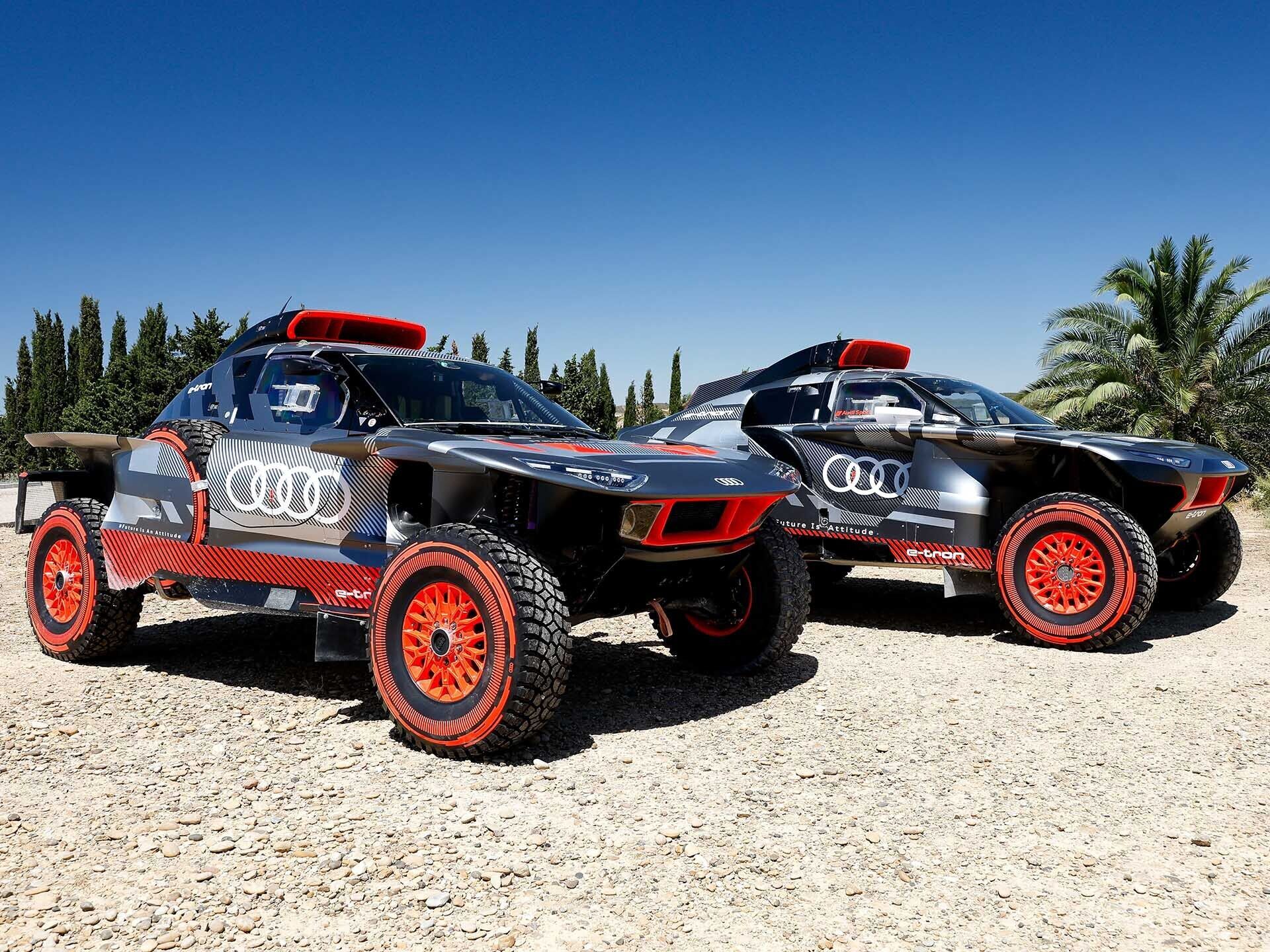
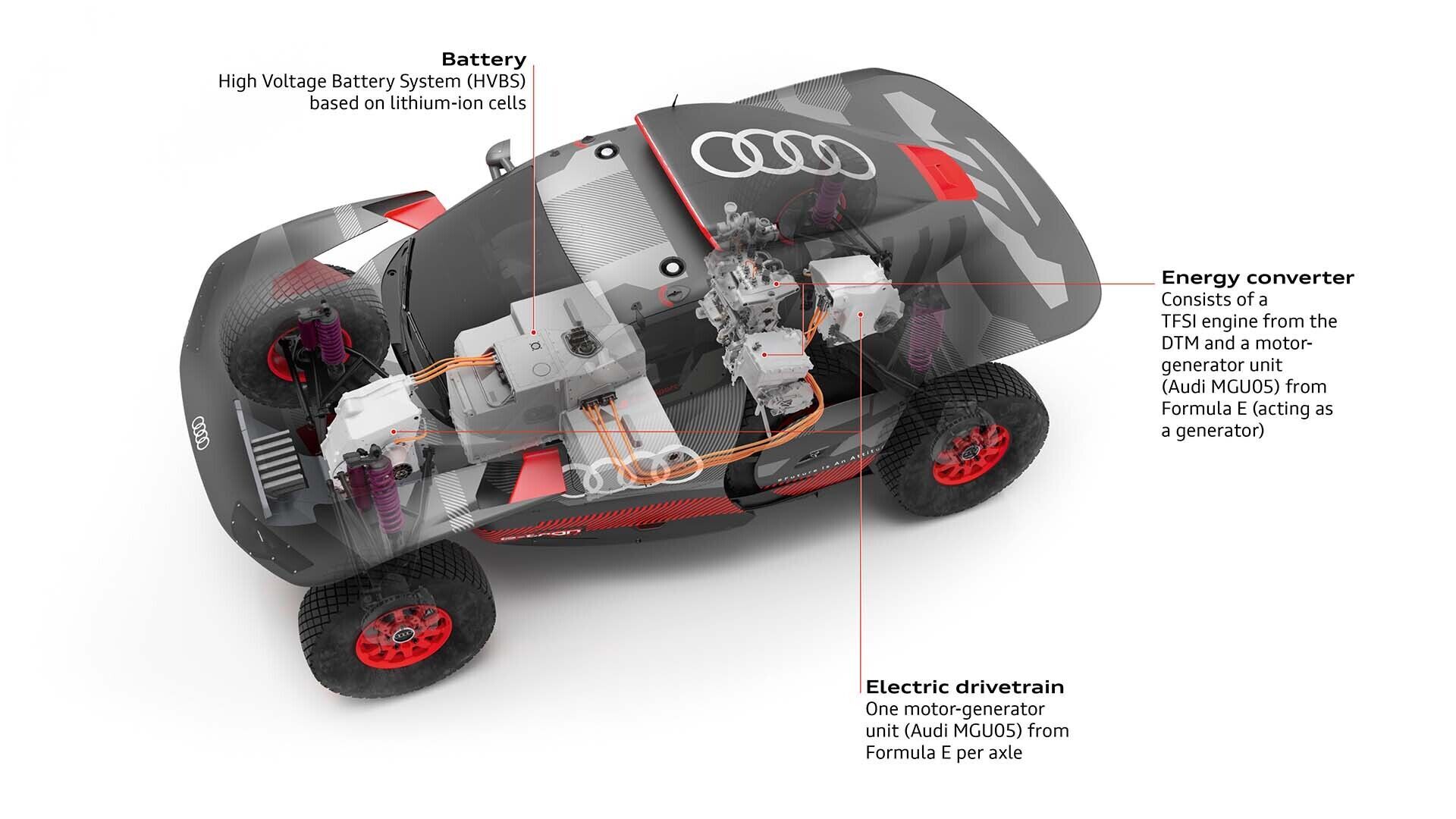
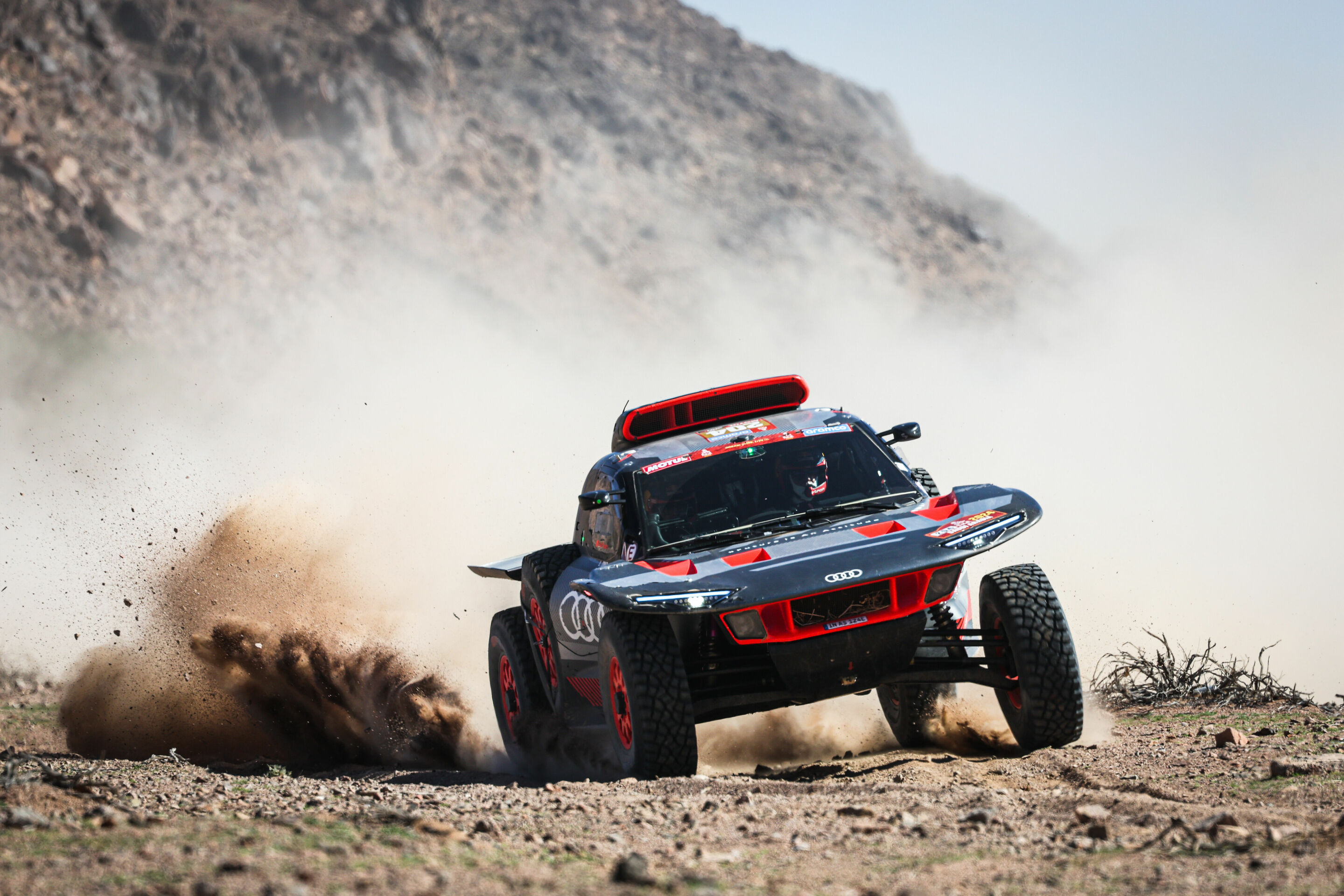
With a total distance of 7,900 kilometers, towering dunes, rough rally terrain and relentless impacts from extreme bumps on the chassis and drivetrain², the Dakar Rally places the highest demands on man and machine. The dust and often high outside temperatures not only put a strain on the participants, but also on the technology. Audi used the MGU from Formula E to place one motor-generator unit on each axle, front and rear, of the Audi RS Q e-tron, as well as one as a generator that was part of the energy converter. A high-voltage battery system with a capacity of 52 kWh supplied this drivetrain system. To charge the battery, Audi used an energy converter consisting of the highly efficient TFSI engine from the DTM in combination with the generator. A rigorous testing program and targeted continuous development allowed the RS Q e-tron to mature into a winner within a short period of time.
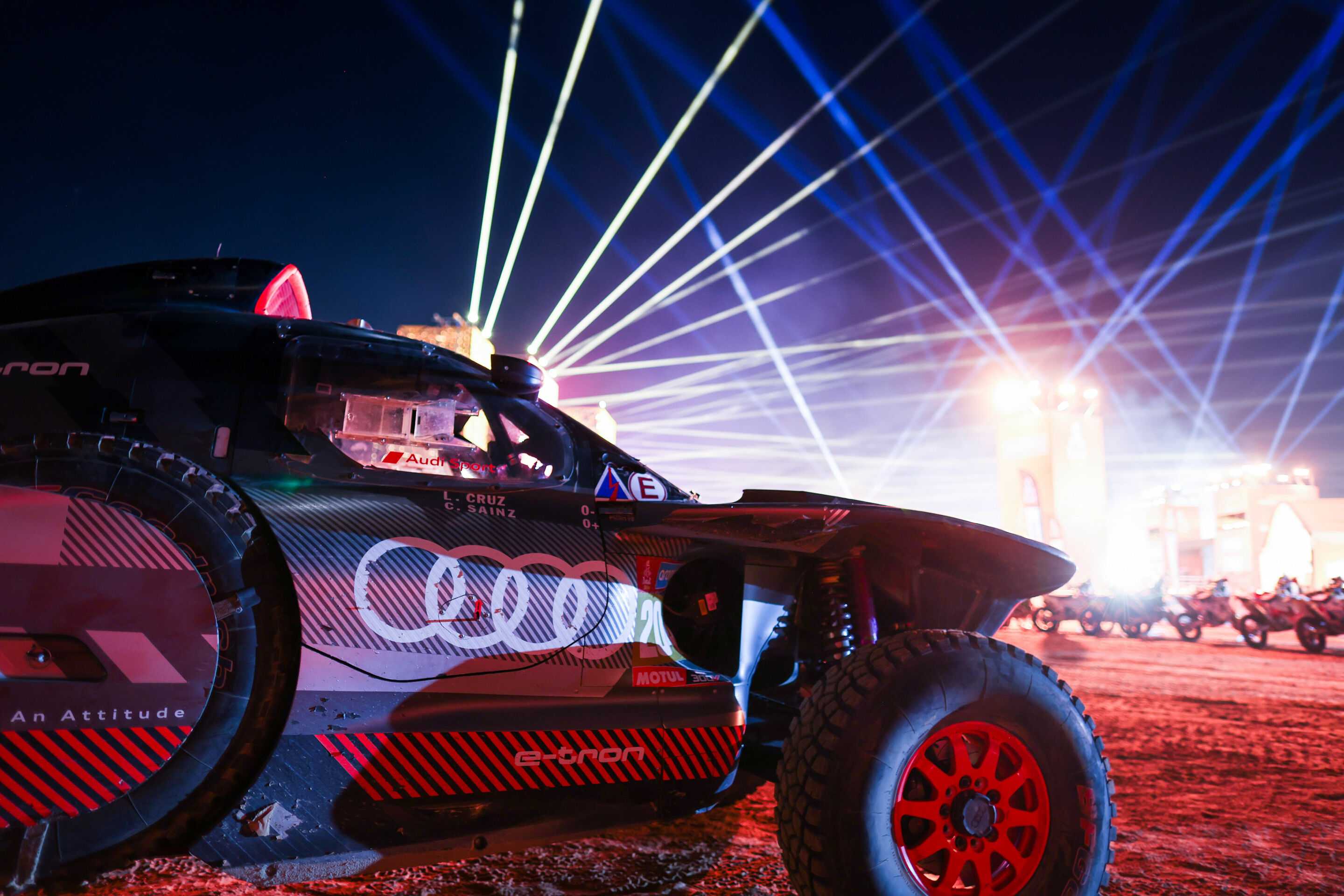
Audi RS Q e-tron
First successes
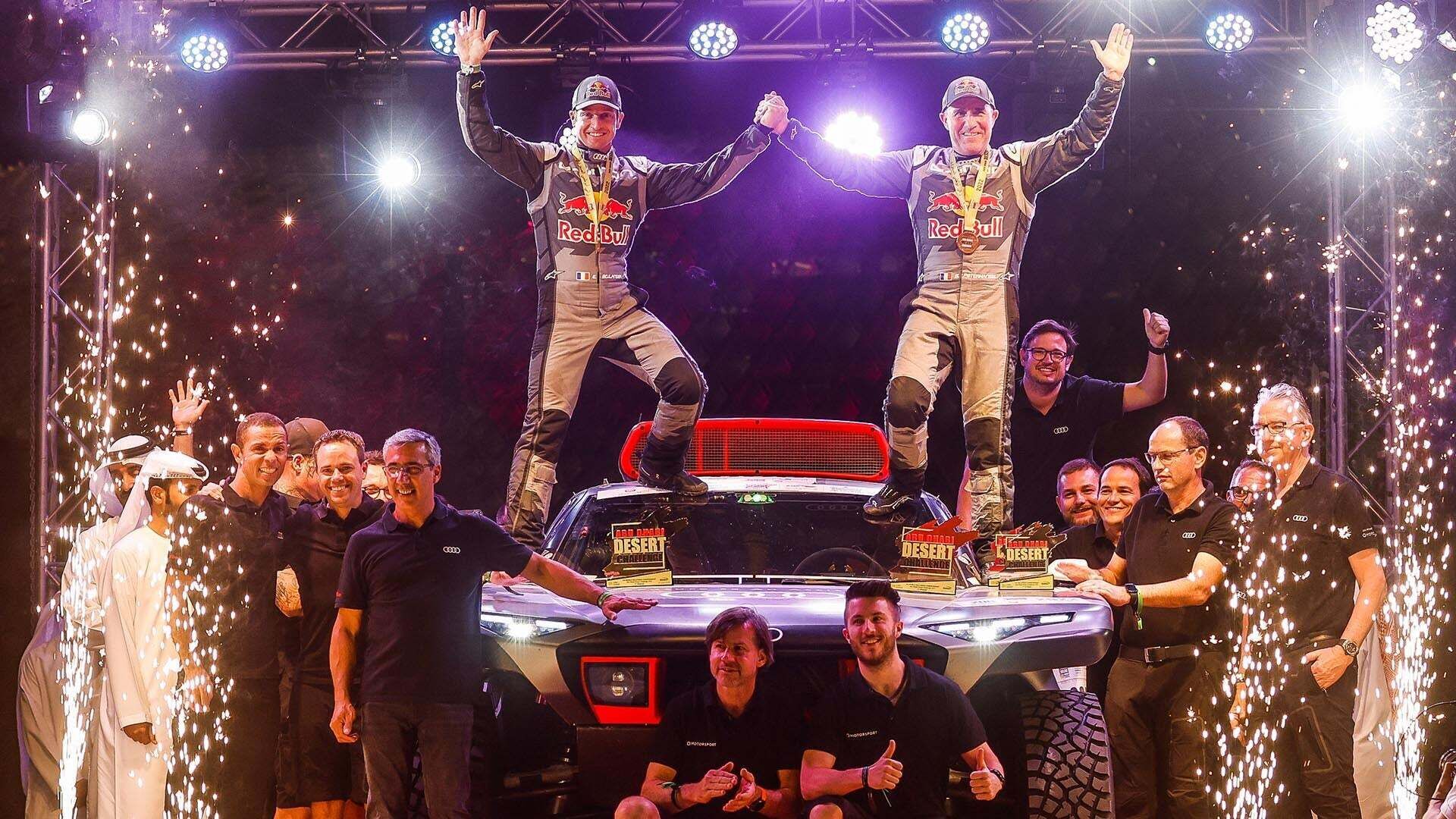
Team Audi Sport recorded four stage victories during its Dakar debut in January 2022. Just six weeks later, the team achieved its first overall victory in the desert. Stéphane Peterhansel and Edouard Boulanger triumphed in the second round of the FIA World Rally Raid Championship, the Abu Dhabi Desert Challenge. Audi contested the 2023 Dakar Rally with an improved version of the prototype and recorded 14 podium results in the daily classifications, including two stage wins. Further outings and testing in Saudi Arabia, North Africa, Spain and France helped to continuously improve the RS Q e-tron over the course of the year.
Breakthrough in January 2024
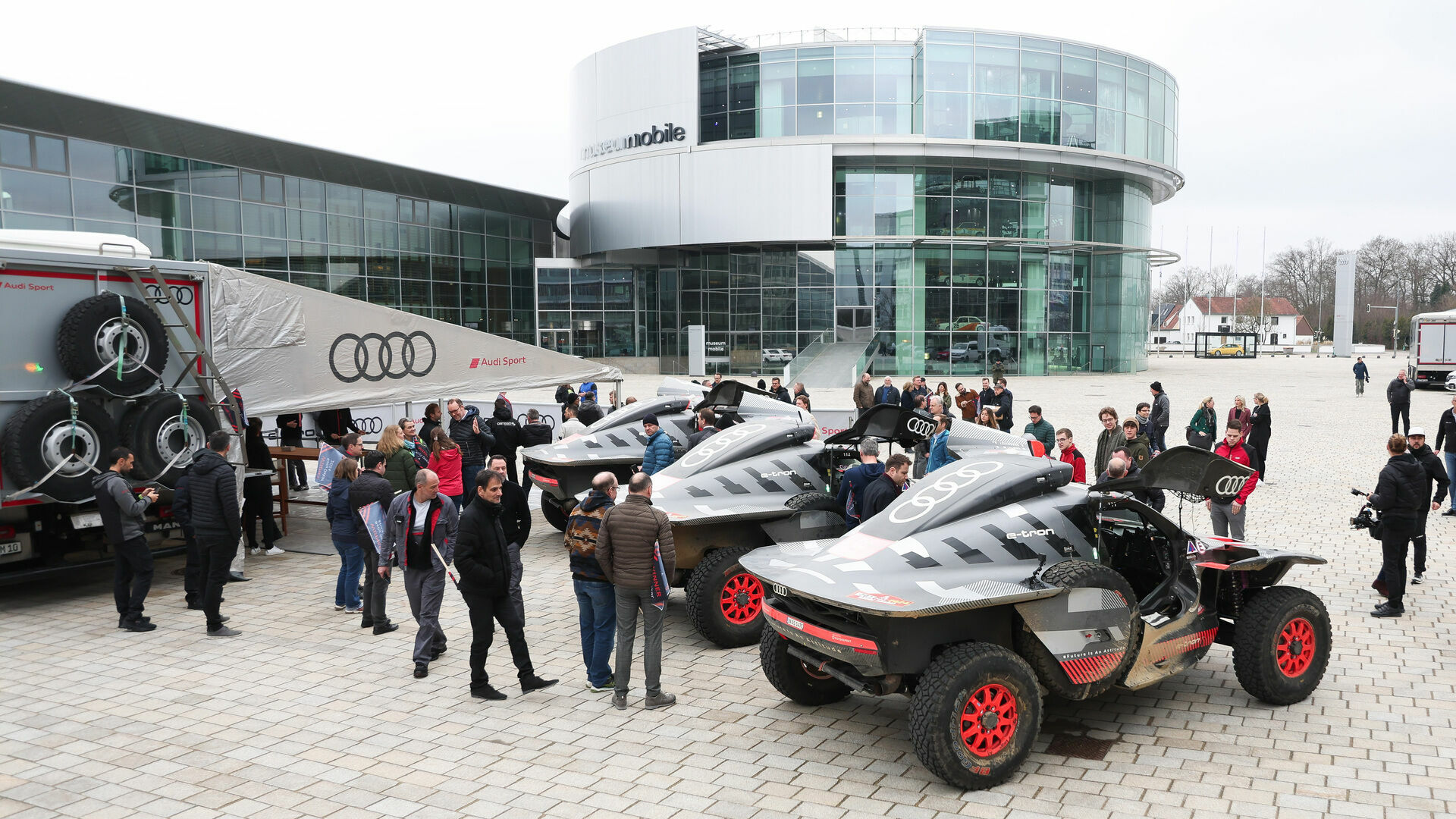
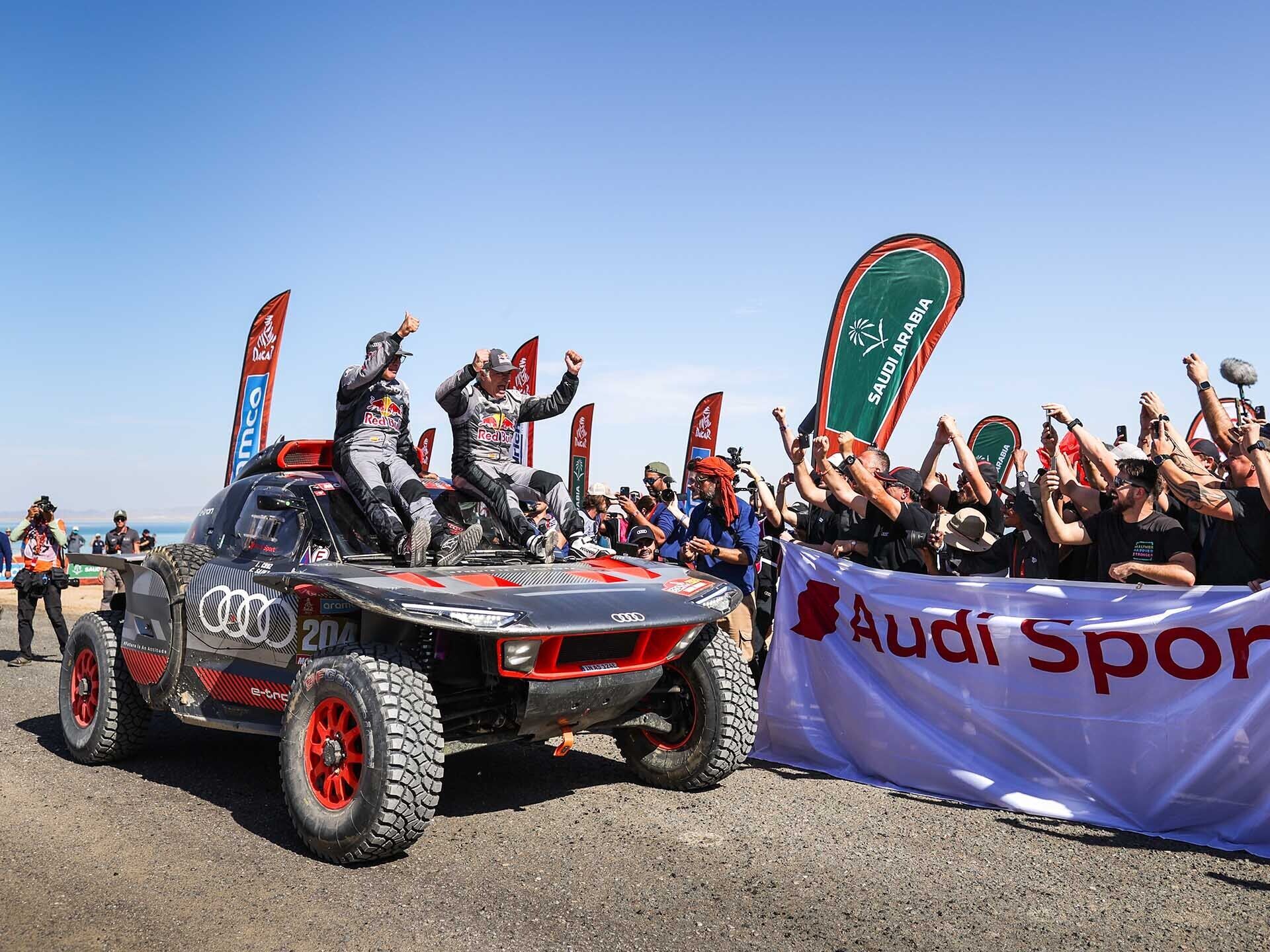
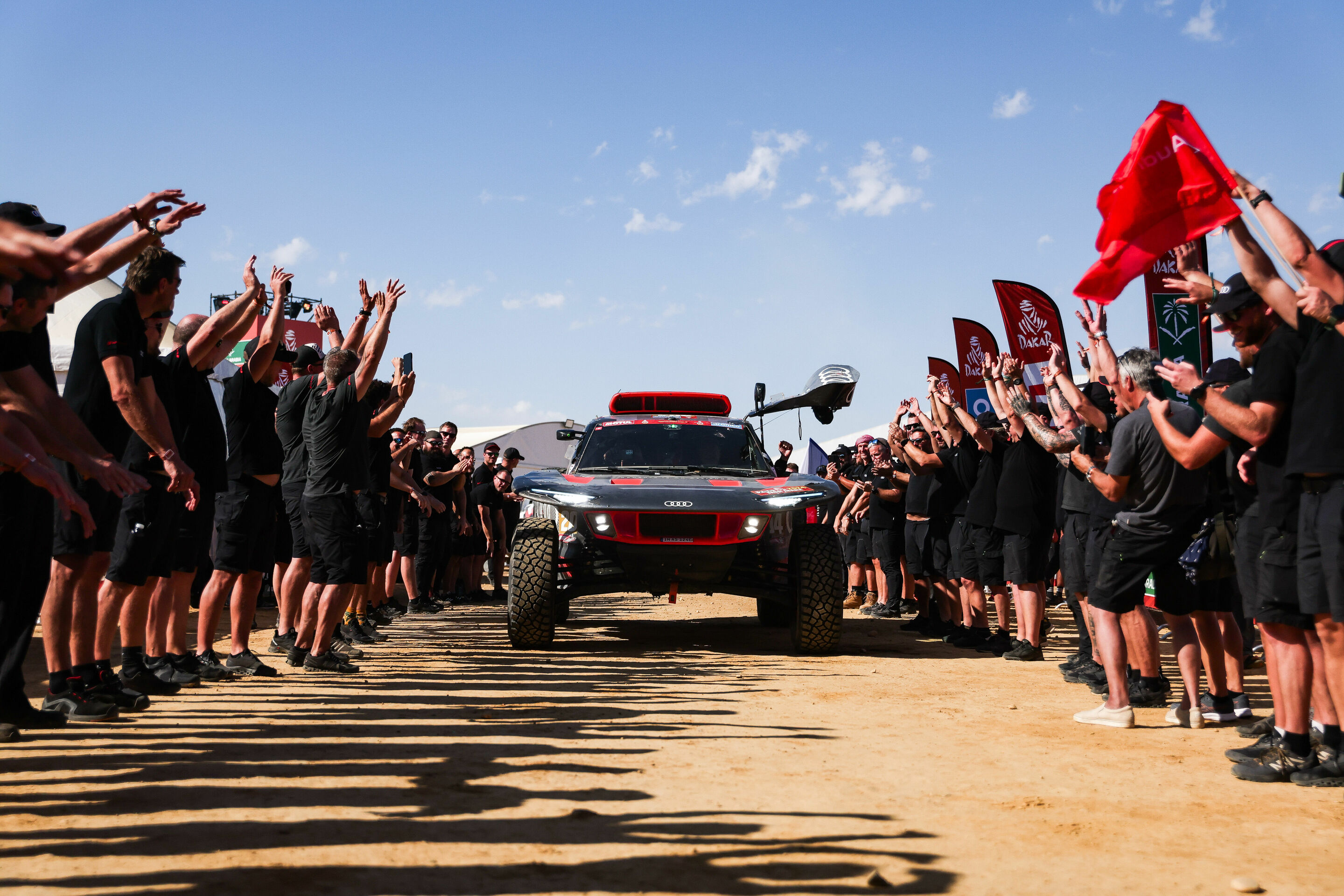
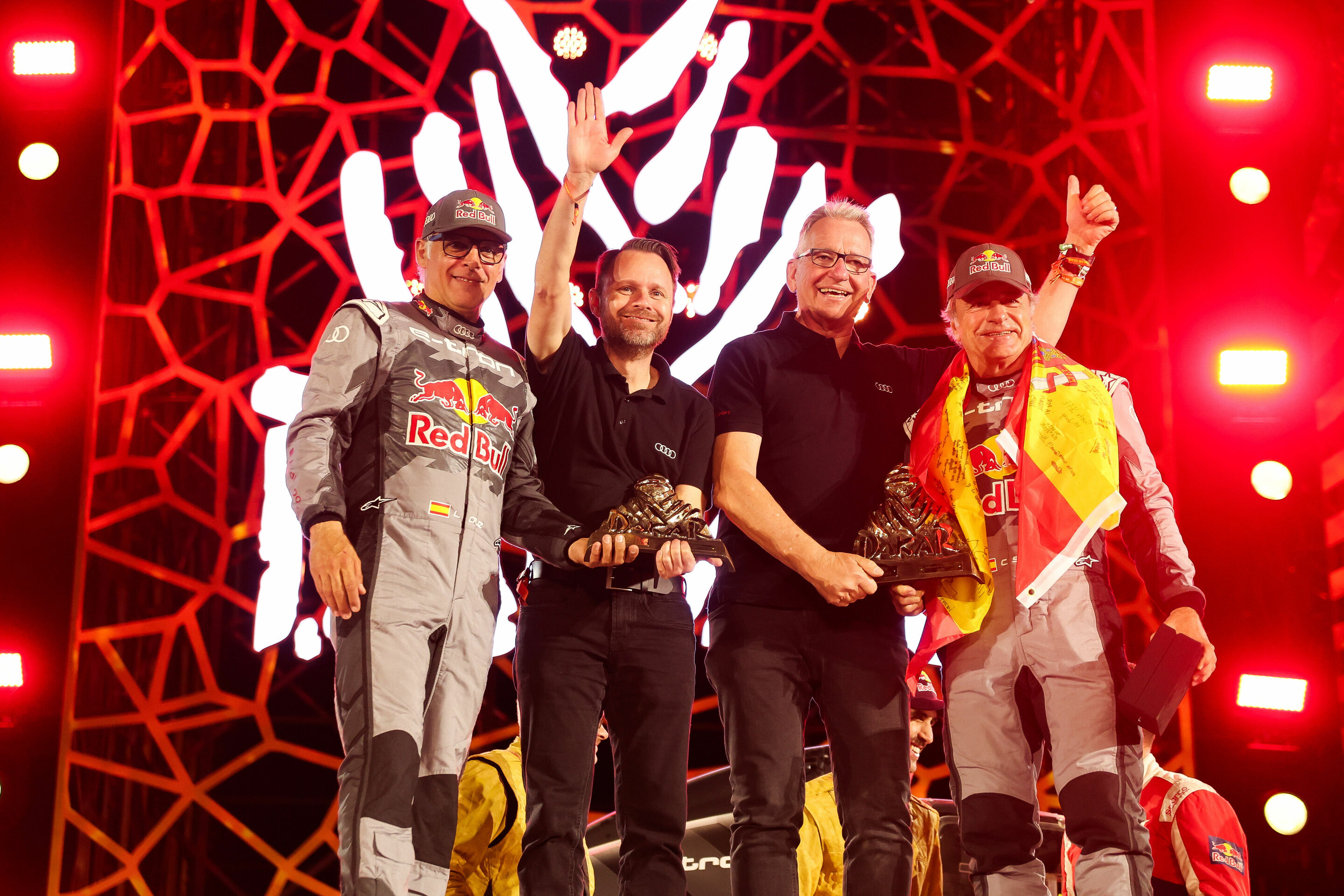
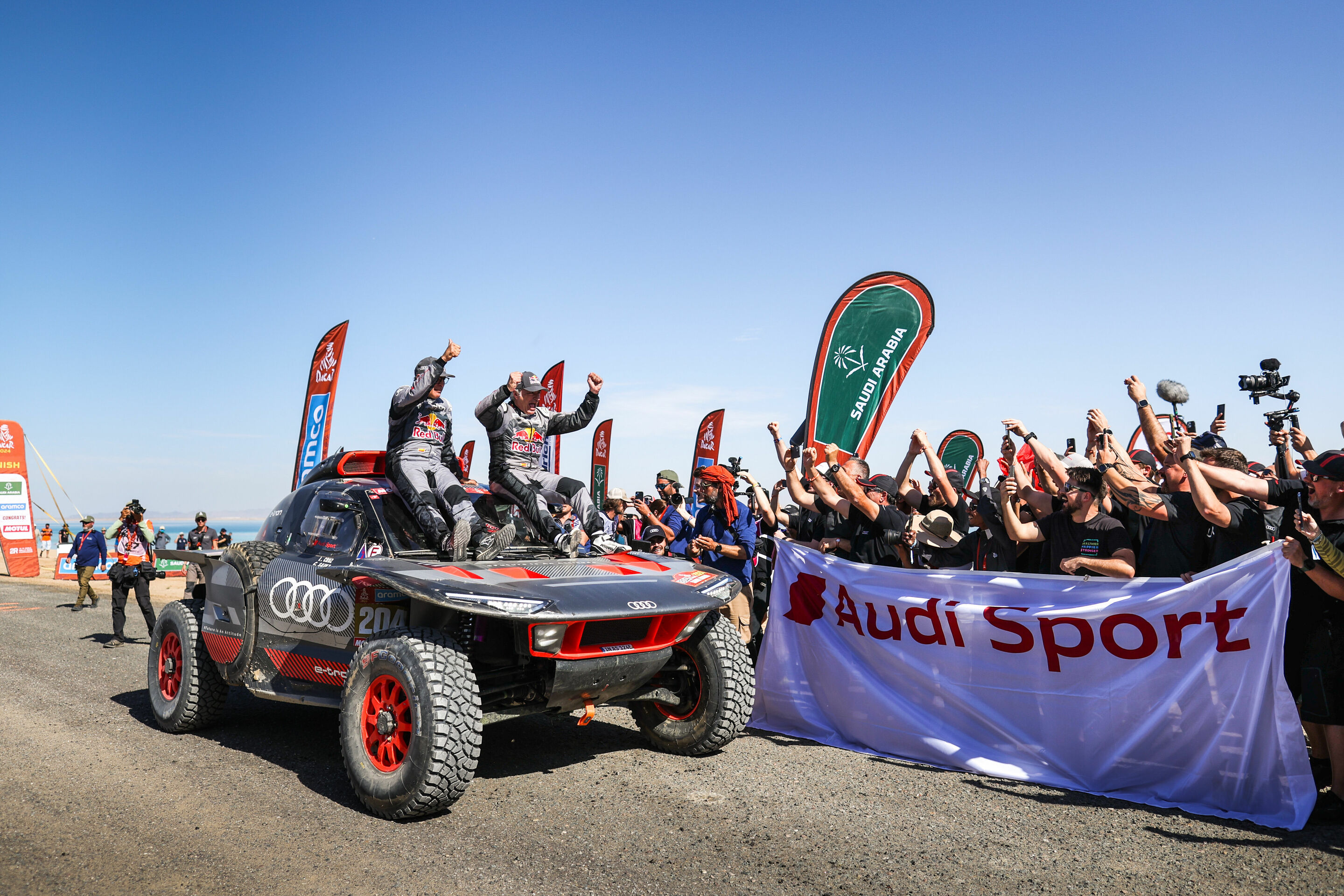
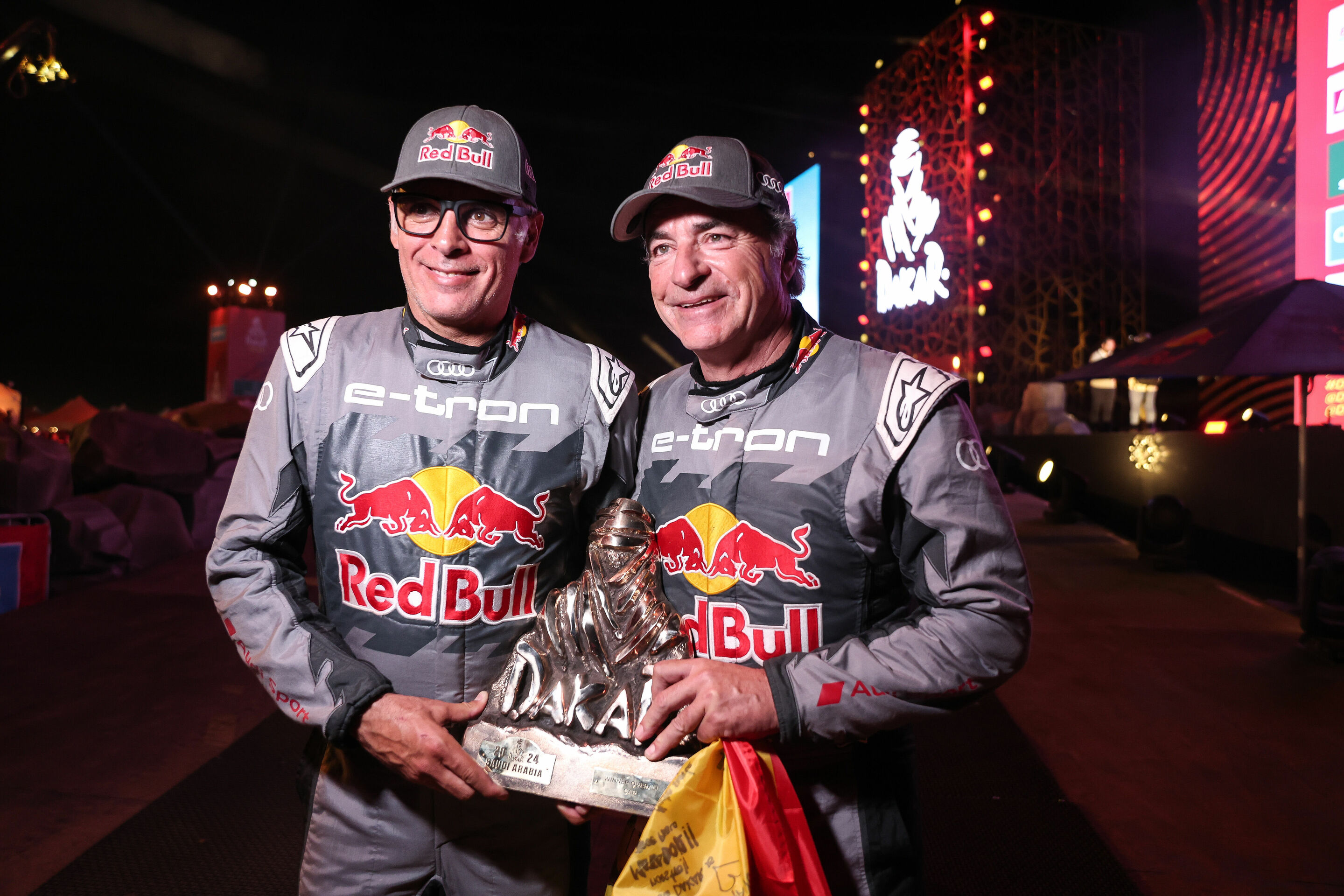
Audi won the Dakar Rally at its third attempt after thrilling competition from Toyota, Ford and the experienced Prodrive team. Spaniards Carlos Sainz and Lucas Cruz celebrated their fourth personal success in the desert classic after intelligently managing their lead right to the end in the battle against their strong pursuers, Sébastien Loeb and Fabian Lurquin. Over daily distances of often more than 400 kilometers, two marathon stages with limited or no service, 4,600 kilometers against the clock, and 7,883 kilometers in total, the Audi RS Q e-tron ultimately won with a lead of 80 minutes. The Dakar victory with an electric drivetrain was the next in a long line of milestones that Audi has set in motorsport. The successes of the quattro all-wheel drivetrain in rallying and circuit racing in the 1980s and 1990s, the victories of the efficient TFSI, TDI and e-tron quattro drivetrains at Le Mans, individual technologies such as the LED matrix light system or the Audi laser light in endurance racing, as well as titles and victories of Audi’s first electric racing car in Formula E, stand for technological and sporting masterpieces.
Images
Videos