The era of the economic miracle
The currency reform of 1948, not long after the end of the Second World War, marked the beginning of an unprecedented period of economic growth in Germany. At the same time, the appetite for mobility grew – initially for affordable motorised two-wheelers, but soon also for cars. The re-establishment of Auto Union GmbH in Ingolstadt saw the company return to the DKW brand’s roots in vehicle manufacturing. During the 1950s, NSU Werke AG, still an independent company at the time, became the world’s largest manufacturer of two-wheeled vehicles. Soon afterwards, it made a comeback as a car manufacturer.
DKW RT 125 W (1949-1957)
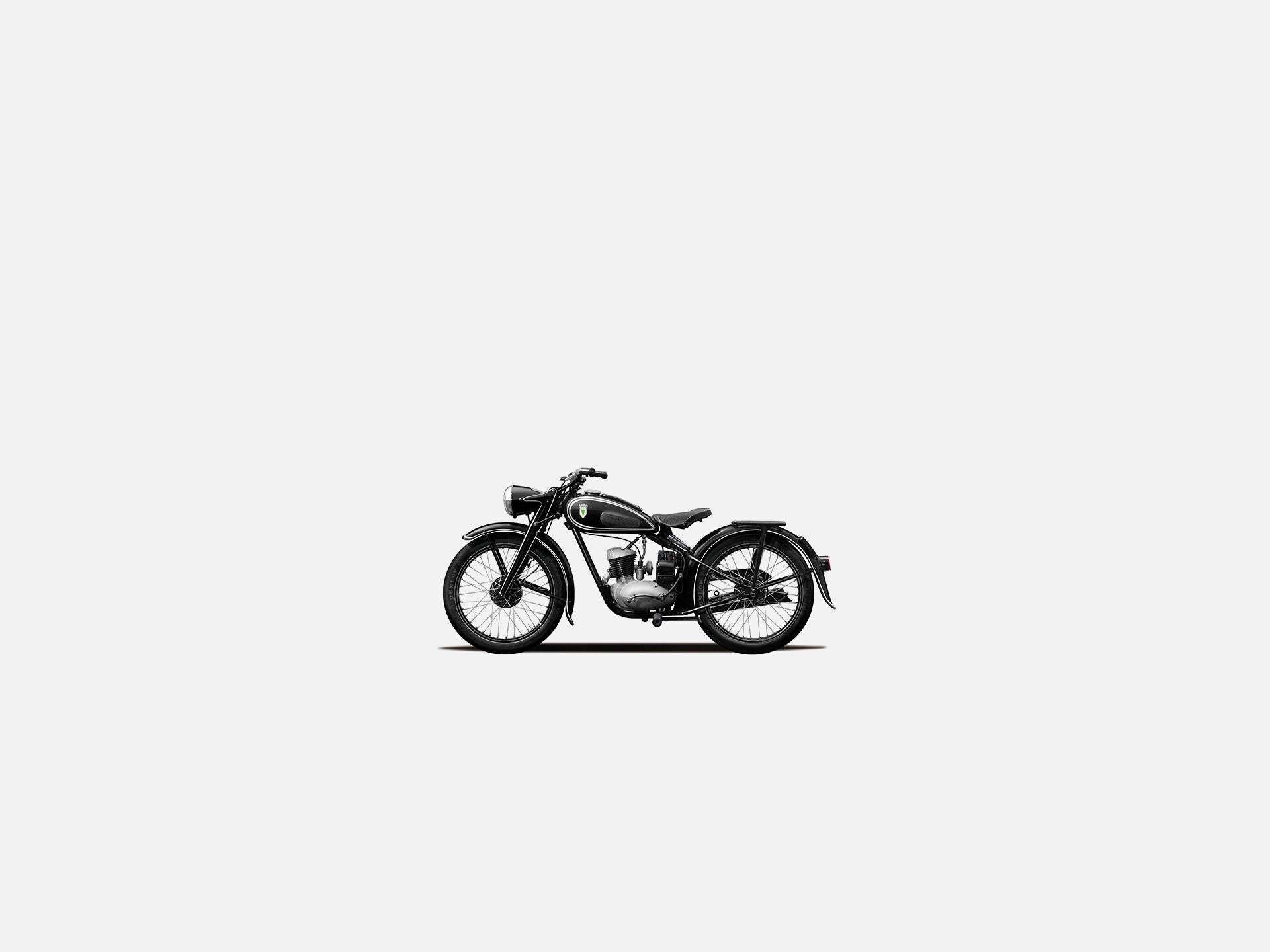
There had already been an RT 125 in the Auto Union AG programme before the Second World War. Building on this, the newly founded company Auto Union GmbH was able to quickly launch a proven product on the market in 1949: the DKW RT 125 W. It remained in DKW’s two-wheeler programme in various modified forms until 1957, becoming a best seller for the still young company.
DKW RT 125 W:
- Engine: Single-cylinder two-stroke engine
- Displacement: 123 cm³
- Power output: 4.75 PS at 5,000 rpm
- Top speed: 75 km/h
- Length/width/height: 1,985/655/880
- Unladen weight: 73.5 kg
DKW F 89 L Schnelllaster (1949-1962)
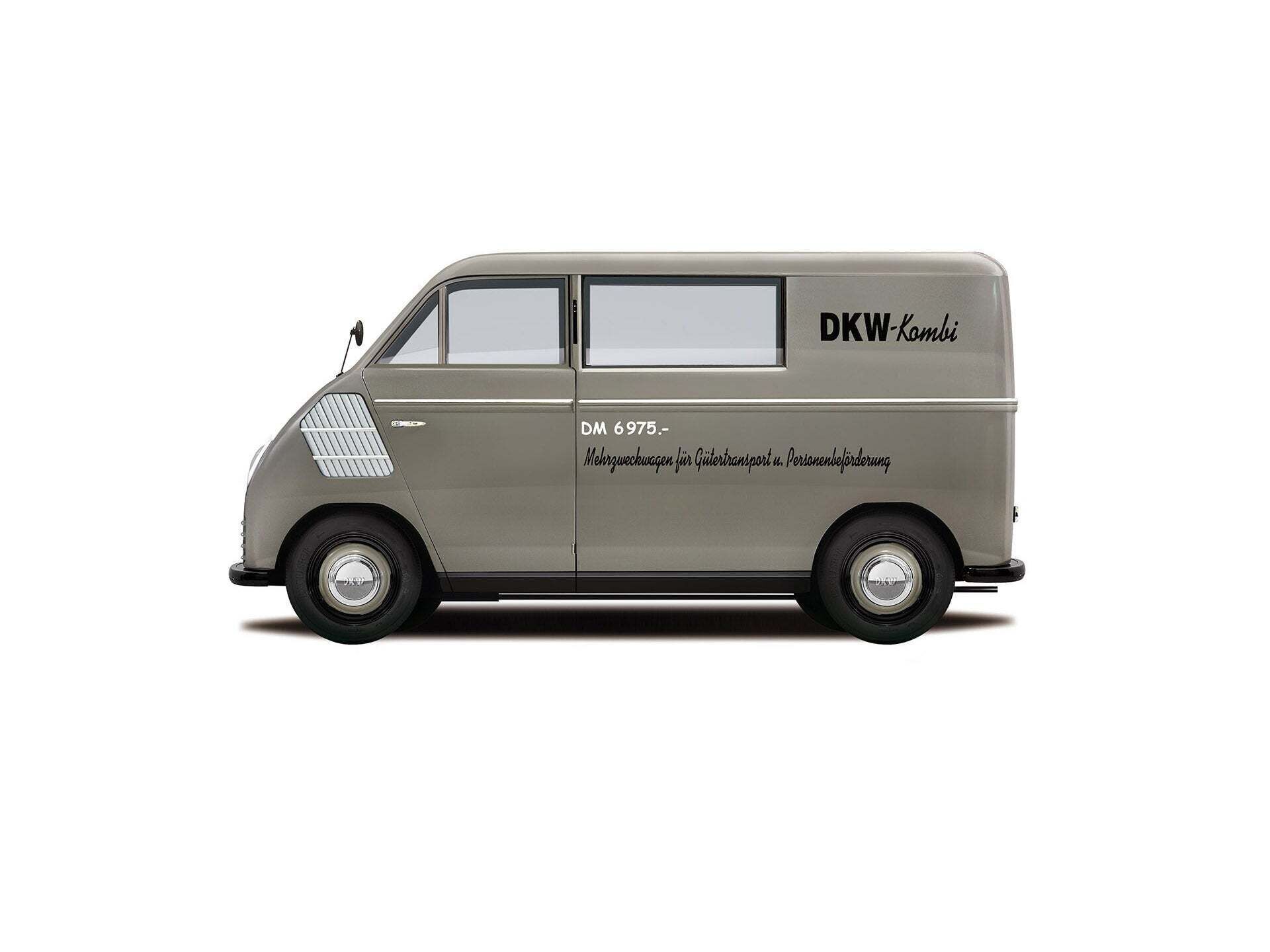
The Schnelllaster was the first car to be produced by Auto Union after the Second World War – and the first ever to come out of Ingolstadt. It was engineered in such a way that it could be used as the basis for a wide range of different versions, from minibuses to flatbed trucks and ambulances. Thanks to its versatility and simple technology, the Schnelllaster proved to be the right product at the right time for Auto Union.
DKW F 89 L:
- Engine: Two-stroke petrol engine, 2 inline cylinders, transversely mounted
- Displacement: 684 cm³
- Power output: 20 PS at 3,600 rpm
- Top speed: 78 km/h
- Length/width/height: 3,925/1,550/1,900 mm (box van)
- Unladen weight: 945 kg (box van)
NSU Quickly (1953-1967)
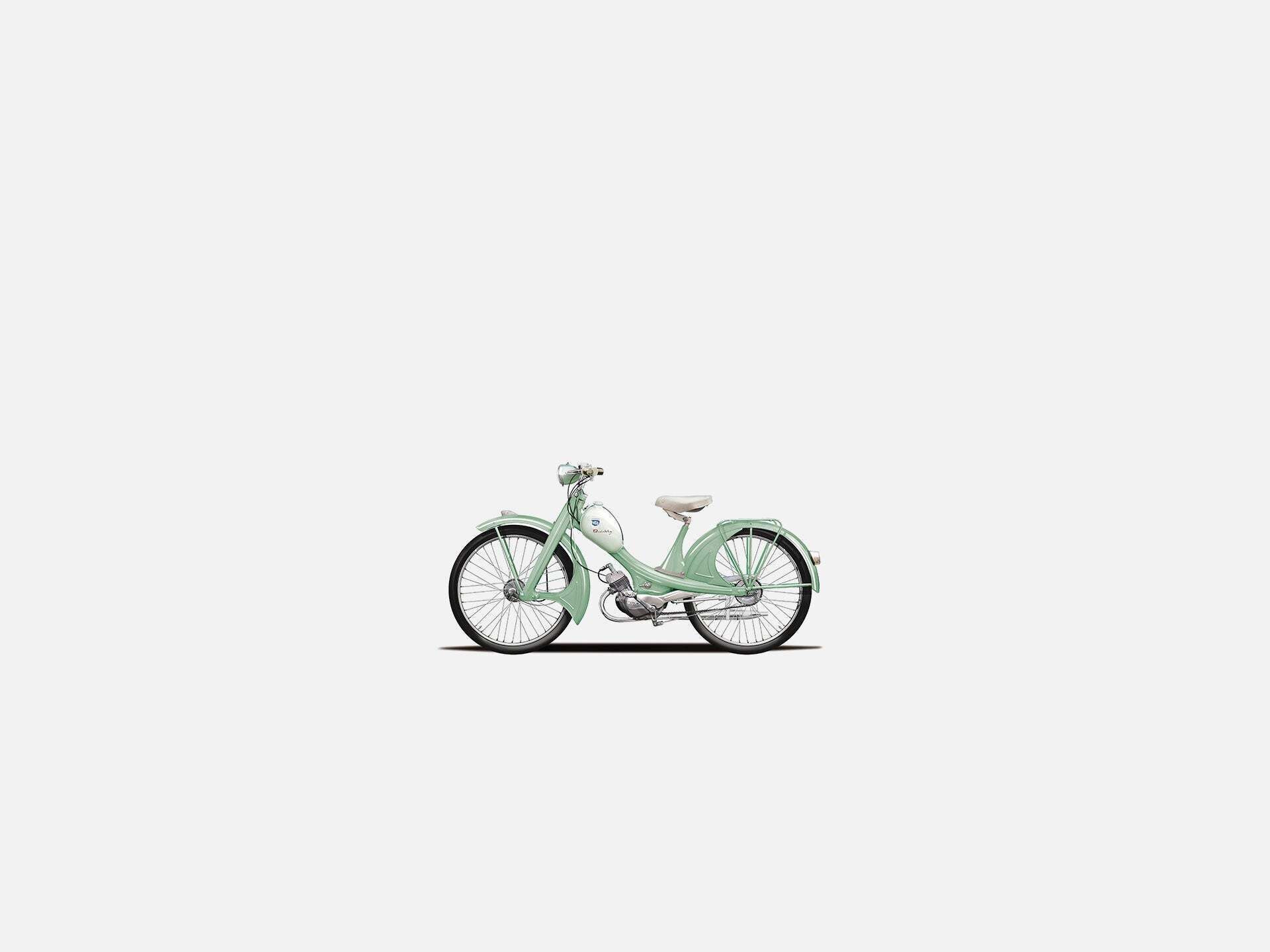
Unveiled in 1953, the Quickly soon became a bestseller with the slogan “Nicht mehr laufen, Quickly kaufen” (roughly: Quit walking, buy a Quickly). With this 49-cm3 moped, NSU wanted to give the general public access to mobility during the economic miracle years without having to pay taxes, register the vehicle or, above all, obtain a driving licence. The one millionth Quickly rolled off the production line in 1959.
NSU Quickly:
- Engine: Single-cylinder two-stroke engine
- Displacement: 49 cm³
- Power output: 1.3 PS at 5,000 rpm
- Top speed: 40 km/h
- Length/width/height: 1,895/642/960 mm
- Unladen weight: 33 kg
NSU Prinz (1958-1973)
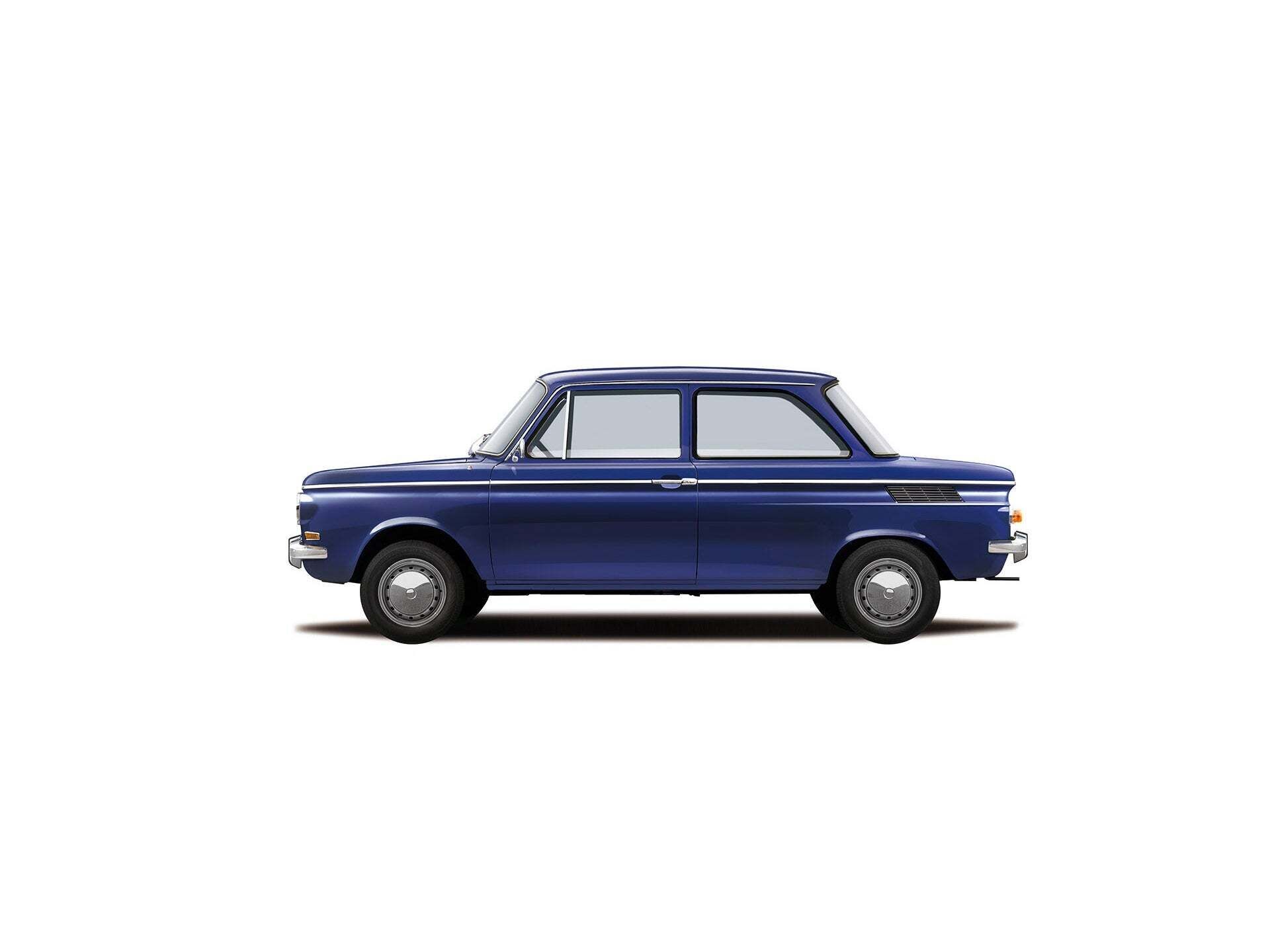
When demand for two-wheelers dropped in the mid-1950s, the NSU brand hit the market with a compact car called the Prinz. It proved to be a real sales hit. The vehicle was powered by an air-cooled two-cylinder inline engine and, unlike many of its competitors, was already equipped with modern 12-volt electrics.
NSU Prinz IV L:
- Engine: Petrol engine, 2 inline cylinders, air-cooled, OHC valve control
- Displacement: 598 cm³
- Power output: 30 PS at 5,500 rpm
- Top speed: 120 km/h
- Length/width/height: 3,440/1,490/1,360 mm
- Unladen weight: 555 kg
Auto Union 1000 SP (1958-1965)
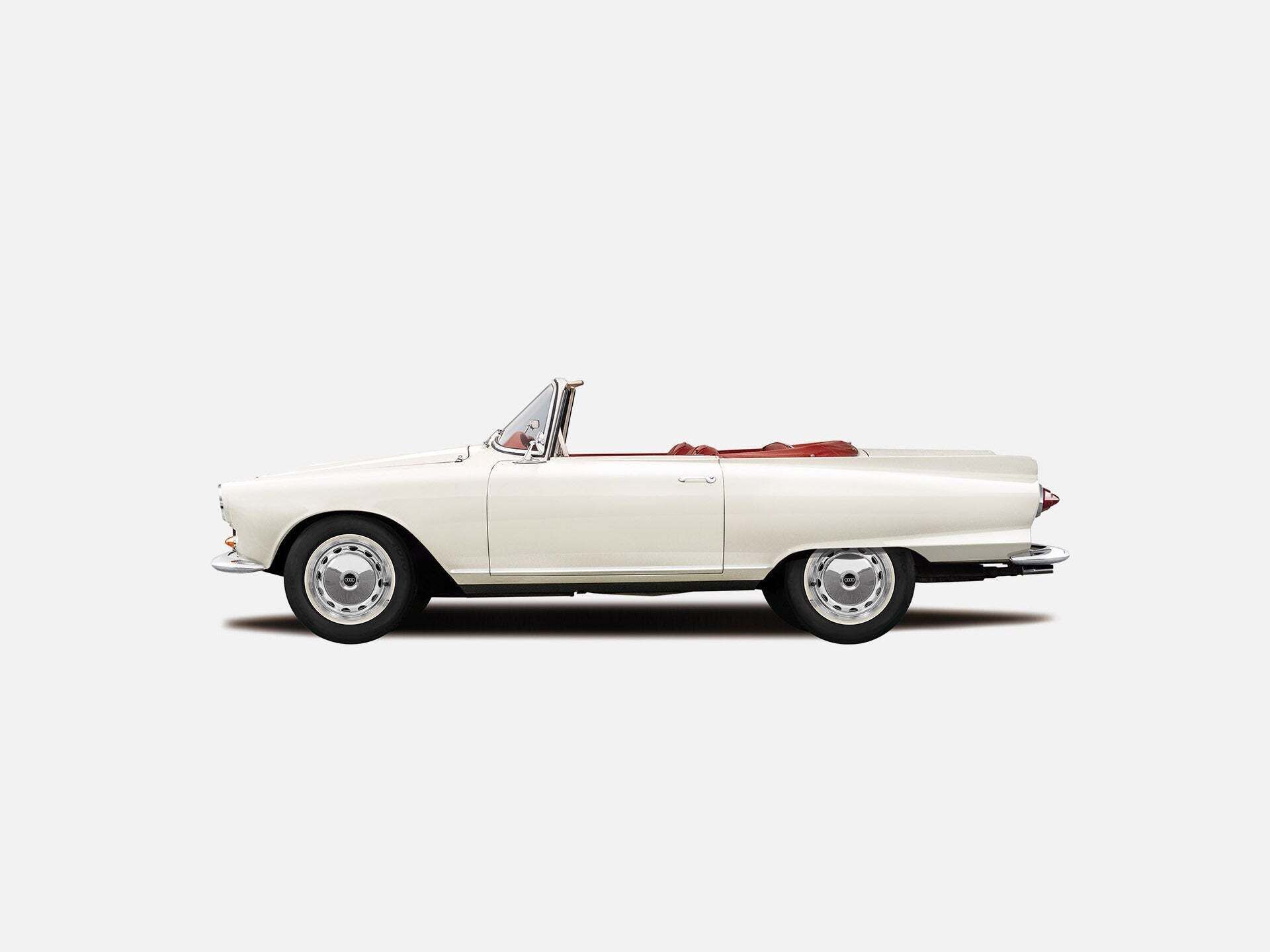
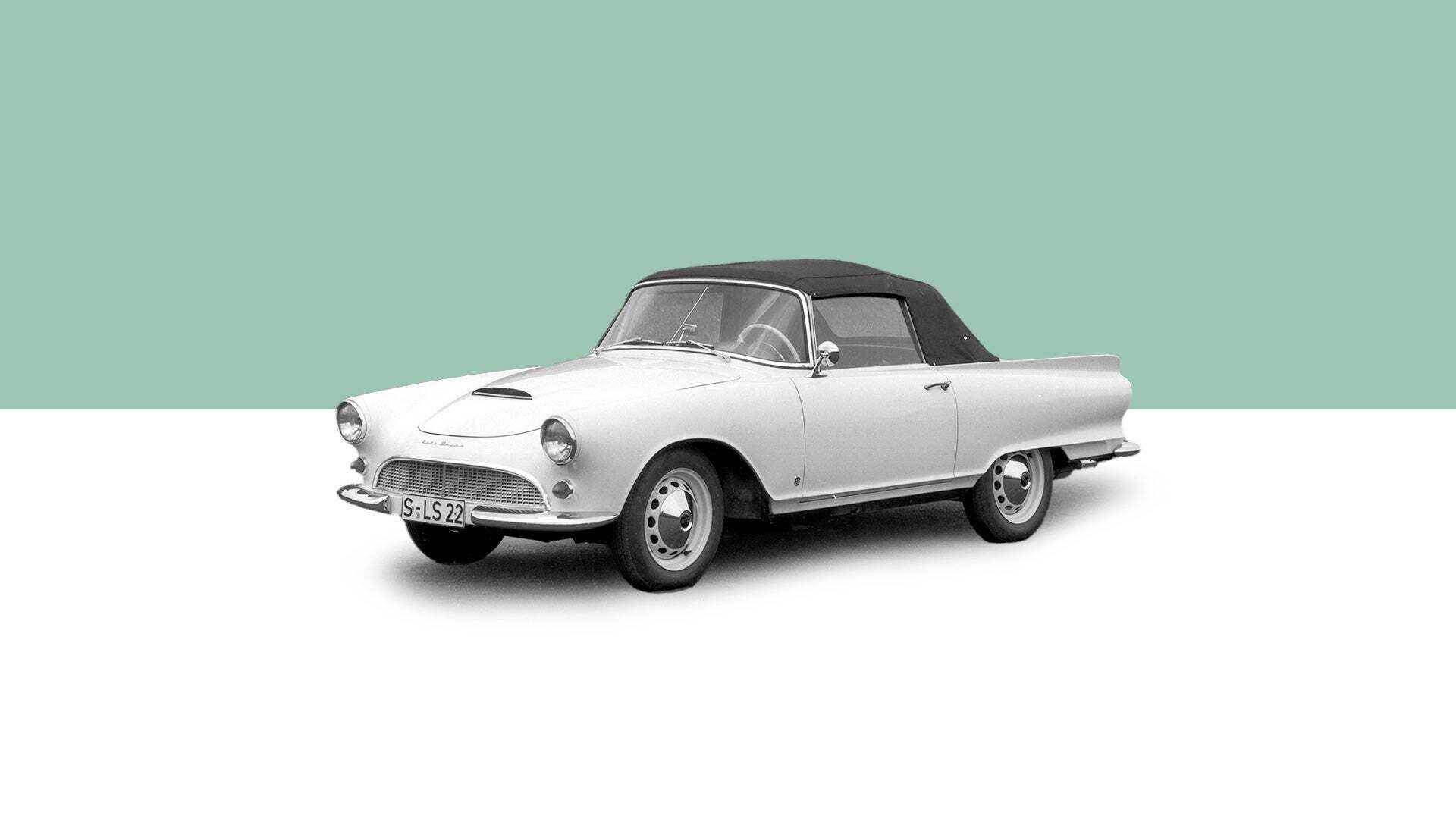
The Auto Union 1000 Spezial was available as a two-seater coupé and, from 1962, as a roadster. With its three-cylinder engine and striking appearance, it is often described as the top model of the two-stroke segment. Among the vehicle’s outstanding features were enhanced engine performance, disc brakes and an American design with tail fins.
Auto Union 1000 SP Roadster:
- Engine: Two-stroke petrol engine, 3 inline cylinders
- Displacement: 981 cm³
- Power output: 55 PS at 4,500 rpm
- Top speed: 140 km/h
- Length/width/height: 4,170/1,680/1,335 mm (roadster)
- Unladen weight: 950 kg