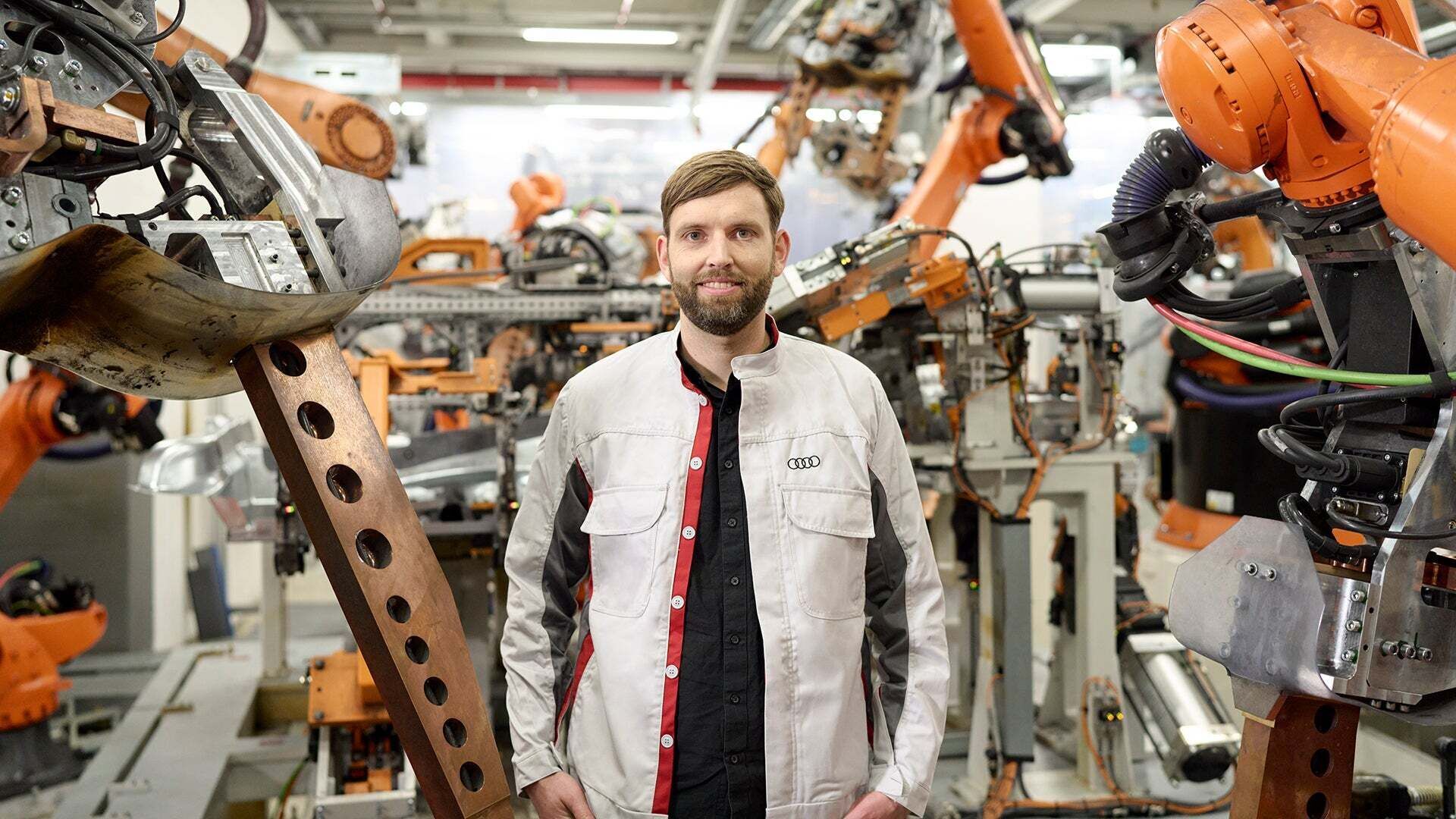
From Prototype to Production: How Audi Is Bringing Conversational AI into the Car
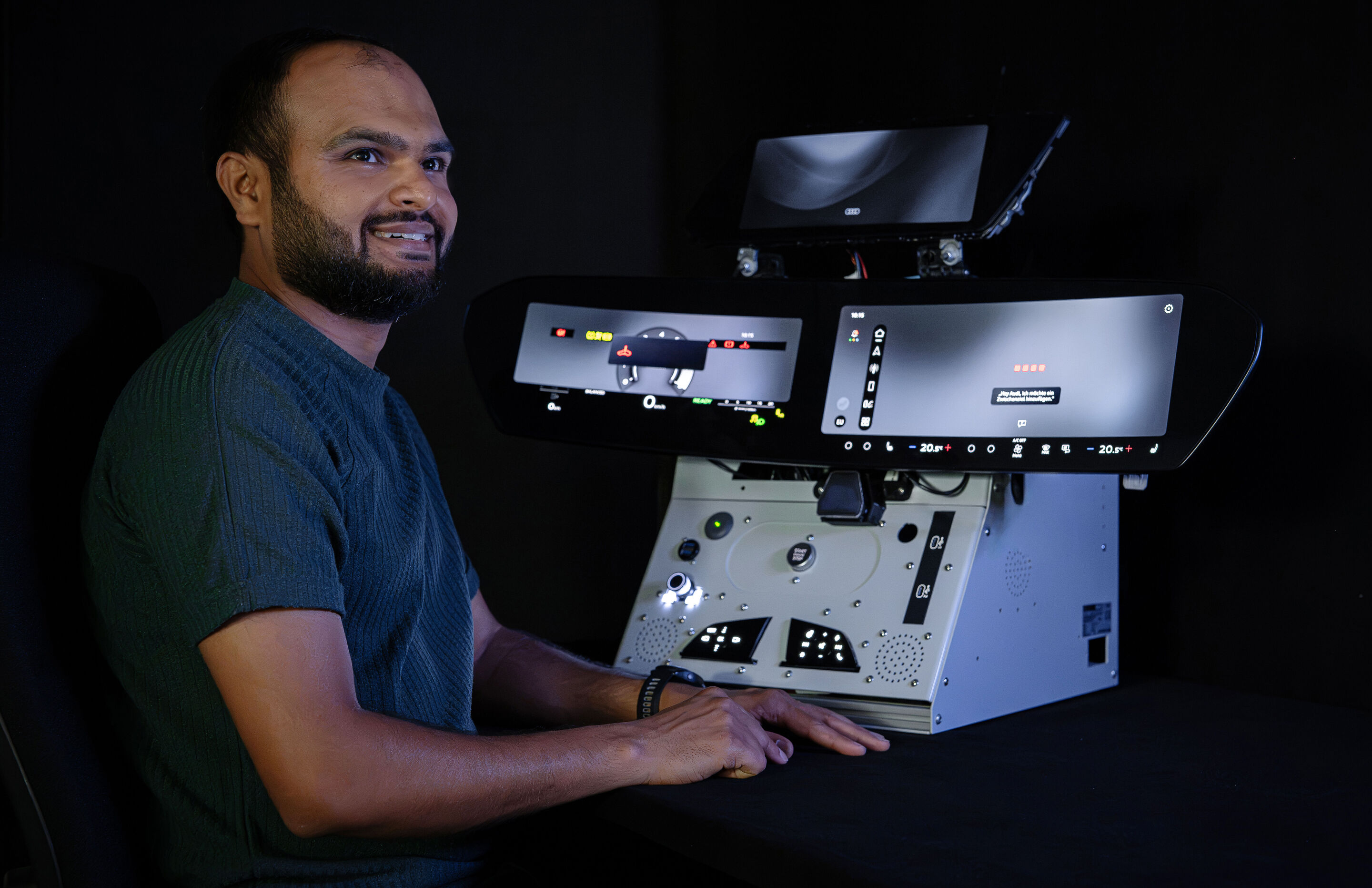
How do emerging AI technologies make their way from prototype to production vehicles? Working in pre-development for the Audi voice assistant, Chiragkumar Savani bridges the gap between emerging AI technologies and series production. In this interview, he talks about integrating ChatGPT, the hybrid architecture behind the voice assistant of Audi, and why speed, responsibility, and courage are essential when bringing AI into the car.
Chirag, what is your role at Audi?
Chirag: I work in pre-development as part of the Voice Assistant team. My role is to explore new AI technologies — especially large language models (LLMs) — and evaluate how they could realistically become part of a future Audi voice assistant.
What excites me most is this transition from idea to reality. This means designing architectures, building prototypes, and working closely with the team to see whether a concept can actually scale, meet quality requirements, and eventually move into series production. I’m not only coordinating – I also write code myself almost every day.

“Pre-development at Audi isn’t just about thinking about the future. It actively shapes what customers will experience later.”
Chiragkumar Savani, Pre-Development Audi voice assistant
What are you currently working on?
Chirag: Currently, I’m working on pre-development and prototyping projects for the next generation of the Audi voice assistant. That means experimenting with different system architectures and integrating large language models to see how future assistants could interact more naturally with users.
A big part of my job is asking questions like: What should a next‑generation voice assistant feel like? How does it integrate into software‑defined vehicle platforms? And how do we make sure innovation actually makes it into real cars?
A lot of my work is prototyping different approaches and evaluating their technical and product feasibility.
From a technical perspective, what makes the Audi voice assistant unique?
Chirag: One key aspect is low latency — responses typically happen in about a second for many vehicle-related requests.
The system understands whether a request is about vehicle control, navigation, general knowledge, or small talk, and then decides intelligently whether it should be handled locally in the car or via the cloud.
With the ChatGPT integration, we’ve also enabled true conversational capabilities that simply weren’t possible before.


Let's go a big deeper technologically: how does the current assistant work?
Chirag: In the series system, voice recognition is designed with a cloud‑first architecture in the car. Audio is processed and converted into text as part of this architecture. From there, the system performs domain classification. If a user says something like “set the temperature to 25,” that is identified as a vehicle-related request and handled accordingly within the system.
We also ensure user privacy for sensitive interactions such as phone calls, which are handled only in the vehicle and do not require contact lists to be transferred to the cloud.
If the user asks something like “How tall is Mount Everest?”, the request is recognized as an information query and routed to retrieve up-to-date information.
Only open-domain or conversational requests are forwarded to systems like ChatGPT.
Audi recently integrated ChatGPT into vehicles. What role did you play in that?
Chirag: I was the technical lead for that integration. The goal was to bring LLM‑powered conversational capabilities into existing Audi vehicles — and to do it fast, without compromising quality or safety.
We integrated ChatGPT as part of the online domains of the Audi assistant. Within just four months, we went from idea to production. Today, the system handles millions of queries per month from more than half a million unique users worldwide.
That moment realizing that something that started as a prototype is now used globally every single day — that was a real tech moment for me.
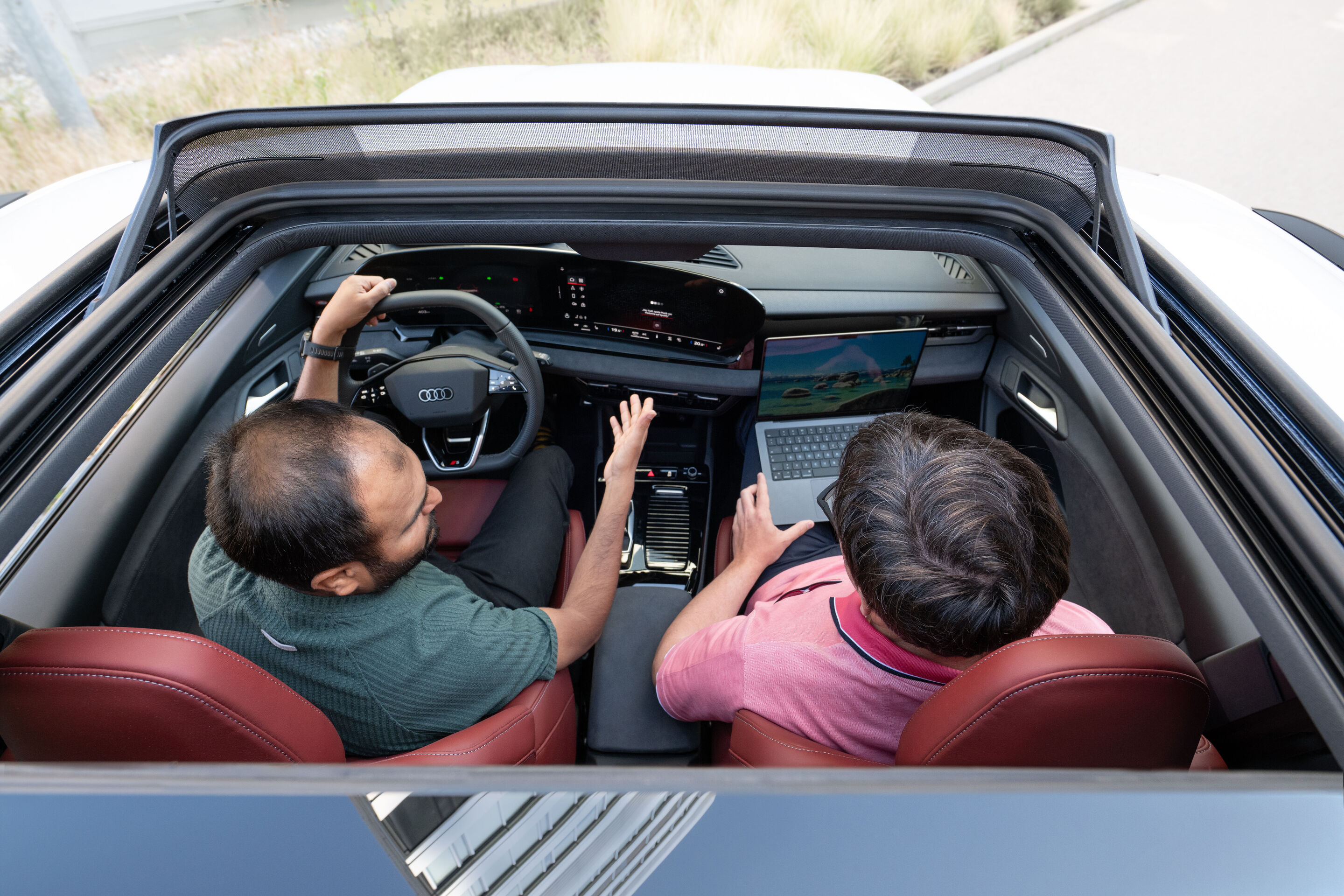
„Our hybrid architecture enables response times of under one second while providing the power of cloud-based AI whenever it is needed.“
Chiragkumar Savani, Pre-Development Audi voice assistant
Was there a particularly emotional moment in your career at Audi?
Chirag: Yes. One of my pre-development projects was showcased during Audi’s Annual Media Conference. Seeing an Audi board member interact live with an AI assistant I had helped develop — in front of journalists — was incredible.
That moment made it very real: pre‑development at Audi isn’t just about future thinking. It shapes what customers will experience.
Where do you see the next evolution of the Audi assistant?
Chirag: One direction is making the assistant more context‑aware and empathetic — within technical boundaries.
In pre-development, we’re exploring how signals like voice or interior and exterior camera data could help estimate whether a driver is stressed or tired. Based on that, the assistant could adapt its behavior — for example, suggesting a break or changing how it communicates.
Another area is personalization over time. If users repeatedly ask for Italian restaurants, the system could learn that preference and respond more naturally over time. Additionally, current smart systems that rely on static scenarios should be replaced with AI-driven, dynamically learning models. Technically, the challenge is doing this in a transparent, responsible way.
What motivates you most about your role?
Chirag: Seeing technology move from an idea to real-world use. When millions of drivers interact with something you helped build, that’s extremely motivating.
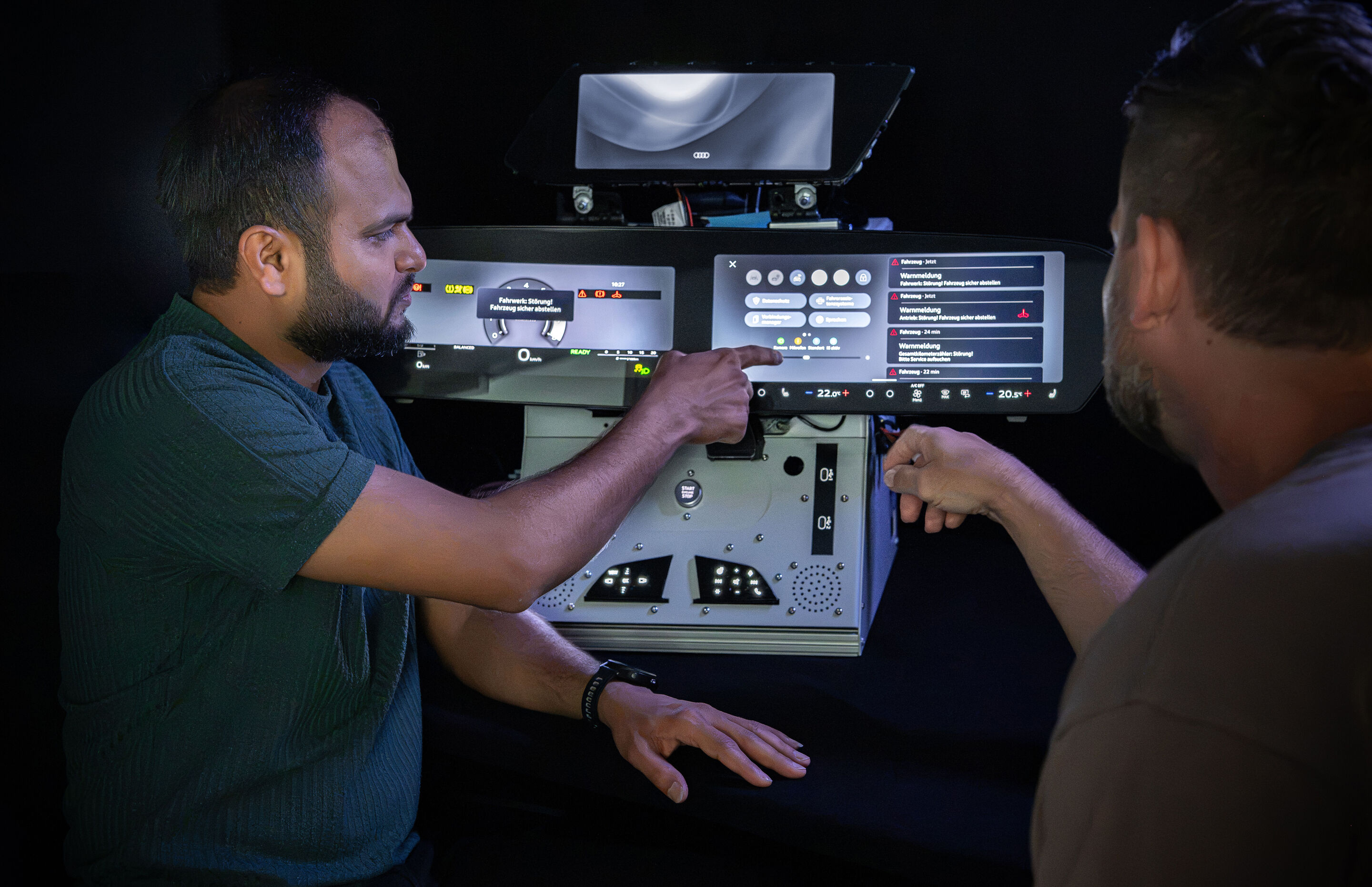
I also like the way we work as a team. We don’t just define requirements - we implement solutions ourselves, test them in real cars, and take responsibility when something doesn’t work.
How do you and your team live the Audi values in everyday work?
Chirag: Trust, responsibility, courage, and passion are part of our everyday work. We openly address weaknesses, take responsibility by building solutions that are robust and ready for series production, and have the courage to challenge existing architectures when needed. When a prototype clearly improves the user experience and moves closer to becoming a real feature in the car, that passion is something we immediately feel across the team.

Your vision for moving forward?
Chirag: I want to help shorten the path from new AI technology to real customer features — without compromising on quality, safety, or responsibility.
If a new technology becomes available, I want us to be able to evaluate it quickly and, if it makes sense, bring it into the vehicle within weeks rather than years. That’s what we’re working toward as a team.