Inclusion at Audi: “I have a voice”
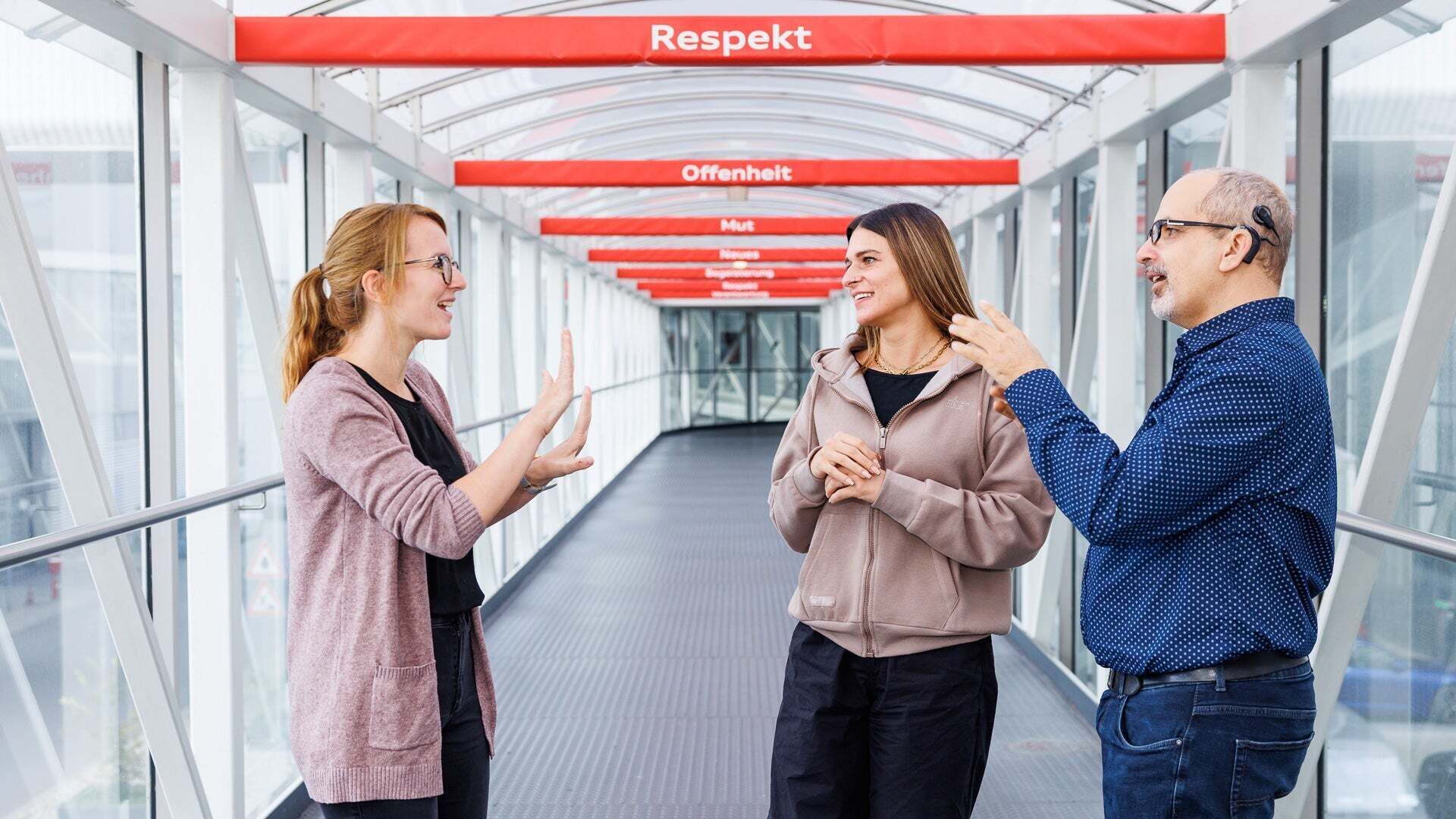
Deaf employees at the premium manufacturer? Audi is showing how it can work.
Integrating severely disabled people and people with restrictions is an important human resources goal at Audi.The company wants to improve conditions so that all employees can apply their skills as effectively as possible.
For many years, Audi has been committed to inclusion at its sites. Whether they are blind or visually impaired, wheelchair users, deaf or autistic: AUDI AG currently employs almost 3,400 people, including apprentices, with a wide range of disabilities at its Ingolstadt and Neckarsulm sites. This corresponds to a severe disability rate of six percent, which is above the statutory minimum requirement Each year, 8 to 10 apprenticeship places are given to young people with severe disabilities. In the past 10 years, around 80 severely disabled people have been trained in Ingolstadt and Neckarsulm and then hired on a permanent contract.
Alternative positions for employees with restrictions
Additionally, the Audi family also includes people who have work restrictions and who contribute to the company’s success every day. For example, if employees from production are no longer able to continue in their positions for health reasons, they are given the option of working in the services area through our “50 Permanent Posts” Program. Among other things, these employees with work-related restrictions engage in services such as delivering smartphones and tablets.
“The goal of the 50 Permanent Posts Program is to give employees long-term prospects.”
Tobias Munzel – Inclusion Officer at Audi Ingolstadt
Inclusion at Audi: accessibility, ergonomics, appreciation
There are many reasons for AUDI AG’s commitment. For one thing, diversity is a factor in the company’s success and disability is part of that diversity. Additionally, there are legal requirements: Since 2001, companies with more than 20 employees have been required to ensure that five percent of their workforce consists of people with severe disabilities or individuals granted equivalent status.
“We benefit from each individual unique perspective,” explains Szonja Pajor, HR Business Partner and Inclusion Officer at Audi in Neckarsulm. “But that means that there has to be an atmosphere in which everyone, regardless of their requirements, can apply their knowledge and talents in the way that is most helpful,” says Pajor.
To make that possible, one focal point for integrating and including people with disabilities is ergonomics and accessibility. Ultimately, all Audi employees benefit from doors that open automatically. “But the most important thing is for people to look out for each other,” explains Jochen Biber, Audi’s Deputy General Representative for the Severely Disabled. He says that inclusion means more than just an ergonomic workspace or reading aids.
Consideration for people with autism and Asperger’s: more time, more breaks
Tim is one example of how well that can function. After training as an IT specialist with a focus on application development at the Audi site in Ingolstadt, he now works in the department responsible for quality control systems. He has known since elementary school that he has Asperger’s syndrome, a form of autism. Autistic people not only find it difficult to look others in the eye while talking to them or to recognize irony or sarcasm, but they also prefer quiet settings and like to have more space to themselves, particularly at work. The people around them need to be appropriately informed and respond with patience.
At Audi, Tim has been able to set up his desk in a corner of an open-plan office so that he can work undisturbed. He has also learned to say what he needs. “I sometimes get overwhelmed by simple situations, and I just need some time.” That is something that his colleagues know; his coworkers, he says, are very sympathetic.
Inclusion at Audi also includes apprentices
When a young person with a disability applies for an apprenticeship at Audi, they not only have a personal meeting with the trainers, but during an internship they also get an opportunity to figure out, together with apprentices already established at the company if the job, workplace and environment are right for them.
“People like Tim are an asset to the team,” says Christoph Hermreck, Head of Audi Vocational Training and Dual Study Programs Ingolstadt. “They don’t just learn to communicate more precisely; they also establish a mindful way of interacting with one another and an appreciation for their own privileged situation.” That is a real advantage for team cohesion and an important step toward integrating disabled people.
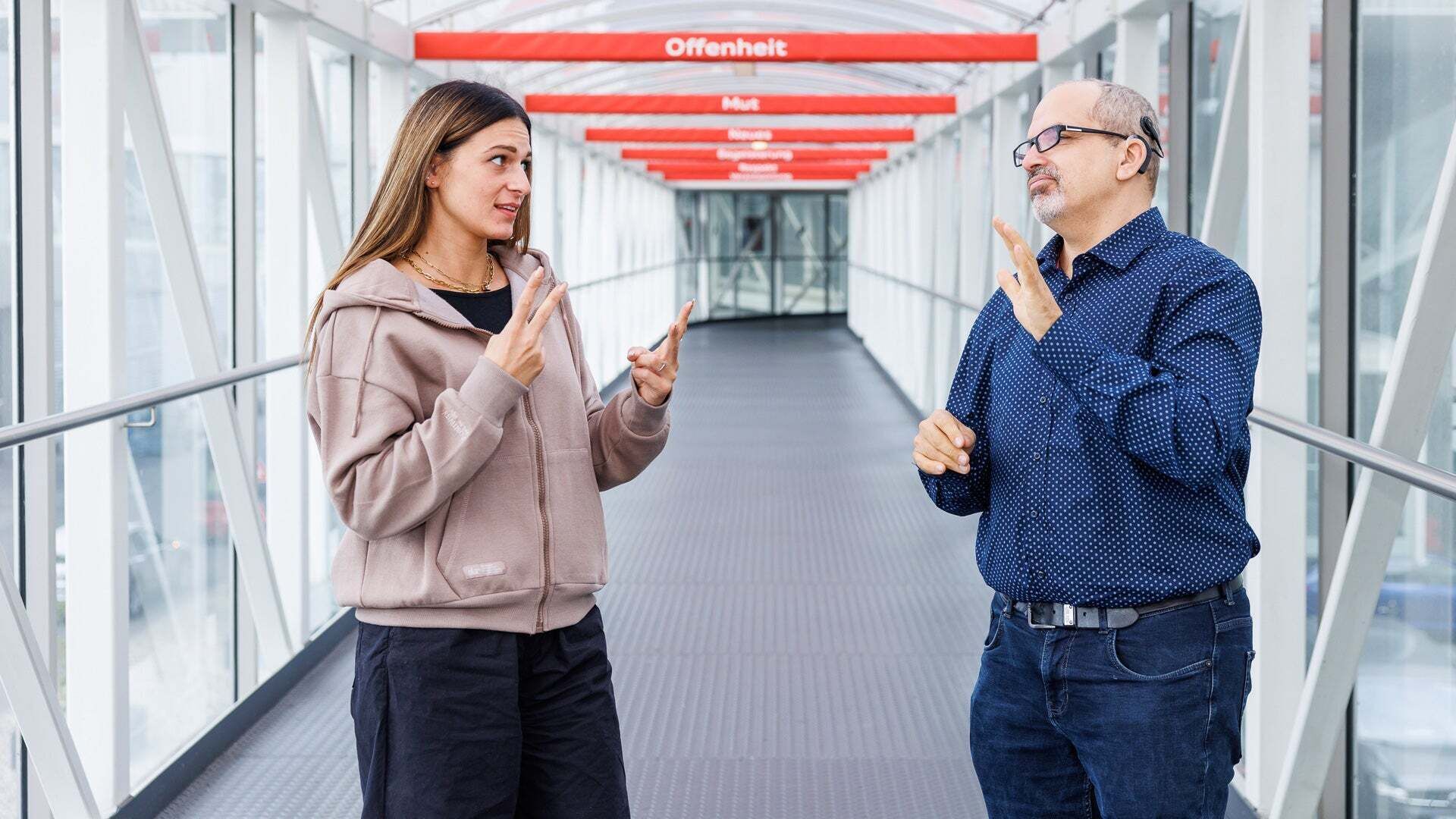
Being deaf or hard of hearing at Audi Neckarsulm: more tools
Vanessa also did her apprenticeship at Audi. She is a deaf employee who has been working in Audi A6 assembly in Neckarsulm since 2010. Her colleague Mathias is also deaf and now works in facility management after 22 years in production. “My department is extremely helpful and very receptive, including with new technical options,” he explains. Mathias and Vanessa would like to see even more technical support for themselves and their 53 deaf colleagues in Ingolstadt and Neckarsulm, including IT programs that convert speech into text.
That’s because everyday communication with colleagues can be difficult, they say. They often do not have much spare time to communicate using a text program on a smartphone or to write things down, Vanessa explains. “I can’t just communicate with people in passing, the way people who hear can,” she says.
“I know I have a voice here at Audi. I won’t be overlooked.”
Vanessa – Employee assembly at Audi Neckarsulm
In order to make it easier for people who are deaf or hard of hearing to participate, sign language interpreters have been present, whenever possible, for the past three years at works assemblies, medical consultations, conversations with superiors and weekly group discussions at Audi Neckarsulm. Of course, this cannot be arranged at short notice. It requires considerable commitment and organization from everyone involved across Production, Human Resources and the Works Council.
“We want deaf people to be included as equals,” says Kai Loeprecht. He is a representative of the Severely Disabled Employees’ Council in Neckarsulm. At the same time, self-determination is the top priority. Anyone who does not want to communicate through an interpreter does not have to. “We’re also looking into what other technical options there are to improve communication,” Szonja Pajor adds. Not every individual need can be met, but the aim is to enable communication with one another – across all channels.
Inclusion on the job at Audi
“I’m grateful that Audi hires people with disabilities and enables them to have normal jobs,” says Vanessa. “But being deaf isn’t a disability to me. I know I have a voice here at Audi. I won’t be overlooked, and nothing is just decided for me.”
Tim would not want to change anything about himself or his situation either. “Asperger’s makes me the person I am, and I like myself as I am.” That goes for his job as well.