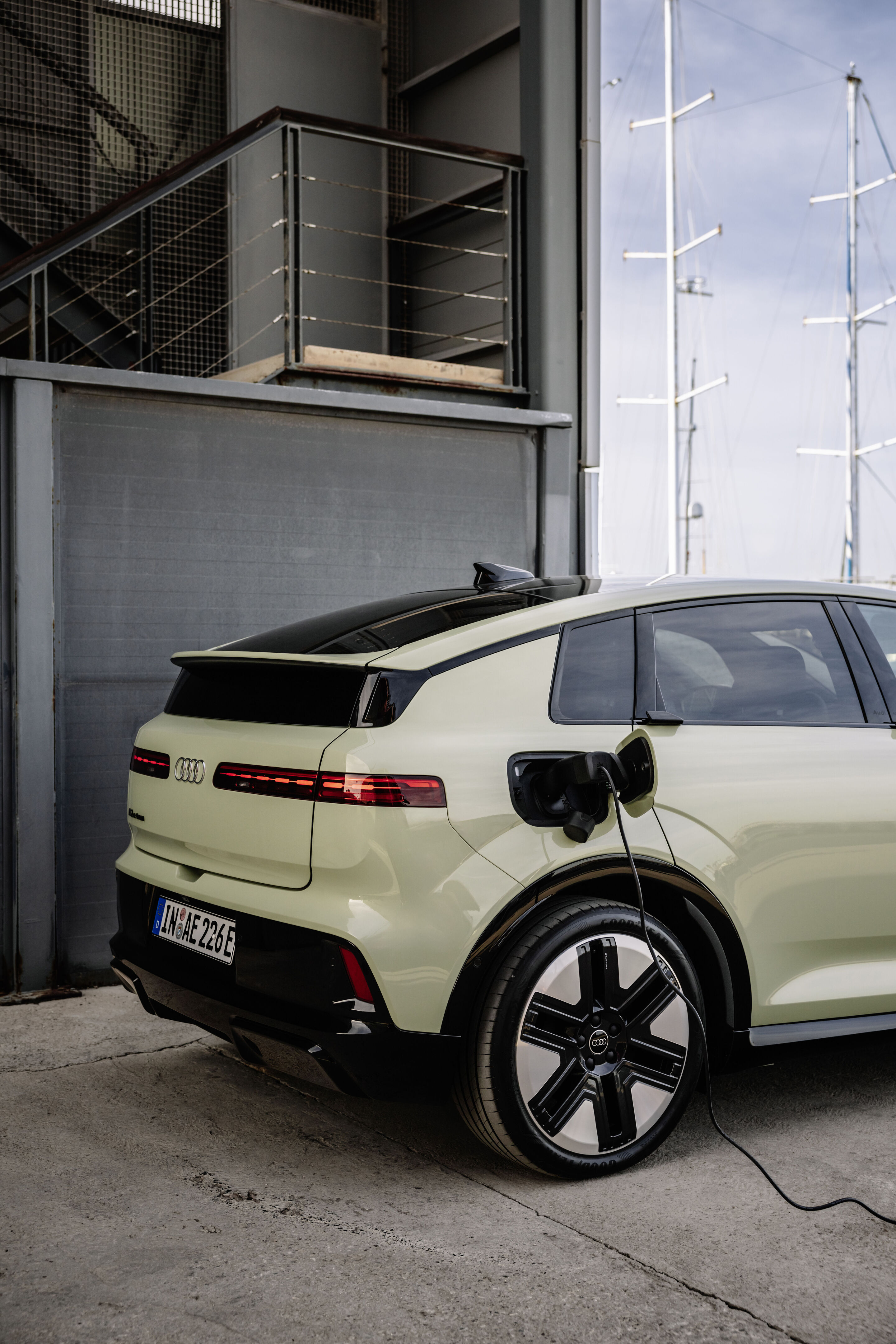
Bidirectional charging: Audi A2 e-tron as a mobile energy storage system
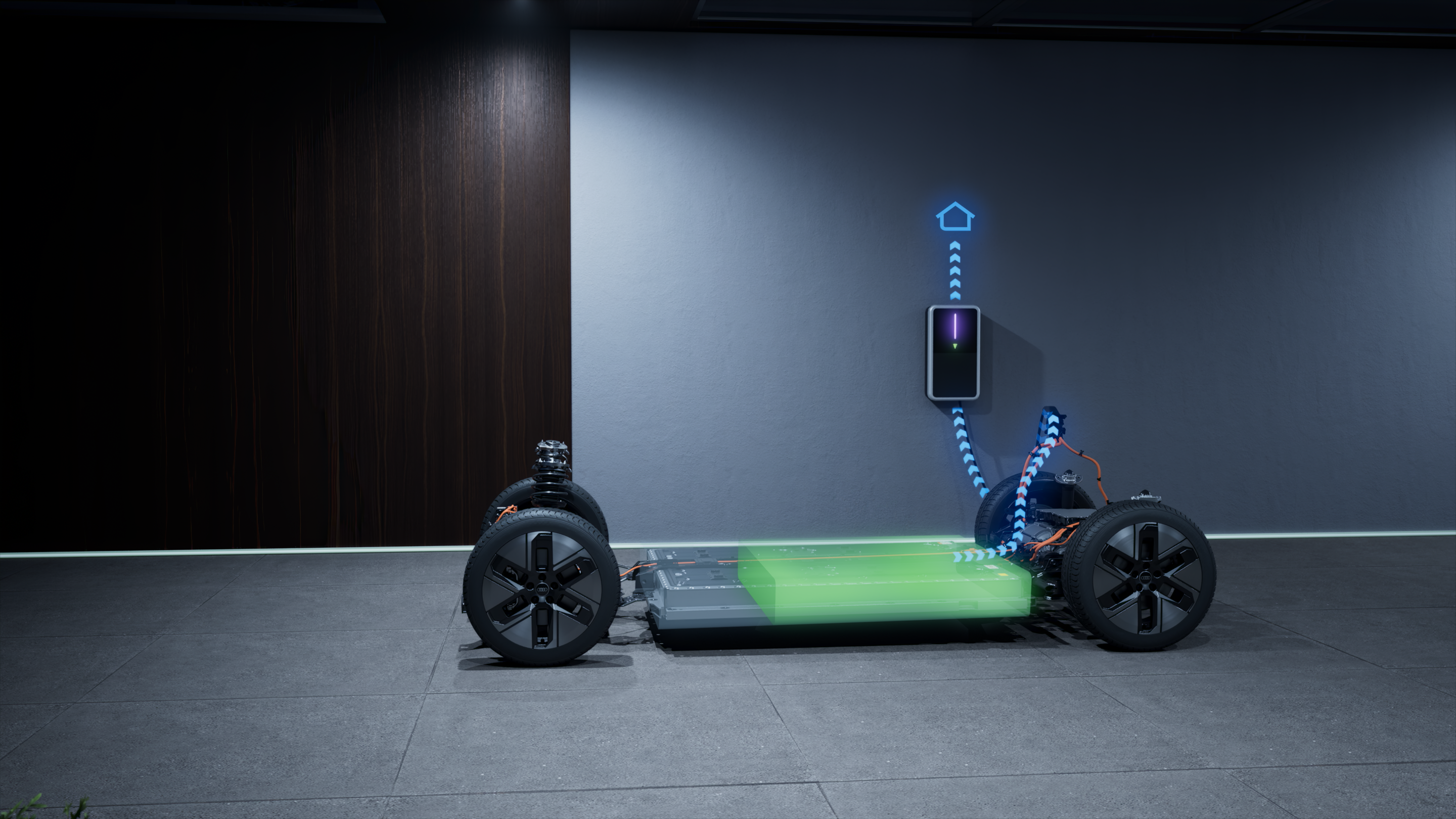
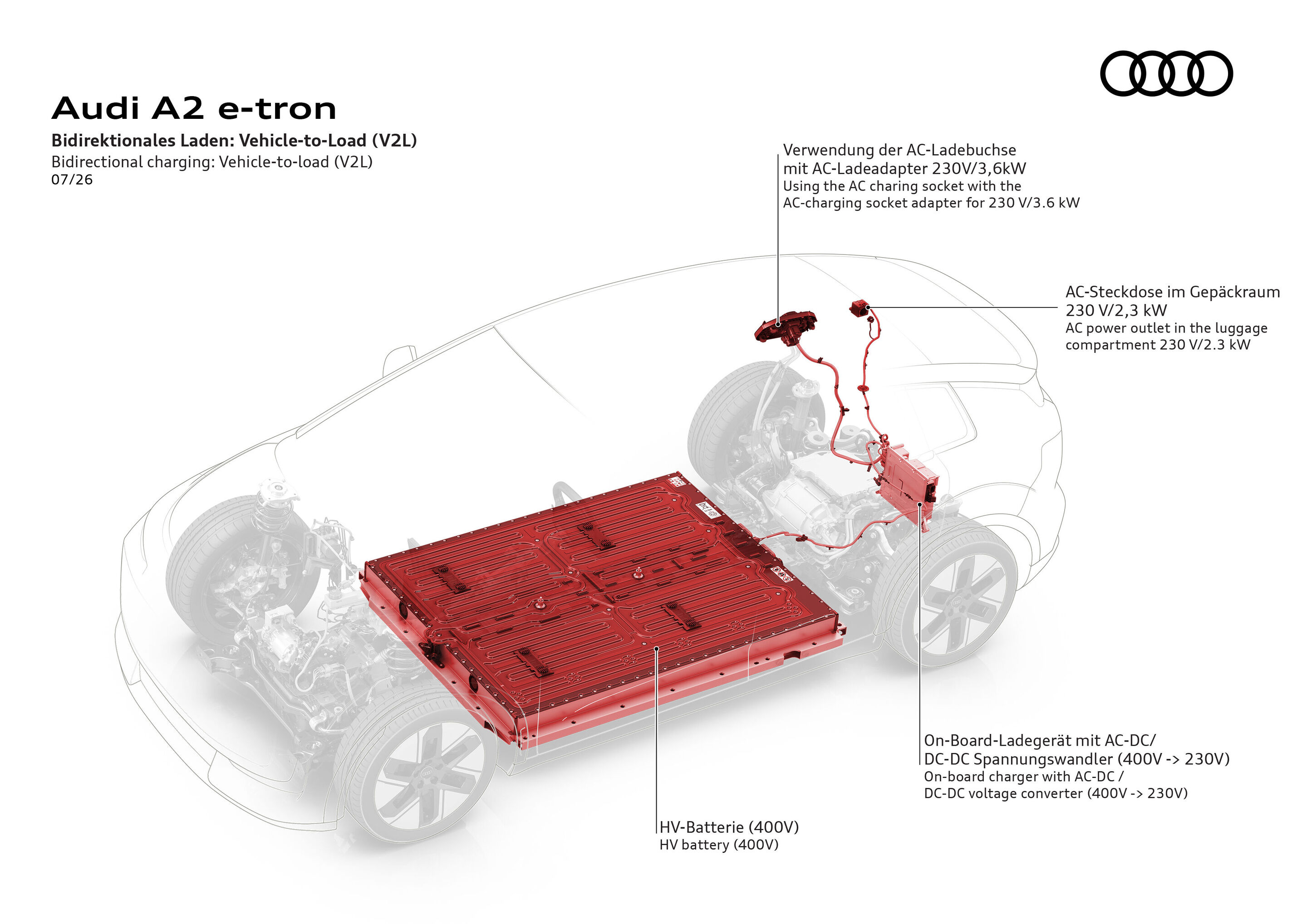
The high-voltage battery of an electric car can not only provide the energy for driving, but can also be used specifically as a power source beyond the road. With bidirectional charging functions, the Audi A2 e-tron enables external devices to be supplied via Vehicle-to-Load (V2L) and the use of stored energy in the household via Vehicle-to-Home (V2H). In the future, Vehicle-to-Grid (V2G) will be added for feeding energy back into the public power grid.
Key facts at a glance
- New Audi A2 e-tron available to order in three battery variants (52, 61 and 84 kWh)
- DC charging power from 100 to 183 kWh
- DC charging from 10 to 80 percent in 24 to 29 minutes
- Vehicle-to-Load (V2L) and Vehicle-to-Home (V2H) expand the use of the high-voltage battery
- Vehicle-to-grid (V2G) will enable energy to be fed into the public power grid in the future
Battery system with coordinated thermal management and charging electronics
Focus on thermal management and charging efficiency
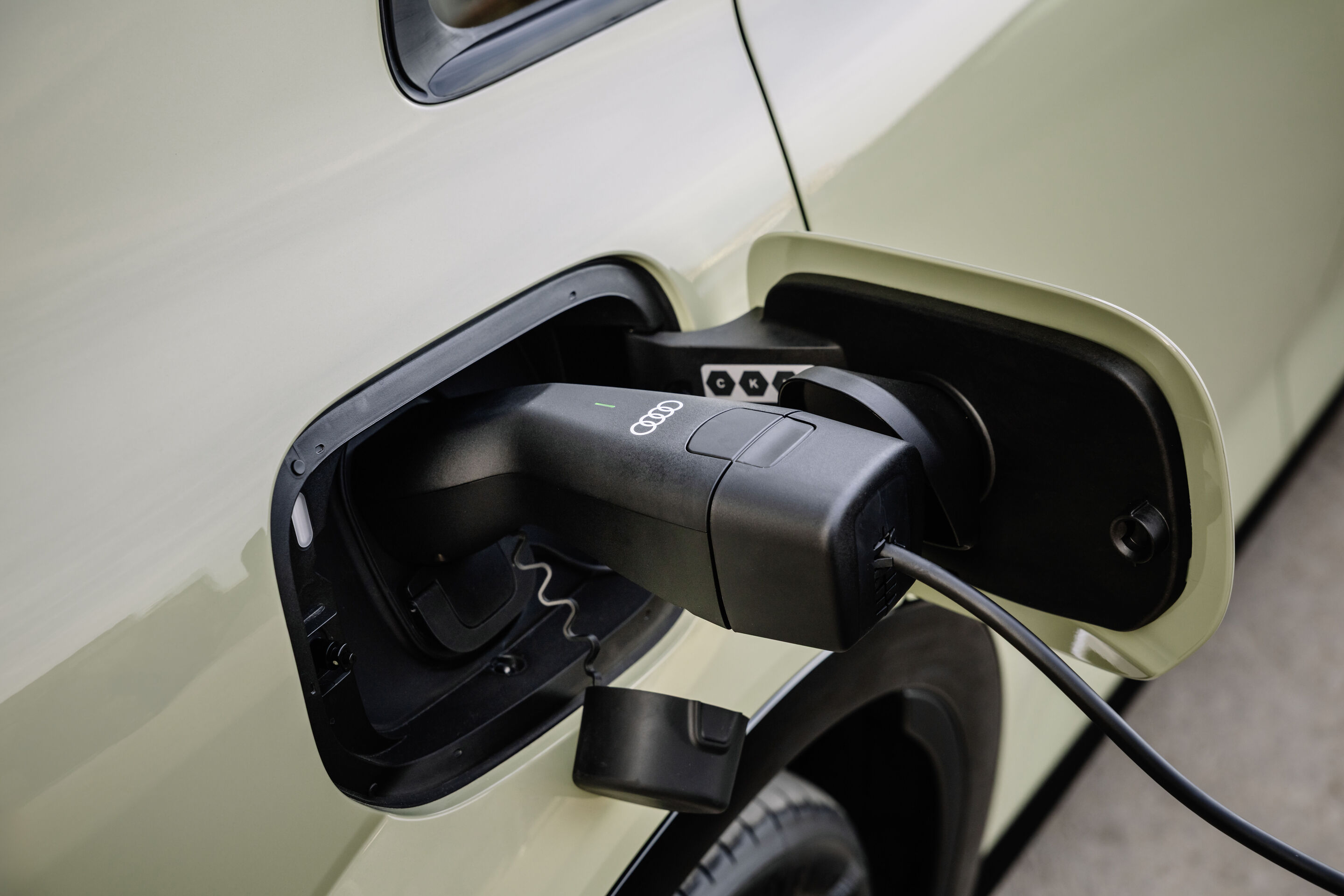
DC charging and integrated charging electronics
The following table provides an overview of the charging time for DC charging from 10 to 80 percent filling status of the battery, depending on the respective model variant and battery capacity.
Power in kW | 125 | 140 | 170 | 240 | |
Gross battery capacity in kWh | 52 | 61 | 84 | 84 | |
Charging time DC 10-80 % in min | 24 | 26 | 29 | 29 |
The specified charging times apply under defined test conditions. The actual charging time may depend on battery temperature, state of charge and available charging power, among other things.
The battery in the A2 e-tron is not only designed for a short-term power peak. The focus for everyday use is on a plannable, controlled and usable charging process. For this purpose, an advanced component is used that combines on-board chargers and DC/DC converters, the so-called OCDC 2.0. It includes a higher number of metal-oxide-semiconductor field-effect transistors (MOSFETs), adapted AC output management and corresponding software adjustments.
Battery management
A battery management controller takes over the monitoring and regulation of the battery. In LFP batteries in particular, a flatter Open Circuit Voltage (OCV) characteristic curve of the cells makes it more difficult to precisely determine the state of charge and aging. For this reason, Audi uses an adapted algorithm. The information obtained is incorporated into the calculation of range, charging behavior and operating strategy.
Extended energy use
The battery in the A2 e-tron is not only used as an energy storage system for driving, but can also generate additional benefits outside the vehicle, depending on the application.
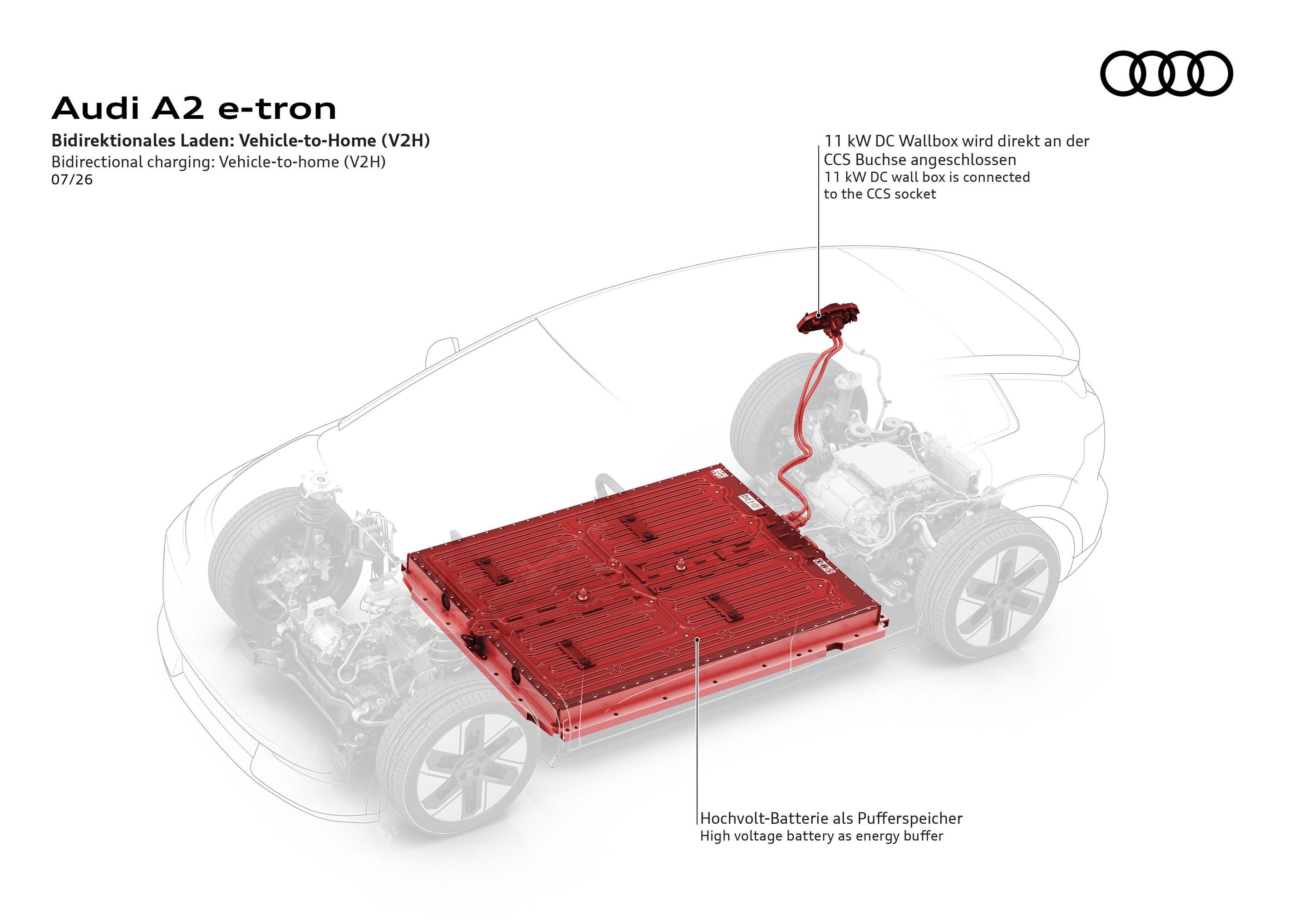
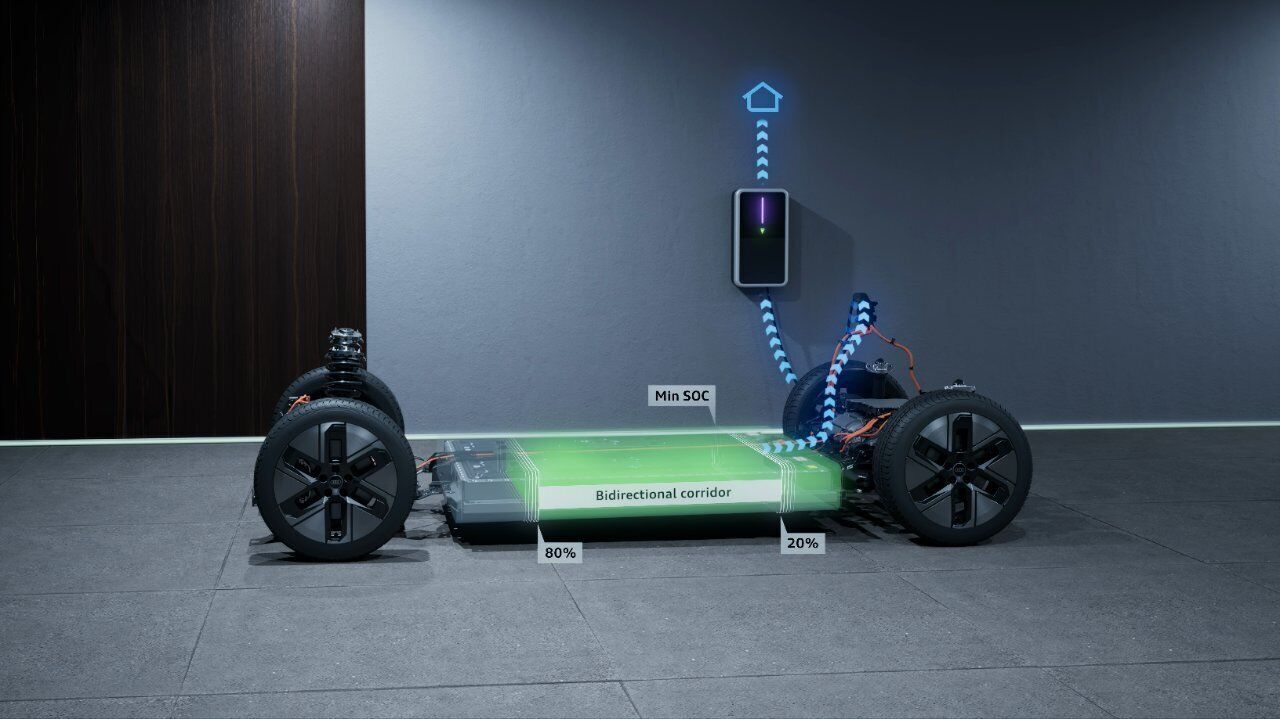
Vehicle-to-Load(V2L) makes it possible to supply suitable external consumers with electrical energy via the vehicle. This makes the A2 e-tron a mobile and flexible energy source. The Vehicle-to-Home (V2H) function uses the A2 e-tron as a large battery storage system and, in conjunction with a compatible, bidirectional DC wallbox, makes it possible to use the stored electricity for the household.
Depending on the market, vehicle equipment, compatible charging infrastructure, home installation, regulatory requirements and, if necessary, a suitable electricity tariff, the compact Audi will enable Vehicle-to-Grid (V2G) in the future. Energy from the vehicle battery is provided for the public power grid. This makes the battery part of a larger energy system.
Conclusion
With the A2 e-tron, Audi is pursuing the goal of making electric mobility in the compact segment suitable for everyday use, efficient and flexible. The interplay of coordinated thermal management, intelligent charging electronics and advanced battery management ensures stable and reproducible charging behavior. At the same time, bidirectional charging functions extend the battery's range of application beyond driving and thus make the vehicle an active part of the energy system. In this way, the A2 e-tron combines efficient charging, intelligent energy use and a high level of everyday usability in a future-oriented overall concept.
Animation: Audi A2 e-tron - Battery technology and bidirectional charging
Frequently Asked Questions
What does bidirectional charging mean?
Bidirectional charging means that an electric car can not only absorb electricity from the grid, but also return it. This turns the vehicle into a flexible energy source.
What can be charged?
With bidirectional charging, it does not matter whether an external device is charged (Vehicle-to-Load; V2L), a house is supplied with electricity (Vehicle-to-Home; V2H) or energy is fed into the public power grid in the future (Vehicle-to-Grid; V2G).