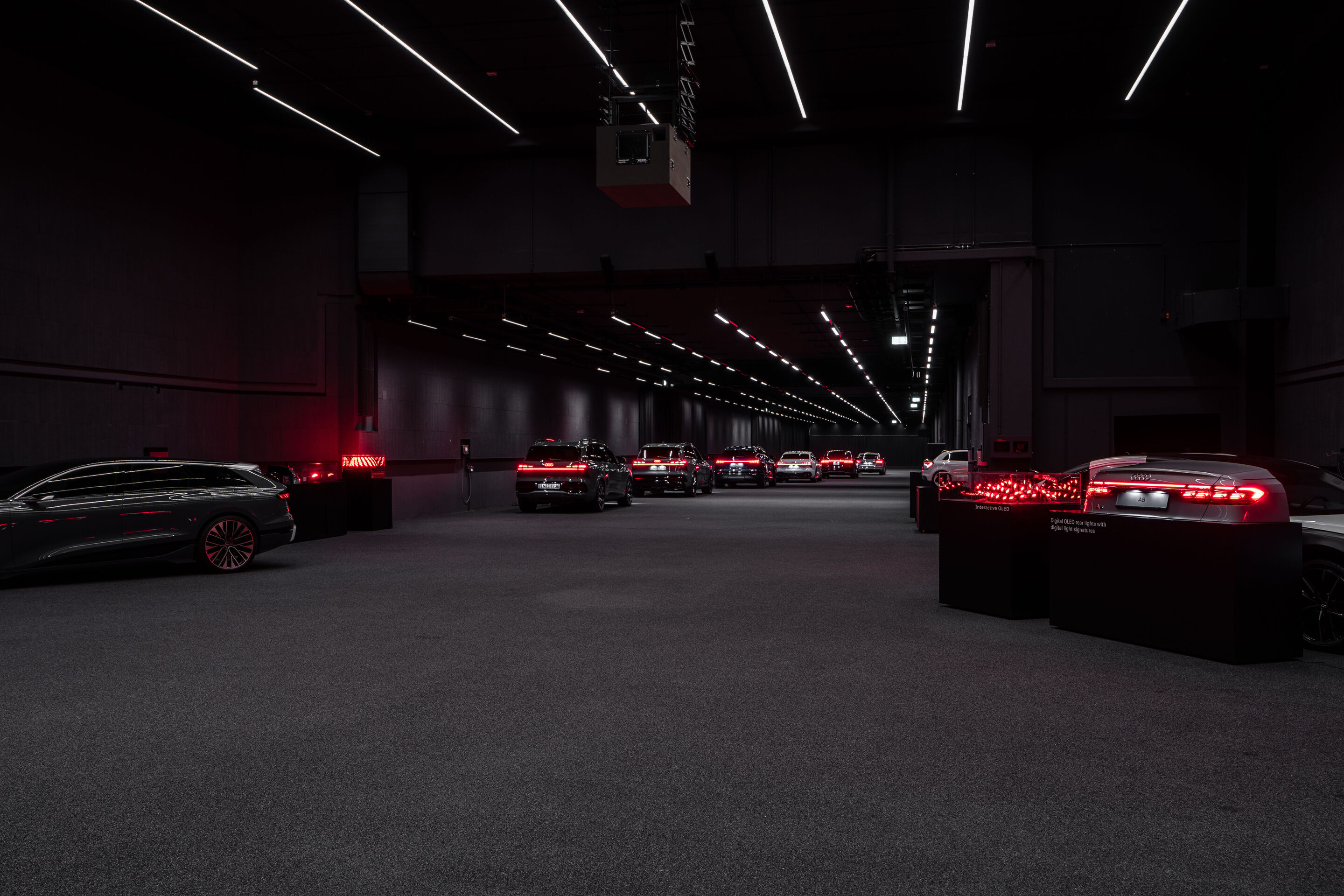
A world first on the Audi Q9: digital OLED panel with a curved design
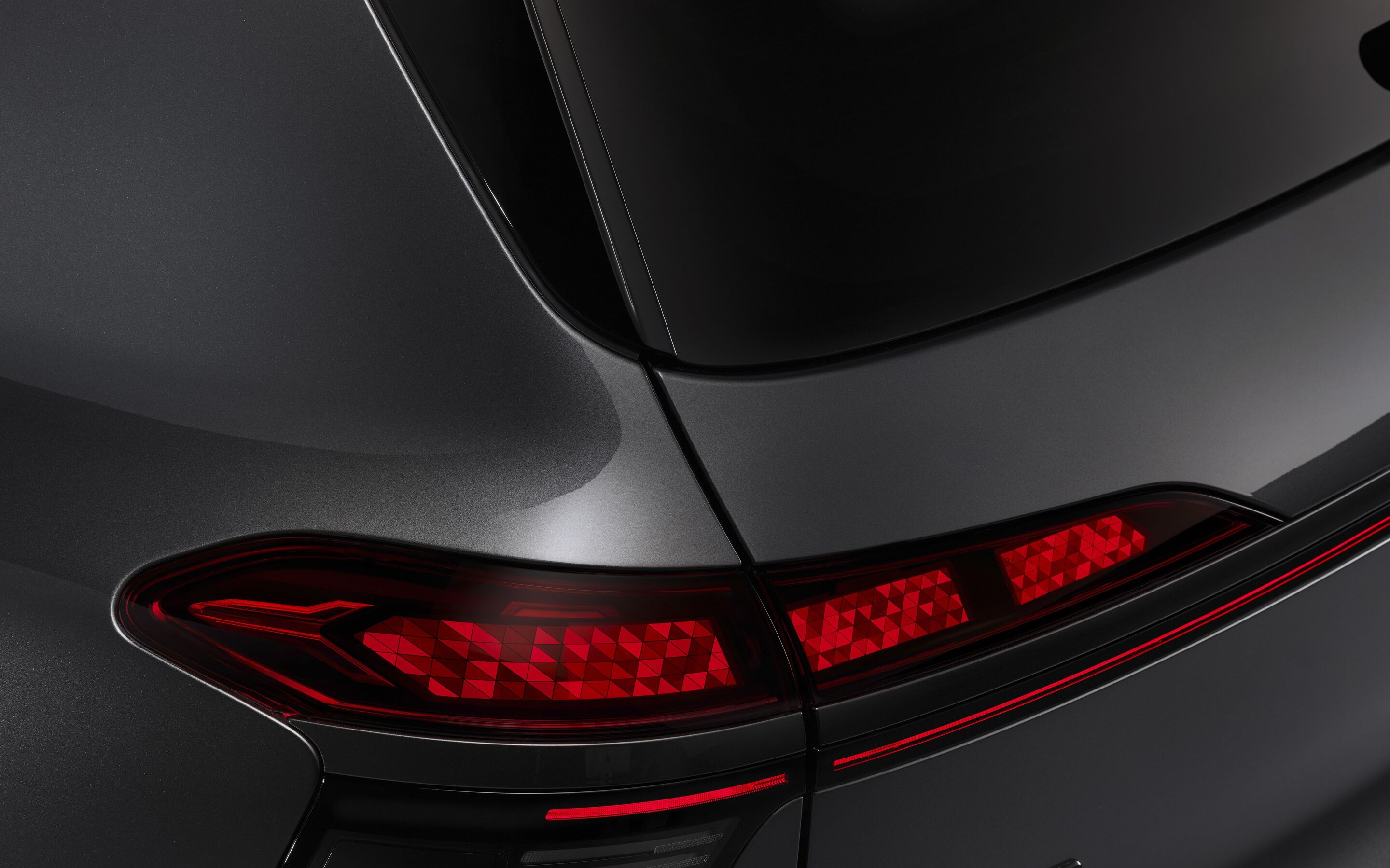
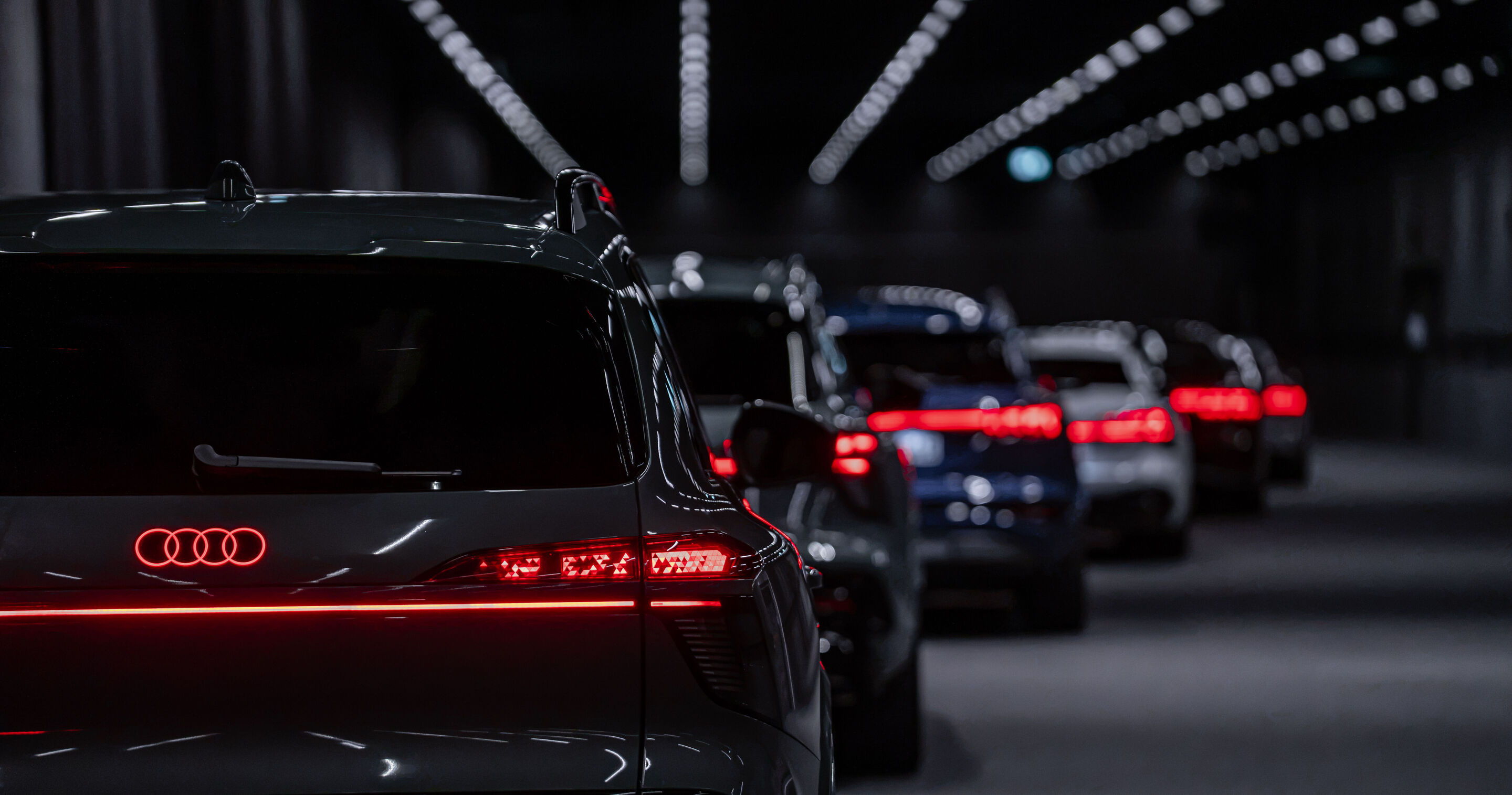
The new Audi Q9 marks the production debut of a technological world first: for the first time in the automotive industry, a three-dimensionally curved digital OLED panel is being used. Third-generation digital OLED technology now offers new possibilities for safety and communication. The Audi Q9 thus marks a milestone in the development of Audi lighting technology, whose OLED success story began ten years ago. As the only automotive manufacturer to consistently advance OLED technology, Audi has transformed it from an innovative light source into an intelligent, digital means of communication.
Key facts about lighting in the Audi Q9:
- World first in the Audi Q9: the first three-dimensionally curved digital OLED panels used in a production vehicle
- Curved digital OLED panels precisely follow the contours of the vehicle and improve lateral visibility
- The carrier glass of the digital OLED panels is only 0.1 millimeters thick
- Ultra-thin glass technology enables a bend radius of up to 200 millimeters
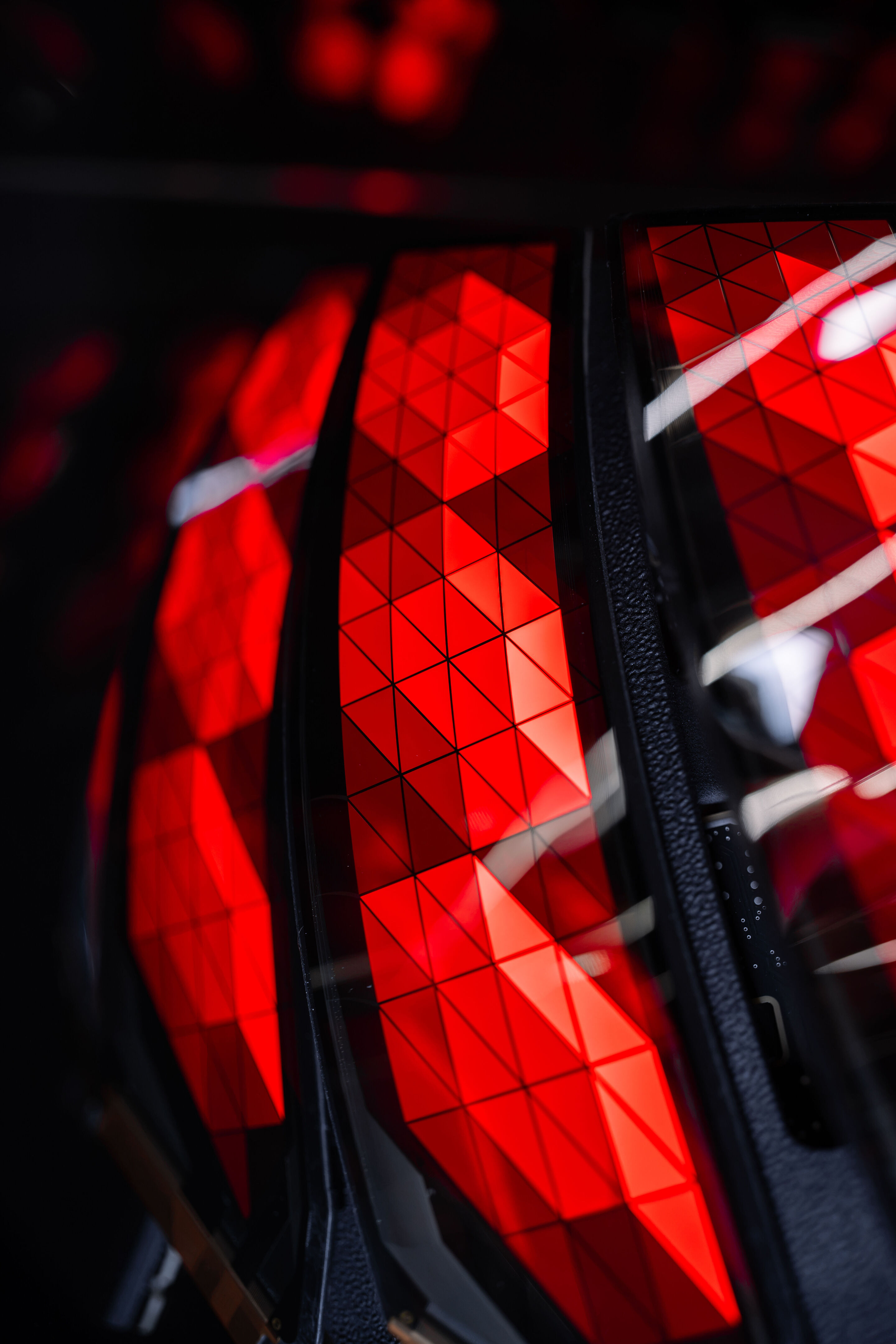
- Third-generation digital OLED technology with 512 segments distributed across six large digital OLED panels
- Audi’s largest OLED panel to date: a curved outer panel with 99 segments; a middle panel with 84 segments; and an inner panel with 73 segments
- Communication light contributes to increased road safety
- New static, active, and semi-active digital light signatures with 3D effects
- Ten years of OLED expertise in production vehicles
- Advanced turn signal for clear communication with the vehicle’s surroundings
- Digital Matrix LED headlights with the latest micro-LED technology for intelligent lighting assistance
- World premiere: curved digital OLED technology sets a new benchmark
The Audi Q9 is the first Audi model to use digital OLED panels in a curved design
This is made possible by innovative ultra-thin glass technology. The carrier glass of the OLED panels is just 0.1 millimeters thick, roughly the thickness of a human hair. This allows the panels to bend to a radius of up to 200 millimeters and follow the contours of the vehicle body.
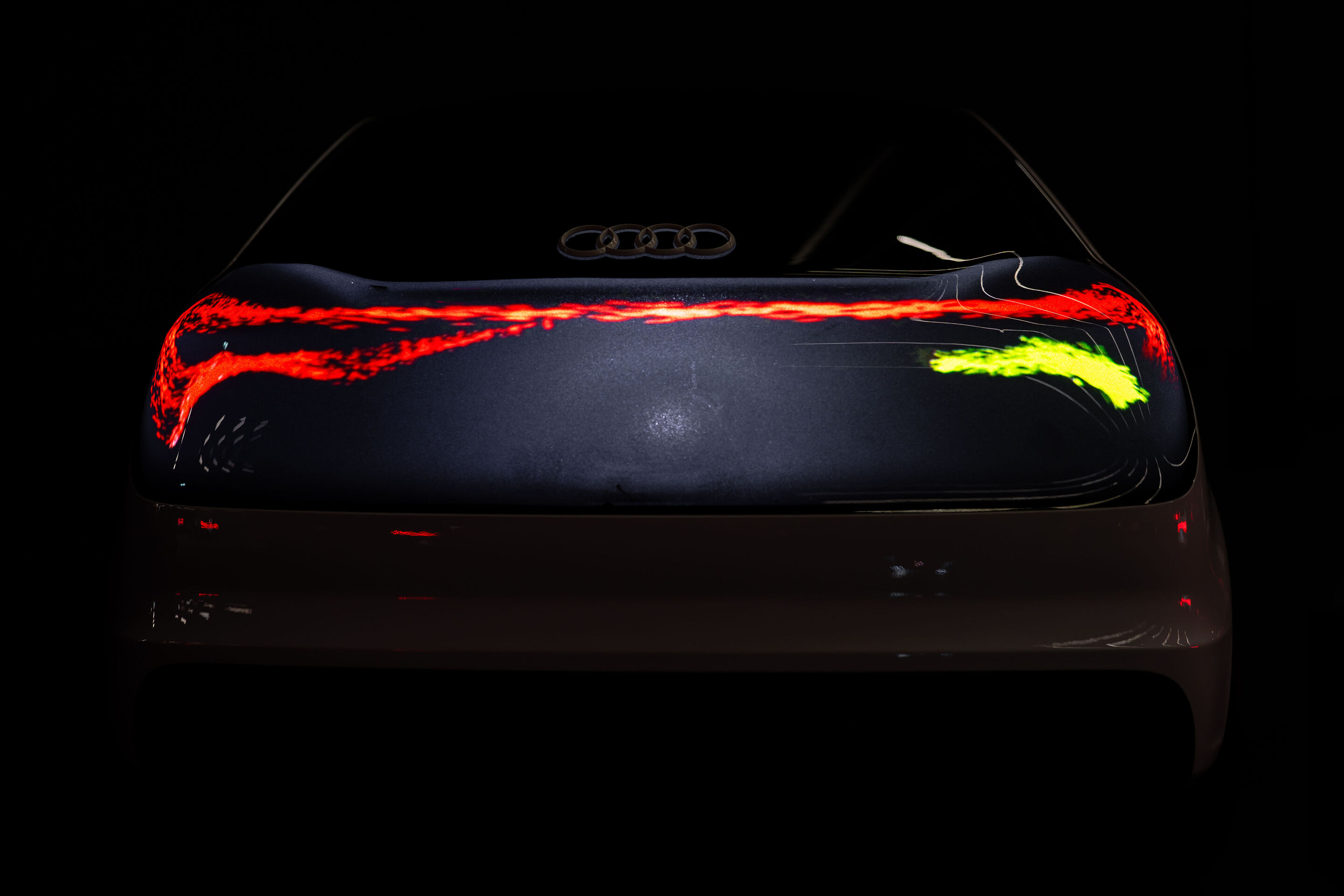
The three-dimensional design not only enables new options for design but also offers functional benefits. By positioning the OLEDs in the outer areas of the rear lights, the light is visible even from wider lateral viewing angles. The improved lateral visibility contributes directly to road safety. The communication light, with warning symbols integrated into the respective rear-light signature, can provide other road users with additional visual warnings of accident and breakdown locations.
The curved digital OLED panels are designed and validated to meet defined automotive requirements for durability, uniformity, and contrast. The technology combines innovative design with the hallmark qualities of OLED technology that Audi has continuously refined over the past decade.
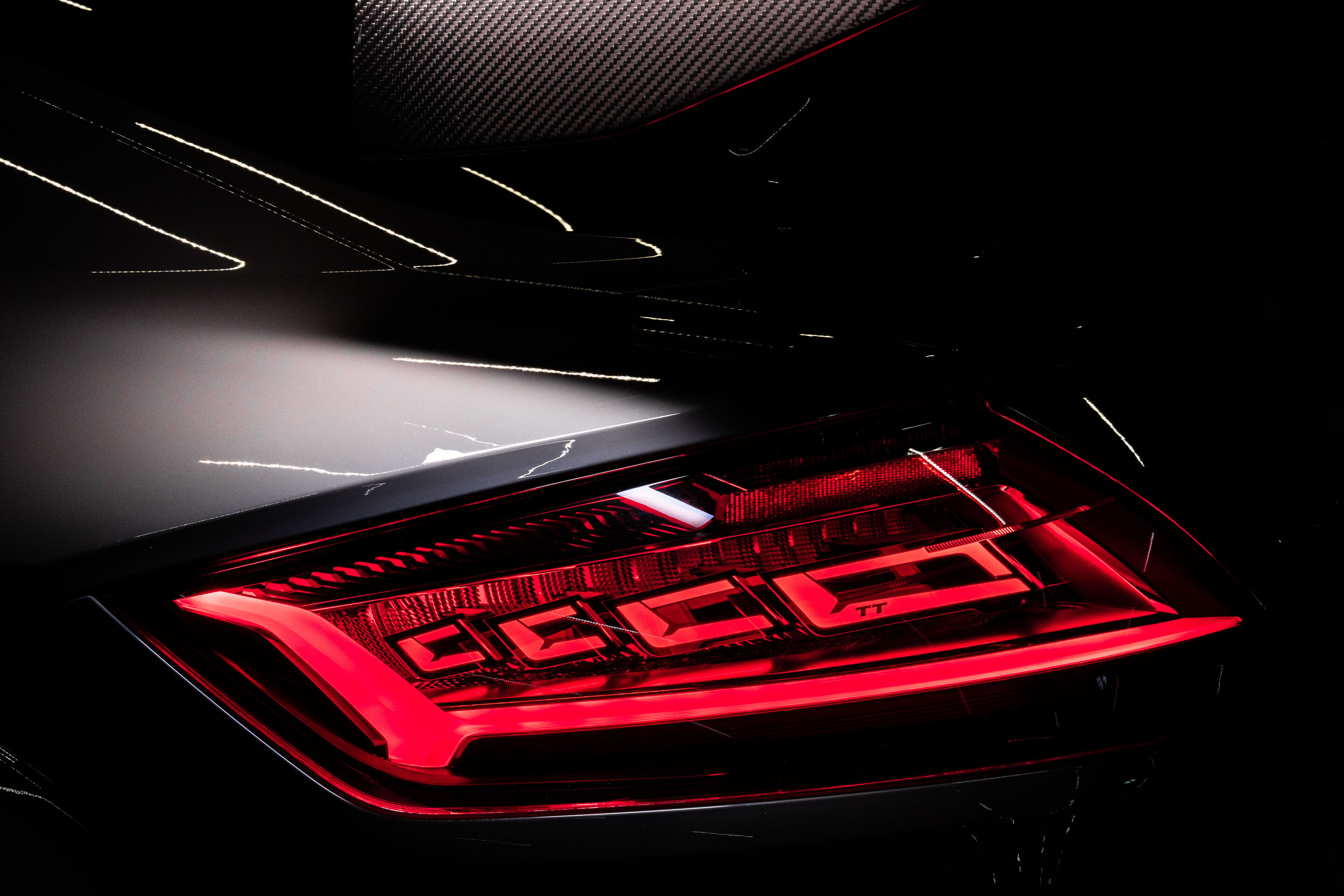
Ten years of OLED expertise in production: Audi continues to advance the technology
The success story began in 2016 with the Audi TT RS. As the first automaker in the world, Audi introduced organic light-emitting diodes (OLEDs) as a production rear-light technology, ushering in a new era of automotive lighting design. The surface light sources enabled unprecedented uniformity, high contrast, and dynamic lighting scenarios.
Just four years later, the next evolutionary stage followed. In 2020, the digitalization of OLED technology in the Audi Q5 made it possible for the first time to control individual segments and personalize the rear-light signature. Customers could choose from different digital light signatures and individually configure the lighting design on the rear of their vehicle.
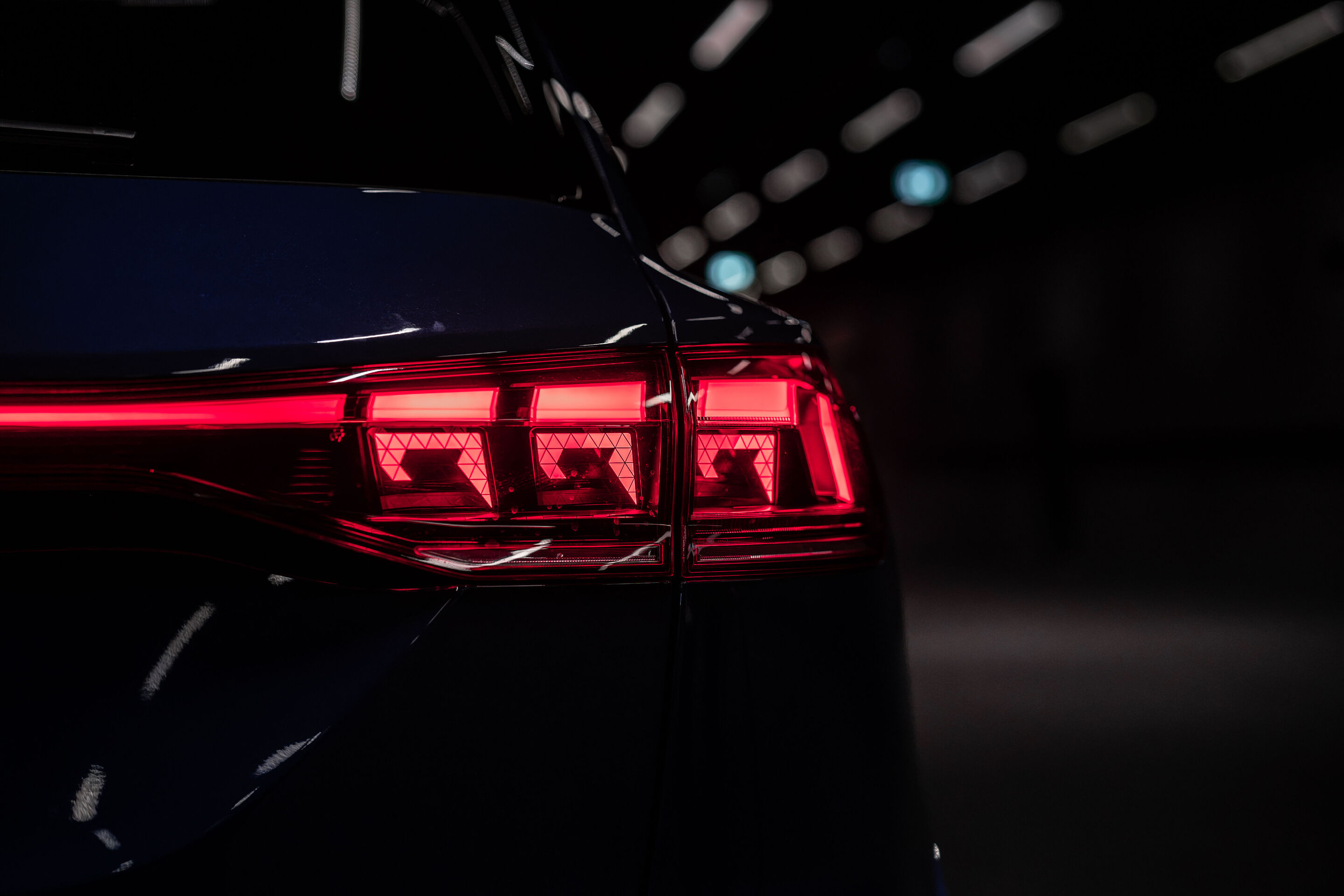
With the second generation of digital OLED technology, Audi continued to advance the technology with the Audi Q6 e-tron in 2024. The number of individually controllable segments increased tenfold, while new safety functions were added. The communication light also further increased road safety. Integrated warning symbols in the rear light could warn other road users at an early stage about critical situations such as breakdowns, emergency braking, or accident locations. This generation also includes the proximity-indication function first seen in the Audi Q5, which activates all digital OLED segments to attract attention when other road users approach the stationary vehicle.
Today, ten years after the OLED premiere, the technology has reached its most advanced stage yet with the Audi Q9 and the third generation of digital OLED technology. It combines emotional design with intelligent safety functions, creating a distinctive brand experience by day and night. The Audi Q9 thus marks a new milestone for the future of automotive lighting.
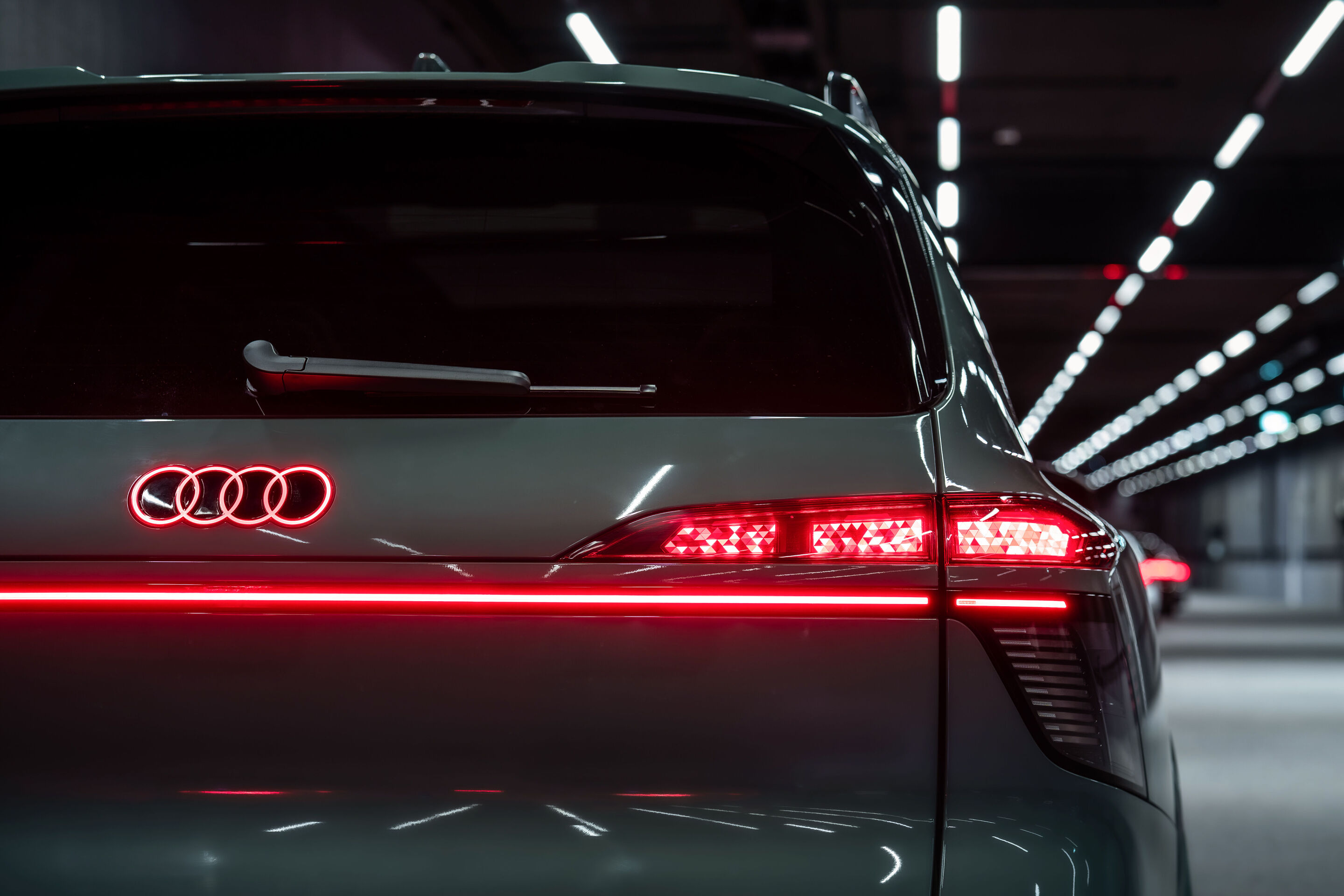
Third-generation digital OLED technology: greater expressiveness, enhanced safety, and more personalization
The third-generation digital OLED rear lights in the new Audi Q9 feature a total of 512 digital segments distributed across six panels. The world’s first curved digital OLED panel, with 99 segments, is also the largest OLED panel Audi has ever used in a production vehicle.
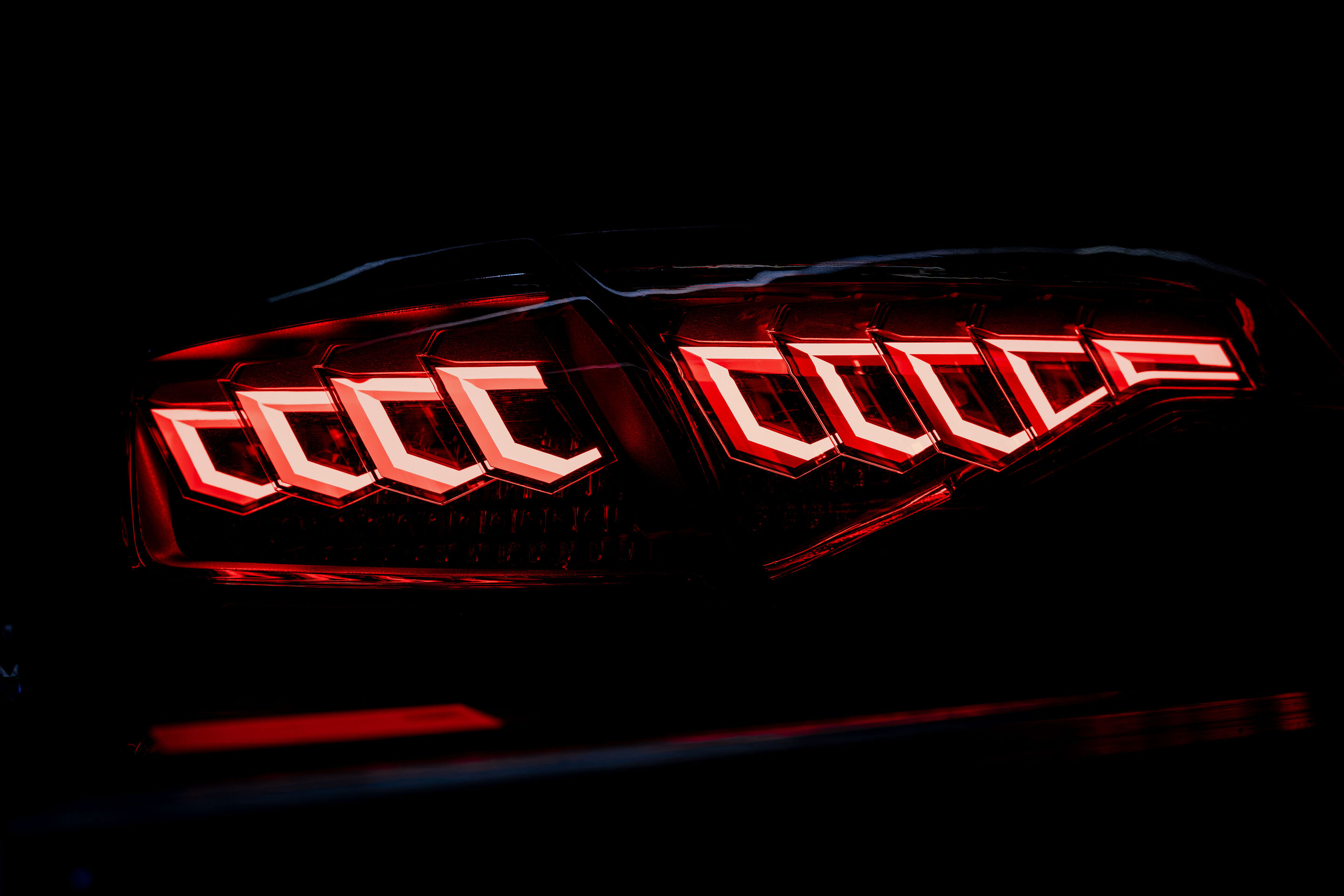
The high number of segments enables new personalization options. Up to eight digital light signatures are available at the front and rear. For the first time, the digital light signatures can be displayed not only as static or fully active signatures but also as semi-active signatures. This enables particularly expressive lighting designs with fascinating three-dimensional effects, especially at night.
Here, digital OLED technology offers a key advantage: since OLEDs are surface light sources, they enable lighting designs that are especially homogenous as well as scenarios with a striking three-dimensional effect. With their third generation, the rear lights become an even more distinctive element of Audi vehicles than ever before.
Digital lighting technologies: light as a means of communication between the vehicle and its surroundings
With the third generation of digital OLED technology, Audi is expanding the ways in which the vehicle communicates with its surroundings. The rear lights are increasingly evolving into intelligent exterior displays.
By combining digital OLED rear lights with digital Matrix LED headlights, the Audi Q9 features an intelligent lighting system that actively contributes to safety and enables more effective communication between the vehicle and its surroundings. The advanced turn signal, first introduced in the Audi Q7, makes the Audi Q9 an active participant in traffic. When turning or changing lanes at night, it projects a stylized, dynamic turn signal onto the road. This allows pedestrians, cyclists, and other road users to see the vehicle’s intended direction change even earlier.
In the new Audi Q9, the digital Matrix LED headlight uses a micro-LED module with 25,600 individual micro-LEDs within a module approximately 13 millimeters wide. Each micro-LED is about 40 micrometers in size and enables the direct projection of high-resolution light images at night. This allows the system to illuminate the road with particularly high precision and contrast and to adapt the light distribution, which is especially beneficial in poor weather conditions. The light-guidance functions include lane lighting with orientation lighting, orientation lighting on rural roads, and lane lighting with turn-signal projection on highways. In addition to the low beam, lane lighting illuminates the lane in which the vehicle is traveling, while projected orientation-light paths indicate the vehicle’s position within the lane proactively. In narrow construction zones, the system can automatically adjust the light distribution and switch off the lane lighting in favor of the orientation lighting to facilitate lane centering. The assistance functions are available only within the system’s limits and support the driver.
History of OLED technology at Audi | ||
|---|---|---|
| 2016 | First use of OLED technology | Audi TT RS |
| 2020 | First-generation digital OLED technology | Audi Q5 PA, A8 PA |
| 2024 | Second-generation digital OLED technology | Audi Q6 e-tron, Audi A5, Audi A6, Audi A6 e-tron, Audi Q5 model lines |
| 2026 | Third-generation digital OLED technology | Audi Q9, Audi Q7 model lines |
| 2026 | Digital OLED technology with a curved design | Audi Q9 |

„At Audi, light means safety first and foremost—seeing and being seen. Digitalization opens up entirely new possibilities for further enhancing road safety. The curved digital OLED technology in the Audi Q9 impressively demonstrates this technology’s potential. It combines design freedom, personalization, and communication with the vehicle’s surroundings at a new level. Our vision is to gradually transform light into an intelligent means of communication that makes interaction between the vehicle and its surroundings even safer and more intuitive.“
Stefan Berlitz, Head of Lighting Development AUDI AG
Frequently Asked Questions
How does Audi’s OLED (organic light-emitting diode) technology work?
Organic LEDs are semiconductor light sources that operate on the principle of electroluminescence. Unlike conventional LEDs, OLEDs do not use a regular crystal lattice made from inorganic material; instead, they consist of stacked layers of organic molecules. When a voltage is applied, electrons and holes recombine, emitting light.
How does Audi use OLED technology?
The individual layers of Audi OLEDs are designed to emit deep red light and to meet specified requirements for light color, luminance, and durability in automotive applications. Audi was the first automaker to offer segmented OLED technology. And has developed the technology for ten years to enable a configurable appearance in the rear lights and to enable communication, thereby contributing to increased road safety.
What are the benefits of digital OLED technology?
The difference between a digital OLED light source and a “classic” OLED lies in the larger number of individually controllable segments and the way they are arranged. Unlike first-generation OLED rear lights, in which each lighting function is supplied via a separate cable, digital OLED rear lights are connected to the vehicle’s electrical-system control unit via a bus system. This enables significantly more functions. The advantages of digital OLED technology include high contrast, high uniformity, minimal gaps between segments, high precision, and a high degree of design flexibility in a surface light source integrated into a light element just one millimeter thick.
How does an OLED light source differ from an OLED display?
OLED displays, such as those used in smartphones, can display any color through electronic control. However, they cannot generate the brightness levels legally required for rear lights or brake lights. The individual OLED segments developed by Audi for automotive use in rear lights can be controlled individually and dimmed continuously. Compared with segmented OLEDs, displays have more pixels, all with the same geometry and size.