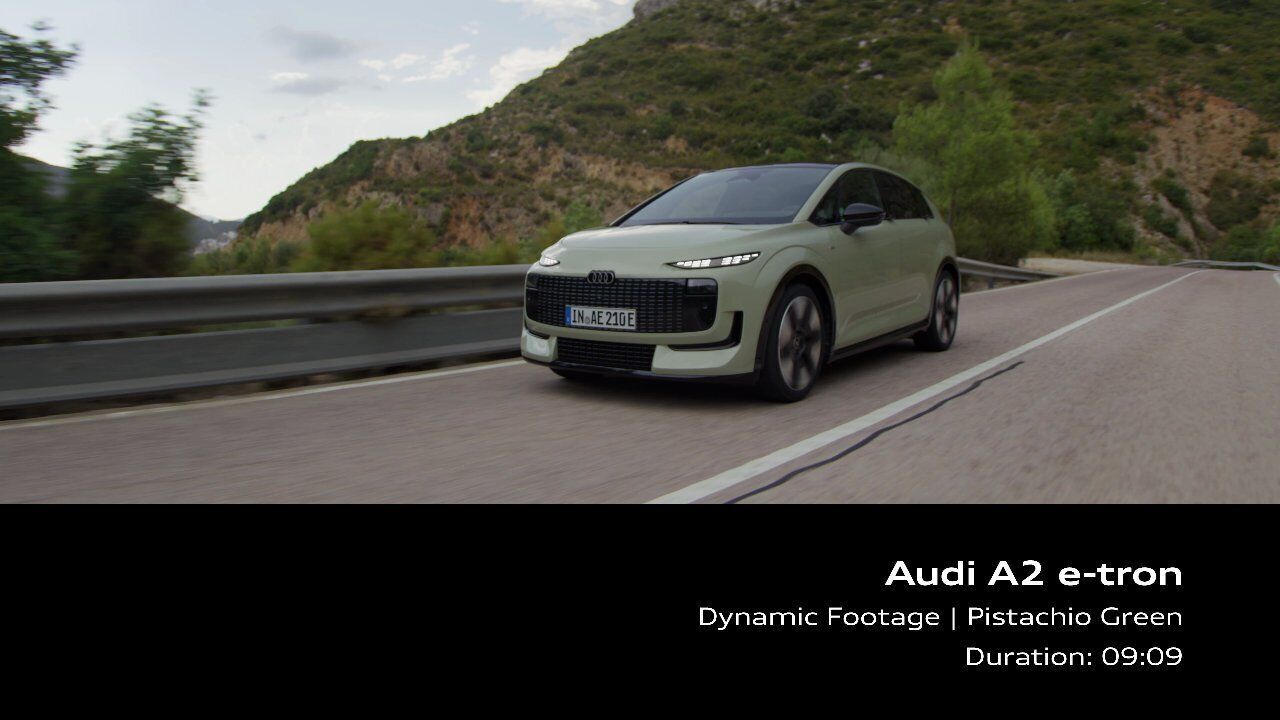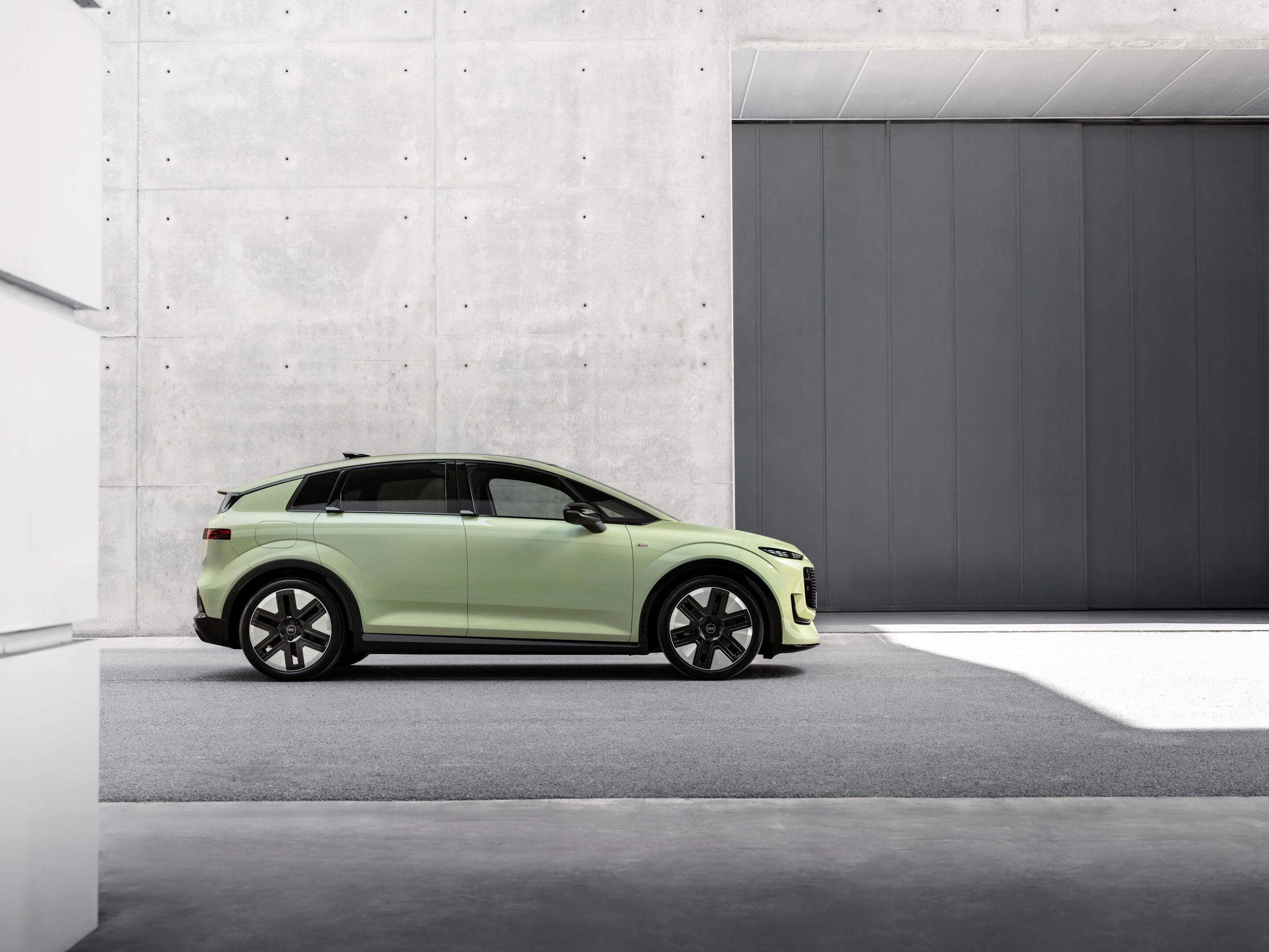
The Audi A2 e-tron puts efficiency at the center of attention. With energy consumption of 12.8 kWh/100 km according to WLTP, it consumes less energy than any other series-production model from the brand before it. In the interior, the vehicle combines versatility with new digital services and is deliberately tailored to the needs of European customers. Developed in Germany and built in Ingolstadt, the A2 e-tron demonstrates how Audi is becoming more efficient itself: the new electric model was developed significantly faster and intelligently makes continued use of existing production structures. Order books open in fall 2026, with the first deliveries beginning in December.

“The A2 e-tron is more than a new model: It represents Audi’s renewal. It shows how we are rethinking premium for Europe: using resources more intelligently without compromising on quality, technology, or customer experience. Developed for the needs of our European customers and built in Ingolstadt, it demonstrates our ambition to shape the future of premium mobility.”
Audi CEO Gernot Döllner
The key facts about the Audi A2 e-tron
- The most efficient Audi model in the company’s history: energy consumption of just 12.8 kWh/100 km and a range of up to 646 kilometers according to WLTP
- Excellent aerodynamics: a drag coefficient of 0.24 – the best value in Audi’s compact segment
- Broad offering: four power levels and three battery sizes
- Bidirectional charging available as an option: Vehicle-to-Load and Vehicle-to-Home
- Full-size-class standard equipment: emergency brake assist, evasive assist, and attention assist, adaptive cruise control (ACC), plus parking system plus and rearview camera
- Spacious on a compact footprint: high interior versatility and a 1.6-square-meter panoramic glass roof
- Standard infotainment: Audi assistant with artificial intelligence, e-tron route planner, and other digital features
- Display and operating system: standard MMI panoramic display with 11.9-inch Audi virtual cockpit plus and 12.8-inch MMI touch display with a curved design
- Premium-segment premiere: the Fidlock fastening system included as standard
- Efficient production at Audi’s home plant in Ingolstadt: intelligent use of existing robots and production equipment
- Orders open September 10, 2026; market launch in December 2026; prices in Germany starting at 38,200 euros
Efficiency in focus
The A2 e-tron was developed for customers who do not want to make compromises in everyday life. They expect an electric car that combines low operating costs, long range, and generous space with modern technology. That is exactly what this vehicle is designed for. The A2 e-tron achieves its particularly low energy consumption through the interaction of numerous measures.
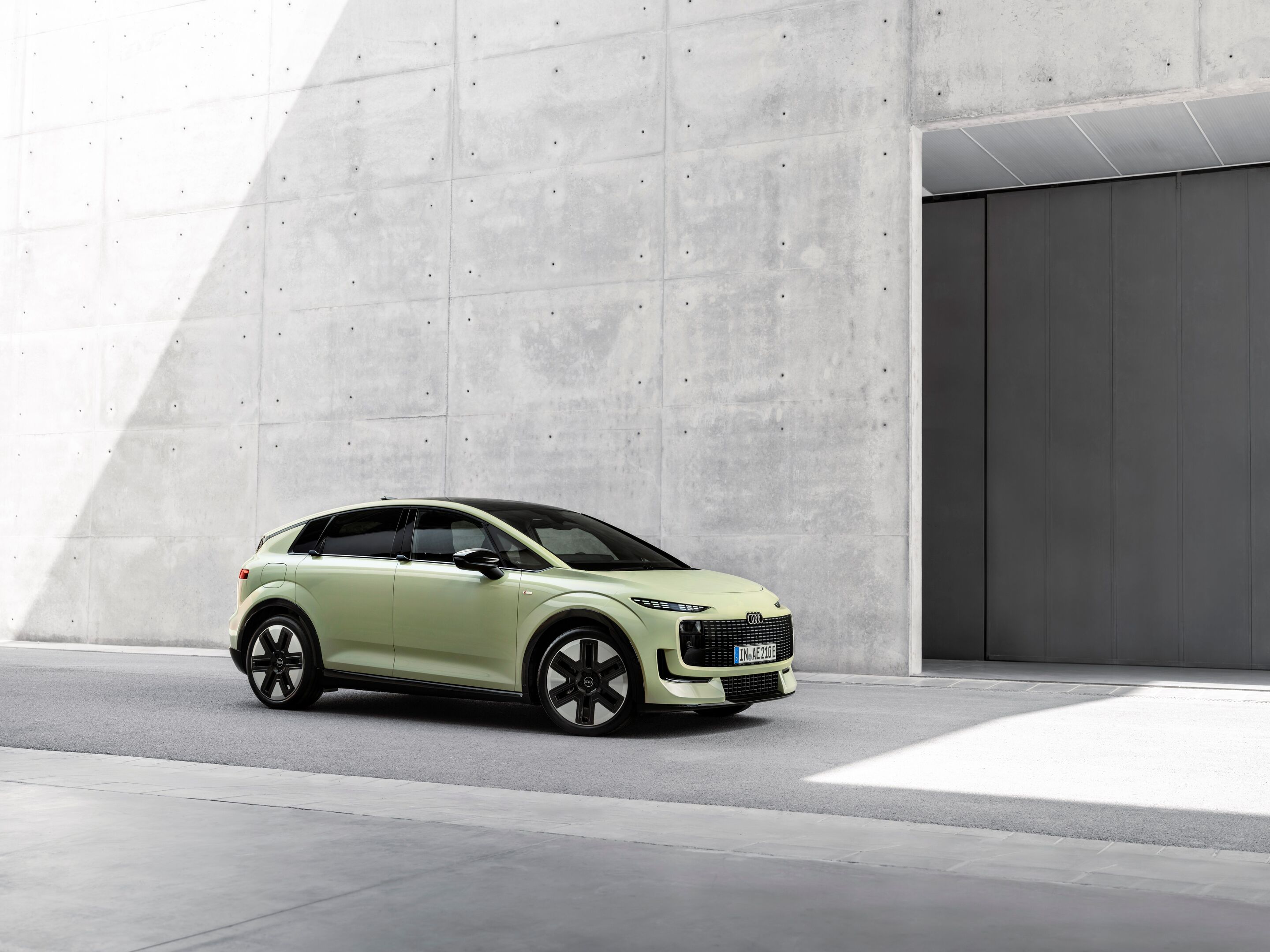
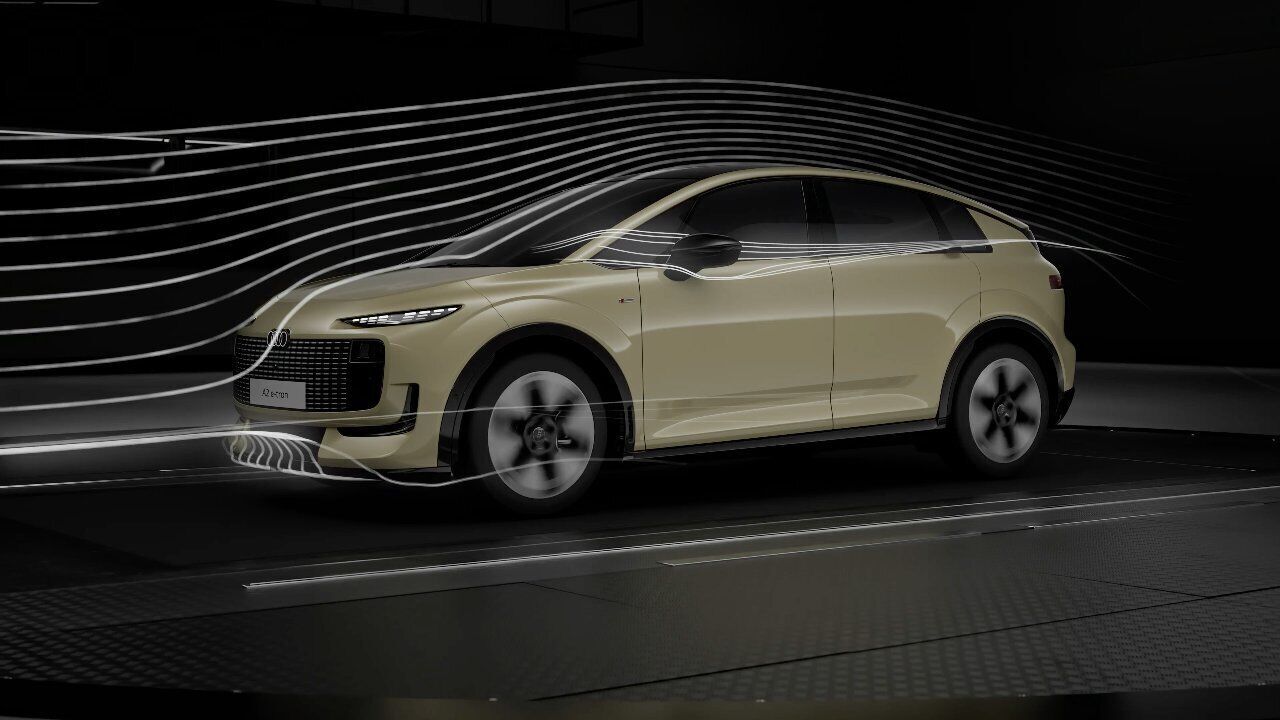
Improved aerodynamics reduce air resistance to a minimum. With a drag coefficient of 0.24, the A2 e-tron delivers the best value in Audi’s compact segment. Clear, aerodynamically optimized surfaces and carefully integrated details define the exterior. These include a controllable cooling-air intake and a largely enclosed underbody. The newly developed aero wheels and so-called gap reducers make a further contribution. Integrated into the wheel-arch trim, they reduce the gap between the wheel and wheel housing. Wing-shaped electric door handles with haptic sensors blend into the side line and provide a particularly convenient operating experience.
Energy intelligently used
Tailored to customers’ requirements, the A2 e-tron offers a choice of four power levels. They range from 125 kW and 350 Nm in the entry-level variant to 240 kW and 545 Nm in the top model. Depending on the power level, one of three battery sizes 52, 61, or 84 kWh (gross battery capacity) – is used. Four recuperation levels, including one-pedal driving via selector lever B, round off the efficient powertrain concept.
As a complete package, the vehicle with permanently excited synchronous motors and rear-wheel drive can achieve a range of up to 646 kilometers according to WLTP. The A2 e-tron 140 kW with the optional efficiency package has a WLTP-measured consumption of 12.8 kWh per 100 kilometers. This makes it the most efficient Audi ever.
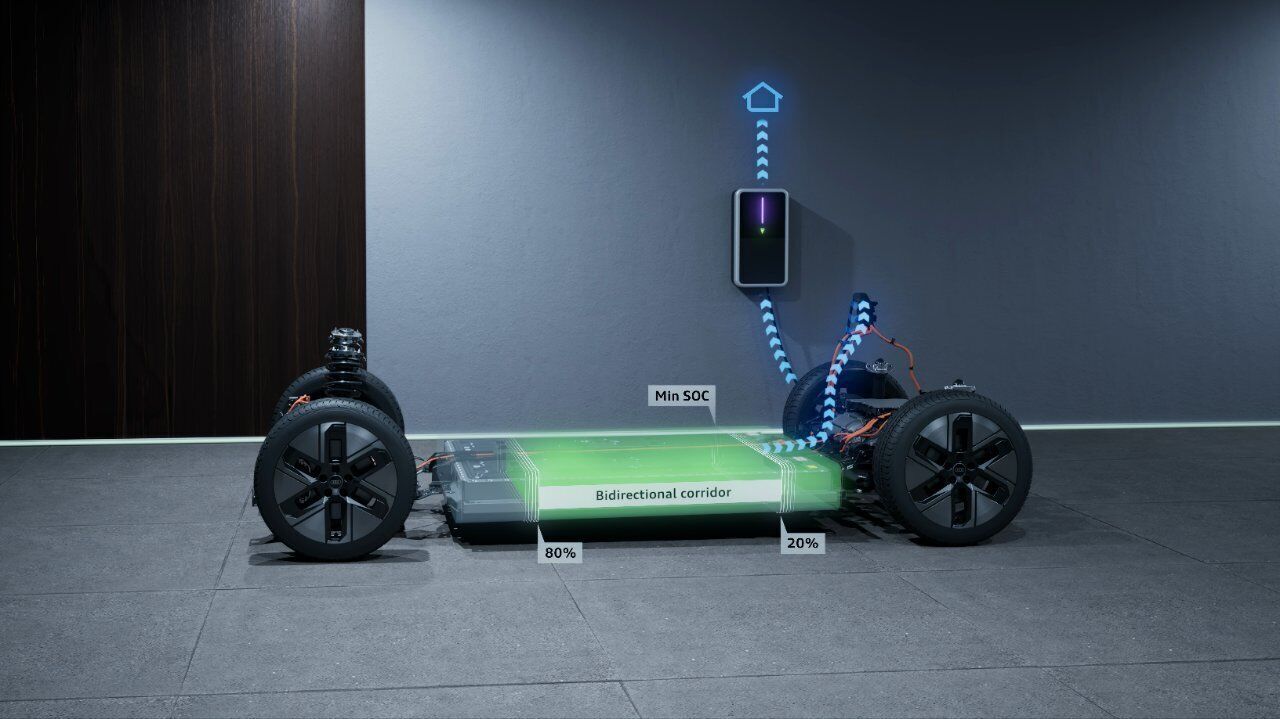
The A2 e-tron also supports bidirectional charging – the high-voltage battery can not only draw energy from the grid but also selectively supply it to external consumers. For example, the Vehicle-to-Load (V2L) function can be used to power e-bikes from a power socket in the trunk or via an adapter at the charging port. In Germany, Austria, and Switzerland, the A2 e-tron can also function as a home battery with suitable DC wall boxes via Vehicle-to-Home (V2H) 2, feeding stored energy back into the household grid. This makes one thing clear: Audi’s new generation of premium electric mobility is defined by technical intelligence and the consistent improvement of the vehicle’s overall efficiency, rather than by larger batteries or more power alone.
Spacious on a compact footprint
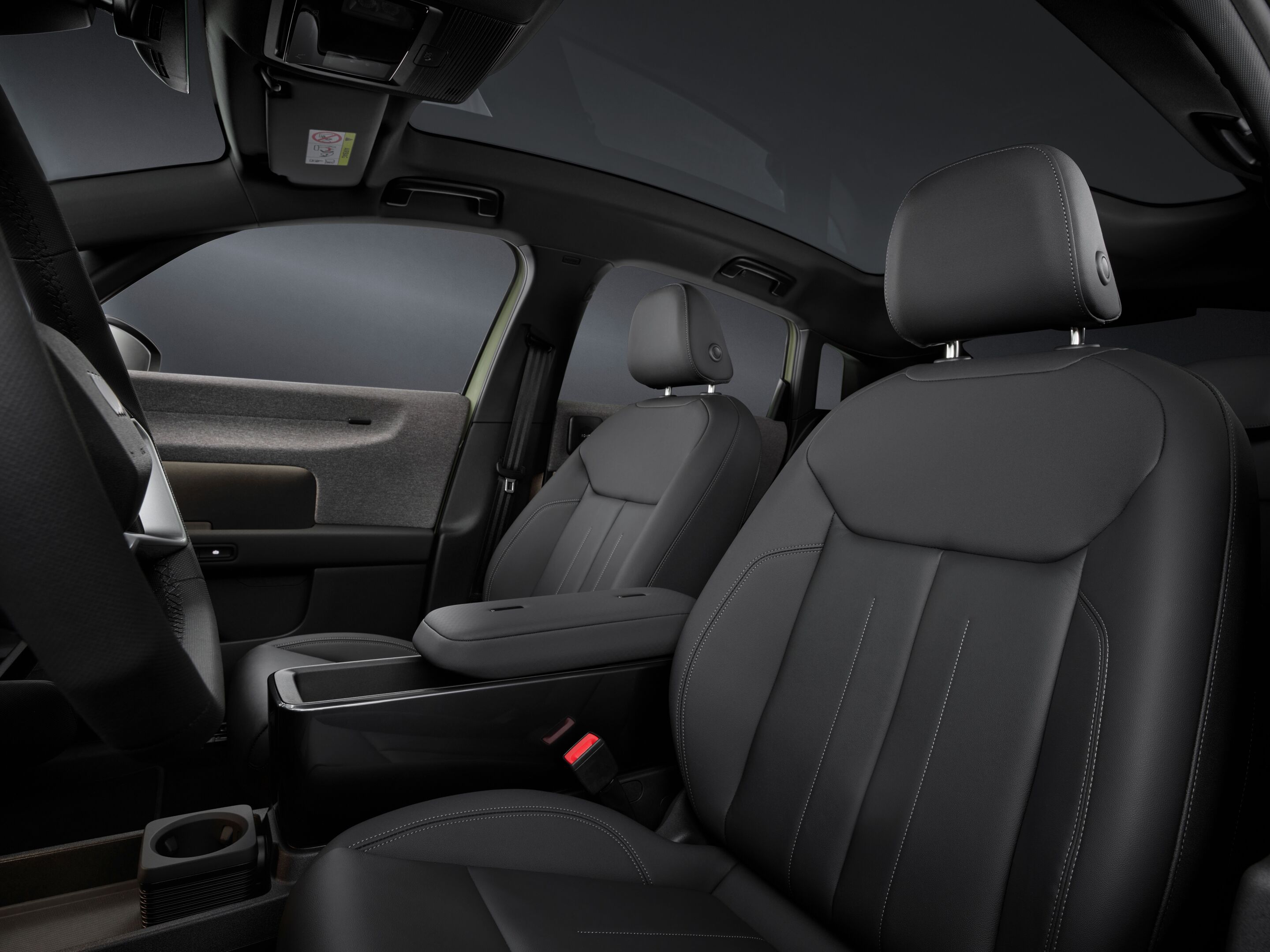
The focus on efficiency continues in the interior. Customers do not simply want electric cars. They want mobility that fits their everyday lives. Despite its compact exterior dimensions, the A2 e-tron offers a spacious and inviting interior. The central design element is the Softwrap - a soft, fabric-covered surface that extends from the instrument panel across the doors and into the rear, creating a welcoming atmosphere. An optional panoramic glass roof with 1.6 square meters of glass floods the interior with light; a special coating also protects occupants from UV radiation.
The Fidlock fastening system provides smart organization and modular storage solutions: Audi is the first premium carmaker to integrate the patented magnetic mechanism as standard equipment – one click, and everything is securely in place – from the cup holder to the charging cable bag. Audi connected work includes Microsoft Outlook, Microsoft Teams, and an AI-based Work Agent that keeps customers connected to their workday even while on the road.
Premium also means using resources intelligently without compromising on quality or customer experience. Audi is taking a new approach to materials in the A2 e-tron as well. Depending on the configuration, the Audi A2 e-tron features more than 300 components made from recycled materials, including steel, aluminum, and plastics. More than 100 components use post-consumer recycled materials. At the same time, Audi is designing components so that they can be recycled and reused more easily at the end of their life cycle. The A2 e-tron paints a picture of how the circular economy is to become an integral part of modern premium mobility in the future.
Efficiency in production
The A2 e-tron is not only an efficient vehicle; it also represents more efficient development and production processes. Audi brought its entry-level electric model to the road 21 months earlier than comparable predecessor models. This was made possible by streamlined development processes and greater vehicle maturity earlier in pre-series production. The A2 e-tron thus exemplifies how Audi is also advancing its transformation within its own production operations.
The A2 e-tron is built at Audi’s home plant in Ingolstadt. There, Audi uses more than 1,200 existing production components and around 250 robots that were already in use for other models. This reduces investment and saves resources.
In the “pearl chain” production principle, Audi is also introducing a new form of factory control in Ingolstadt that has already been used successfully at the Neckarsulm plant. The fixed sequence of customer orders enables more efficient processes, reduces complexity, and cuts the effort required for storage and sequencing.
Pricing and market launch
Audi has tailored its new fully electric entry-level model specifically to the needs of European customers. High efficiency, generous space, and digital services. Developed in Germany and built in Ingolstadt. The A2 e-tron can be ordered starting September 10, 2026, and the first vehicles will be at Audi partners from December 2026. Starting price in Germany for the most efficient Audi ever: 38,200 euros.
Further information about the Audi A2 e-tron as well as image and video material are available in the press kit.
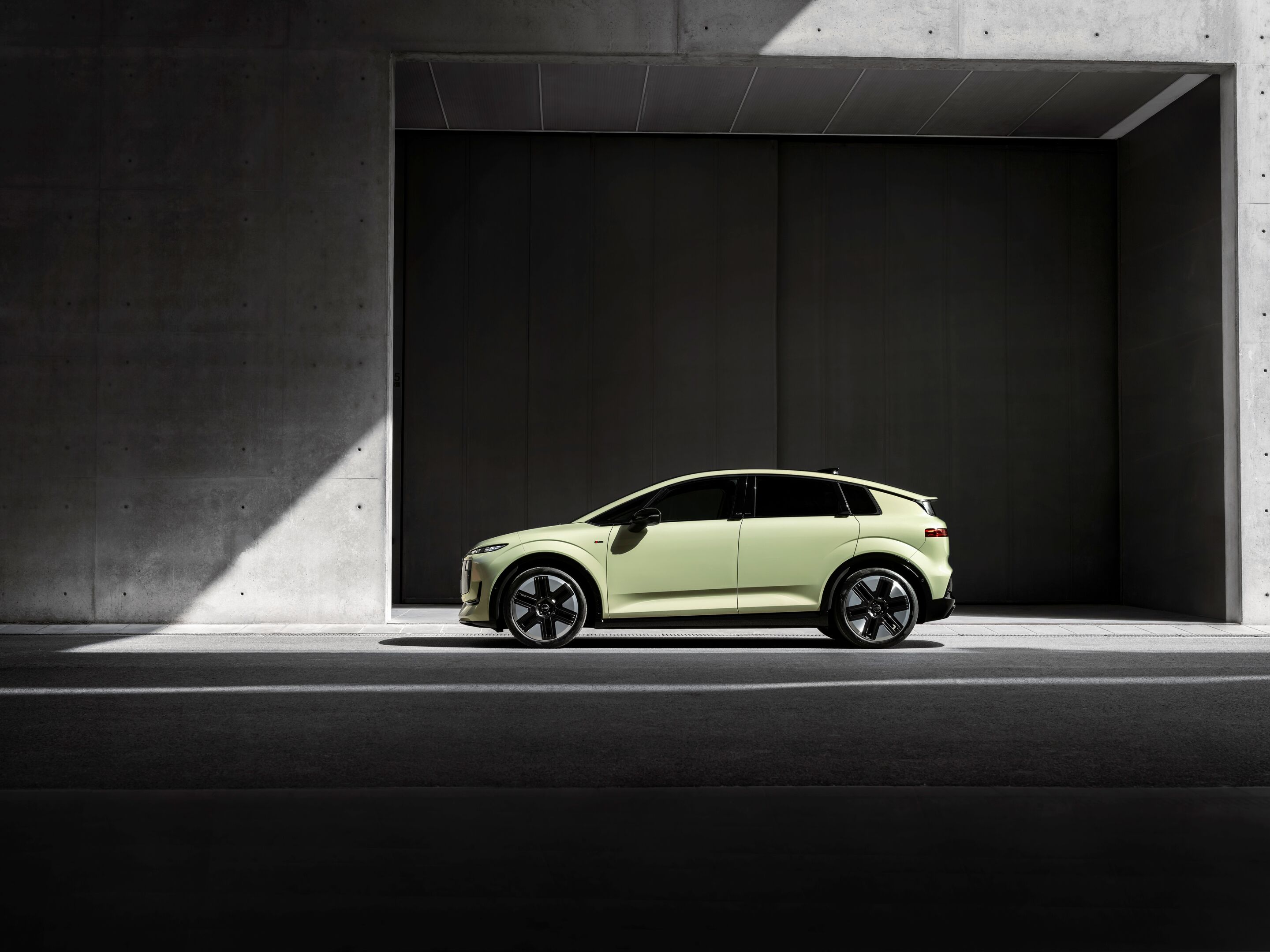
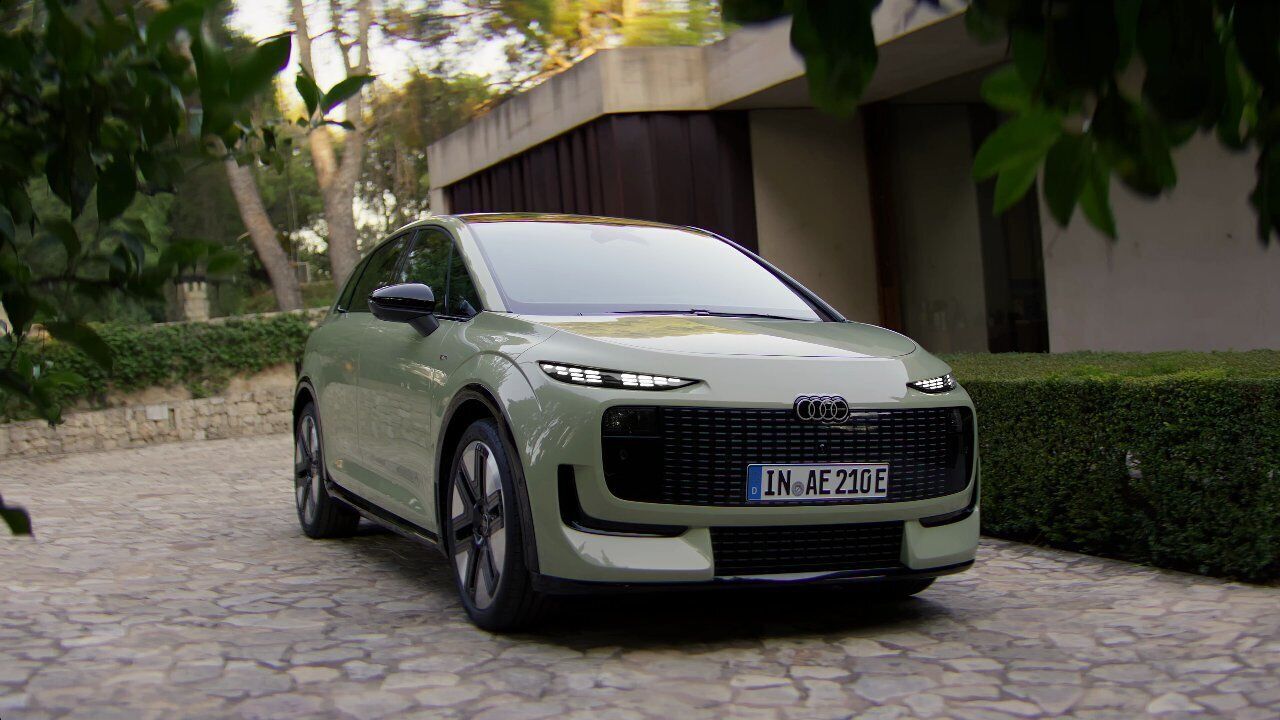
The shape of the Audi A2 e-tron is engineered for aerodynamics, efficient use of space, and high everyday usability. Short overhangs, a long wheelbase of 2.77 meters, and a distinctive roofline provide the foundation for a spacious feel on a compact footprint. Efficiency shapes the design of the A2 e-tron on multiple levels – from energy consumption to aerodynamics to the use of interior space.
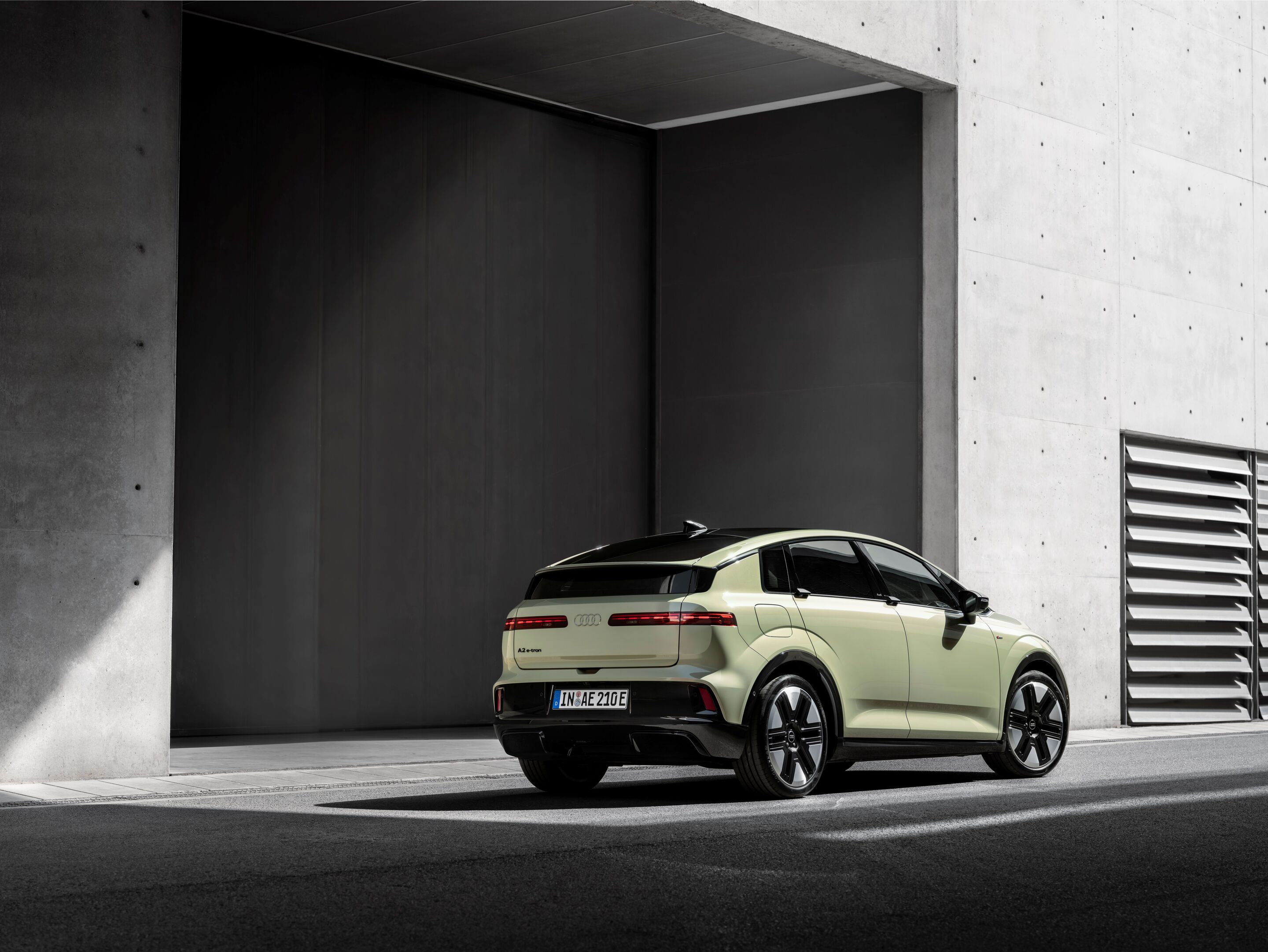
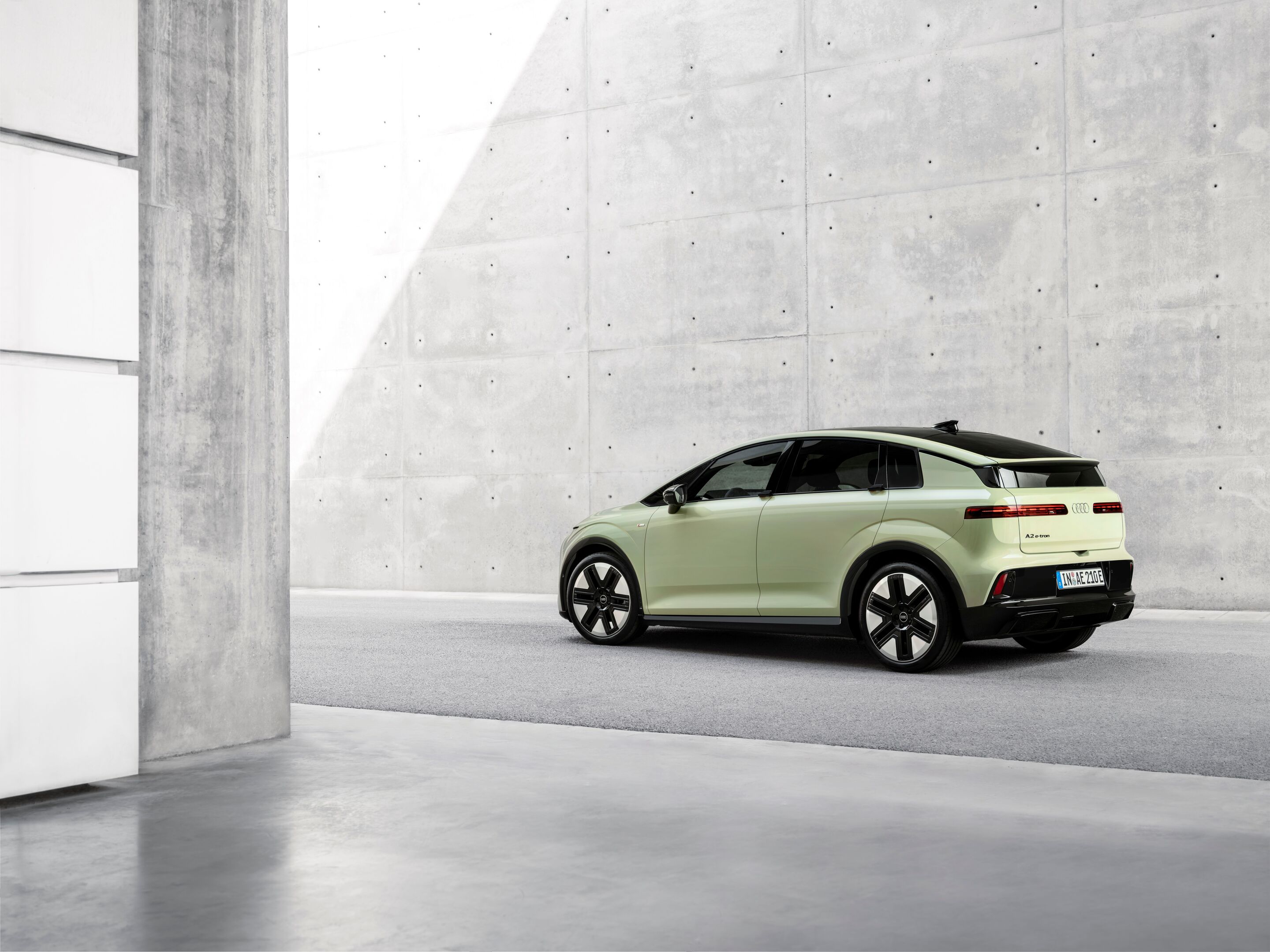
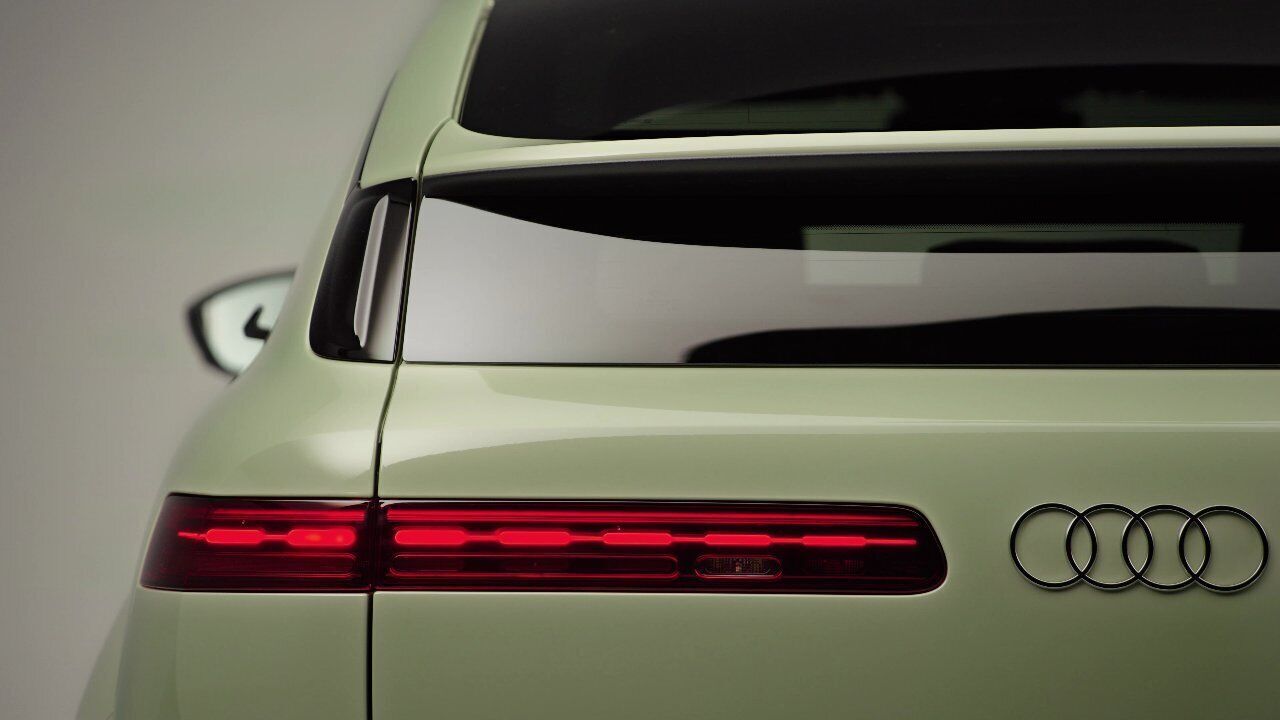
At the front, sensors for the driver assist systems and the main headlights are discreetly integrated into the “black panel.” Above these are the slim daytime running lights – a distinctive feature even from a distance. The A-pillar flows seamlessly into a sweeping roof arch, creating an airy sense of space. Toward the rear, the roofline slopes gently at first before ending in a precisely defined spoiler. This ensures aerodynamically optimal flow separation. At the rear, horizontal LED lights emphasize the vehicle’s width and create a striking effect in the dark with their illuminated elements.
Instead of mechanical handles, Audi uses a fully electric system with intelligent sensors to operate the doors. The door handles respond to the slightest touch: a gentle pull is all it takes to open the door. Locking requires only a light press on the sensor surface.
The door handles blend seamlessly into the side profile. The handle area is designed as a black accent that, depending on the paint color, either provides contrast or blends in with the bodywork. An energy storage unit built into the door ensures that the doors can still be opened even if the onboard electrical system fails.
Even the base exterior, with its subtle bumpers and wide selection of exterior colors - such as Horizon blue, Arrow gray, or the new Pistachio green – emphasizes the compact appearance of the A2 e-tron.
The S line exterior is aimed at those who prefer a sportier look, defined by more pronounced bumpers, high-gloss black side skirts and window trim, a sporty diffuser, and aerodynamically designed front air intakes. Attractive paint finishes such as Intense blue and Daytona gray pearl effect, as well as a contrasting high-gloss Mythos black finish, give the A2 e-tron its distinctive character.
The Audi A2 e-tron has the best aerodynamics in Audi’s compact lineup. They are founded on an overall concept systematically engineered for efficiency: a sloping roofline, short overhangs with a long wheelbase, and clean surface design with tight panel gaps.
The electric drive system plays its part. Without an internal combustion engine or exhaust system, the underbody is largely enclosed. Smooth transitions from the front splitter via the battery to the diffuser ensure consistent airflow beneath the vehicle. The controllable cool-air intake at the front opens only when needed – it remains closed during normal highway driving.
During development, special attention was paid to the flow of air around the wheels. Key components are the gap reducers and gap breathers integrated into the wheel arch trims. They narrow the gap between the wheel and the wheel arch, smoothing the airflow along the bumper and wheel arch and significantly reducing turbulence. The S line variant offers additional airflow through the front air curtains. The front wheel arch vent also relieves excess pressure. New aero wheels with a more closed-off design and a smooth transition from tire to rim complete the package.
Audi’s lighting technology highlights are also featured in the new model in the electric compact class. At the front, optional Matrix LED headlights illuminate the road. The adaptive Matrix LED feature monitors the road in real time: oncoming and preceding vehicles are selectively shielded, while the rest of the road remains fully illuminated for optimal nighttime visibility. The turn signals intuitively guide the eye in the indicated direction of travel – technically precise and visually striking.
There are four digital daytime running light signatures to choose from – three static and one active digital light signature with a moving light effect that lends the vehicle a vibrant presence during the day and, for the first time, at night.
At the rear, the optional LED rear lights pro complete the lighting design. Their design matches the front styling, making the A2 e-tron instantly recognizable as an Audi even in the dark.
The dynamic turn signals at the rear also add a special touch, sweeping across the entire width of the light strip for even greater visibility.
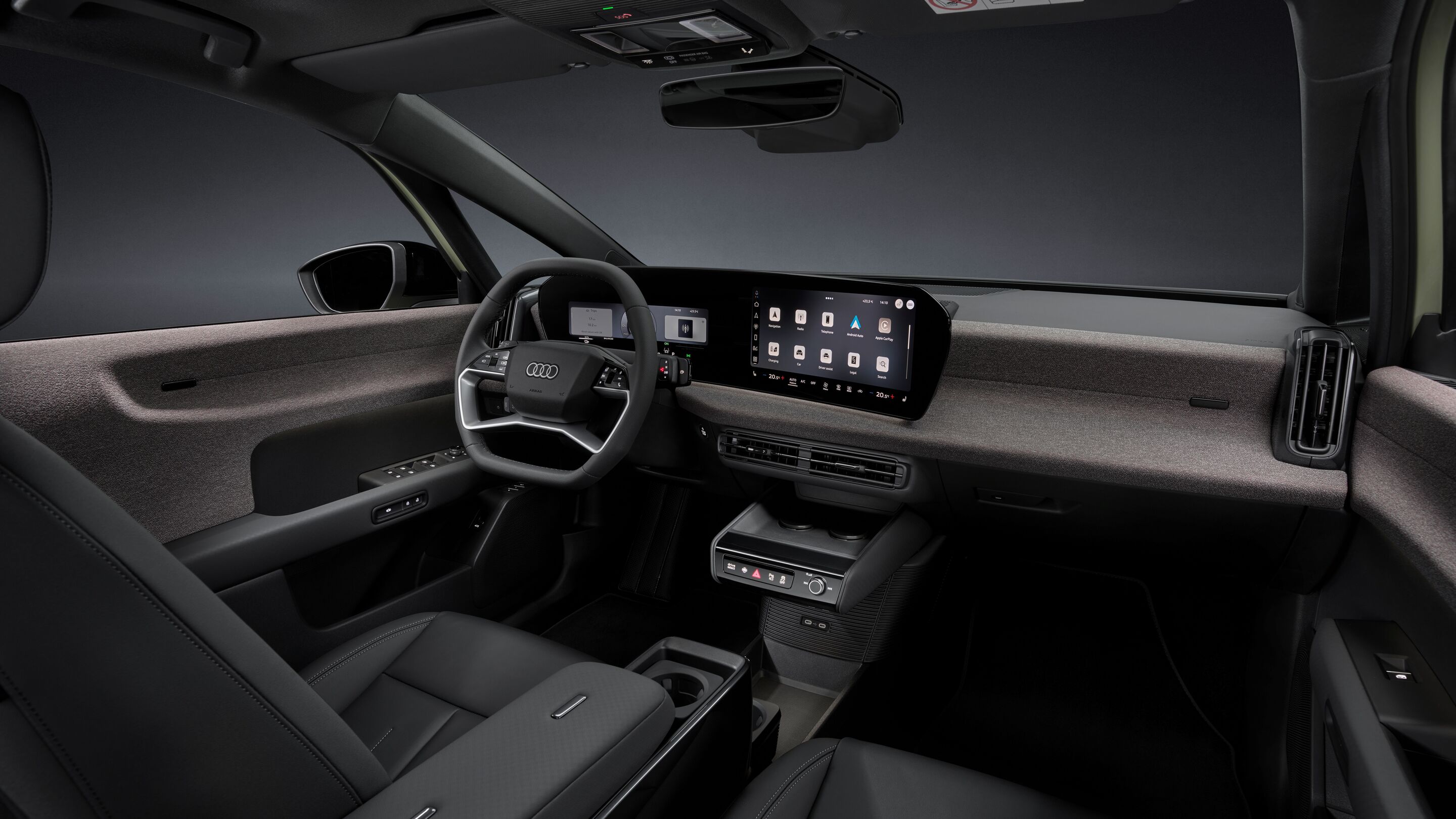
The interior welcomes occupants with generous space. High-quality materials, clever storage solutions, and accent lighting inside the A2 e-tron create an ambiance previously associated primarily with models above the compact segment.
The central design element is the Softwrap – a soft, fabric-covered surface that extends from the dashboard across the door panels and into the rear, rising all the way to the window ledge trim. The atmosphere is enhanced by comfortable armrests, decorative stitching, and buttons inspired by designer furniture. Electric buttons replace traditional door handles, creating clean, uncluttered surfaces.
The optional panoramic glass roof with approximately 1.6 square meters of glass floods the cabin with natural light and enhances the airy sense of space. A special coating guards against UV rays and excessive heat.
The ergonomically contoured seats promote a comfortable seating position and offer a high level of comfort and a relaxed driving experience, even on longer journeys.
The front doors can each accommodate one PET bottle up to 1.25 liters, and the center console can even hold 1.5-liter bottles – providing space for up to four liters of drinks.
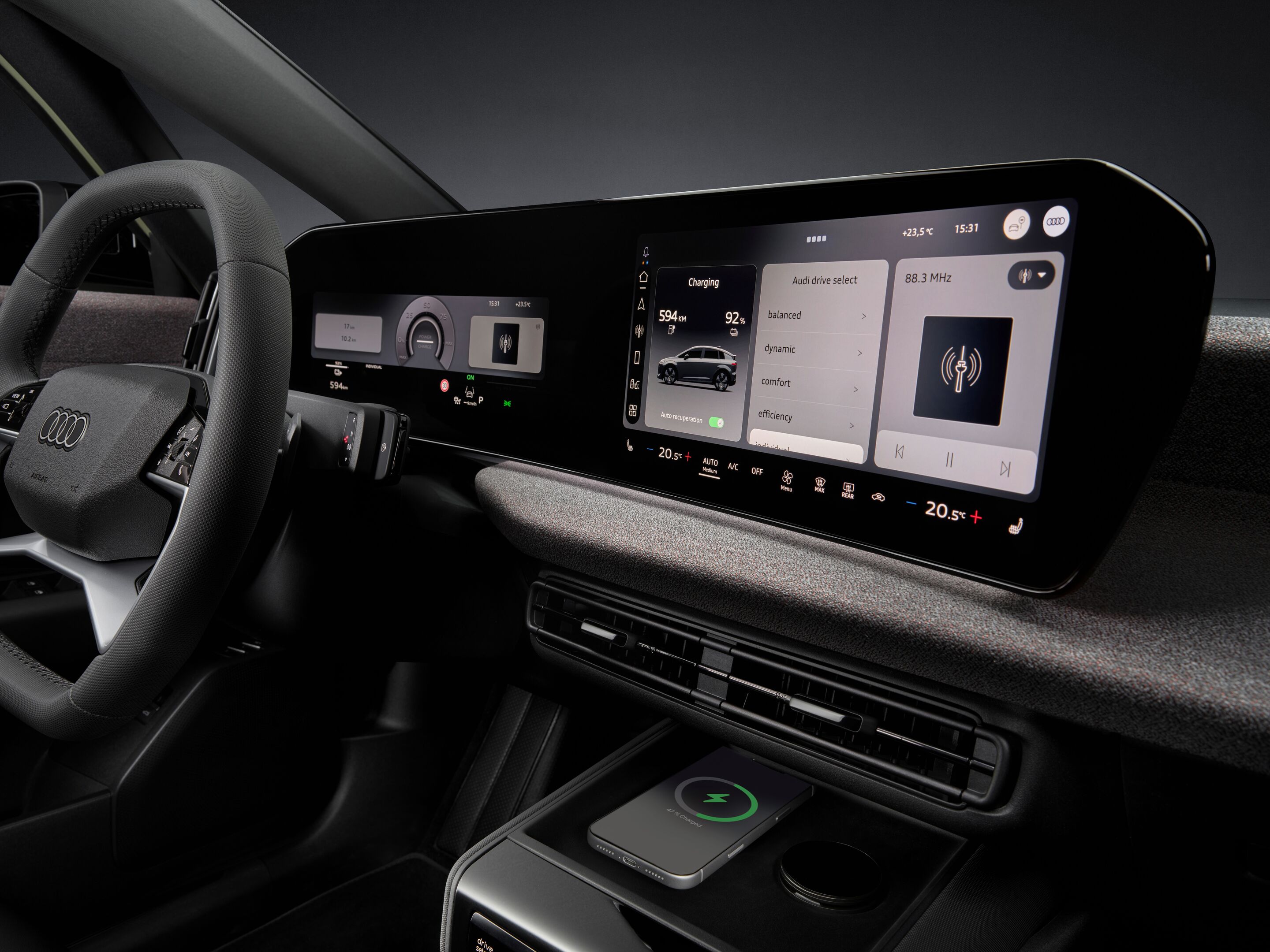
In the A2 e-tron, the gear selector lever is now located on the steering column. This frees up space in the center console for the new phone tray with inductive charging capability compliant with the Qi 2.2 standard. It features active cooling and has space for two smartphones, which can be charged wirelessly at the same time at up to 25 watts. This translates to a charging time up to 70 percent shorter than with conventional 5-watt inductive charging. Powerful magnets keep the devices securely in place even while driving.
Audi is the first premium carmaker to include the patented Fidlock system as standard. It combines strong magnets with a mechanical locking mechanism: objects such as cupholders and charging cable bags as well as tie-down straps can be secured with one hand, and a satisfying click confirms a secure hold.
Three modular Fidlock adapters in the center console and a matching cup holder are standard equipment. The center console also offers plenty of storage spaces – open ones for a handbag or closed ones in the “bowl,” a storage compartment under the center armrest.
Thanks to the standardized system, all compatible Fidlock products – such as those for cycling or outdoor activities – can also be used in the vehicle. Three additional Fidlock points are optionally available in the trunk: two in the left side panel and one in the right side panel. The Fidlock ecosystem continues to grow, and the possibilities in the A2 e-tron are growing with it.
The Audi A2 e-tron has a trunk volume of 396 liters. With the rear seatbacks folded down, the capacity increases to 1,336 liters. Standard features in the trunk include LED lighting, a 12-volt power outlet, and four tie-down anchors.
The optional luggage compartment package adds a variable cargo floor, a cargo net, a power outlet for the Vehicle-to-Load (V2L) function, and three Fidlock adapters on the side walls. Audi is gradually expanding the line of accessories for Fidlock to include items such as a shopping bag, a charging cable pouch, and a lashing strap. A frunk with a volume of 13 liters, standard on the A2 e-tron 170 kW and 240 kW, increases the available luggage space.
The controls are placed where they are most useful in everyday driving: on the steering column and steering wheel. A new switch module on the steering column combines functions that were previously located in the center console – including, for the first time, the electric parking brake. This creates additional storage space in the console without breaking the familiar operating logic: turn signals, high beams, and headlight flash all work in the usual way, but they are more compactly integrated. Gear selection and central functions are positioned so that drivers can keep their hands on the steering wheel.
On the multifunction steering wheel, enhanced controls combine touch-sensitive surfaces with a central roller and a recessed grip for improved tactile feedback – making it easier to locate functions and operate them safely without taking your eyes off the road.
As standard, the MMI panoramic display combines the 11.9-inch Audi virtual cockpit plus and the 12.8-inch curved MMI touch display – fully oriented toward the driver. An optional augmented reality head-up display projects speed, navigation instructions, and other information directly into the driver's field of view. In the standard configuration, white interior lighting adds a touch of style. Light guides accentuate the architectural lines; indirect lights on the doors and beneath the panoramic display make the center console with its inductive charging station appear to float.
The optional ambient light package plus expands the palette to 30 colors and includes the dynamic interaction light – an LED strip that spans the full width of the interior near the windshield and instrument panel. It displays welcome animations and visually indicates when the vehicle is locked and unlocked.
Seven speakers, including a new center speaker at the front, provide balanced sound as standard. The optional Audi sound system with eight speakers, including a subwoofer, delivers 220 watts and fills the cabin with distortion-free sound even at higher volumes.
The top-tier offering is the optional Sonos premium sound system with 14 high-performance speakers, including a subwoofer, as well as 15 amplifier channels and 660 watts of maximum amplifier power. Speakers near the C-pillar create a surround sound experience.
The e-tron route planner predictively schedules charging stops and conditions the battery in advance to ensure maximum charging capacity. It considers traffic conditions, route topography, and the availability and output of charging stations in real time.
Additionally, the e-tron route planner allows for manual adjustment of the calculated charging time, so charging stops can be tailored to individual needs.
As needed, the smart range manager can suggest an alternative route with fewer charging stops by adjusting the recommended driving speed. It also displays the maximum speed at which the current route, including the planned charging stops, can be reliably completed.
AI models in the cloud enhance natural language interaction with the Audi assistant and improve speech recognition and search results for navigation and music. Questions about the vehicle are answered based on the owner’s manual, and general questions are answered via the AI model.
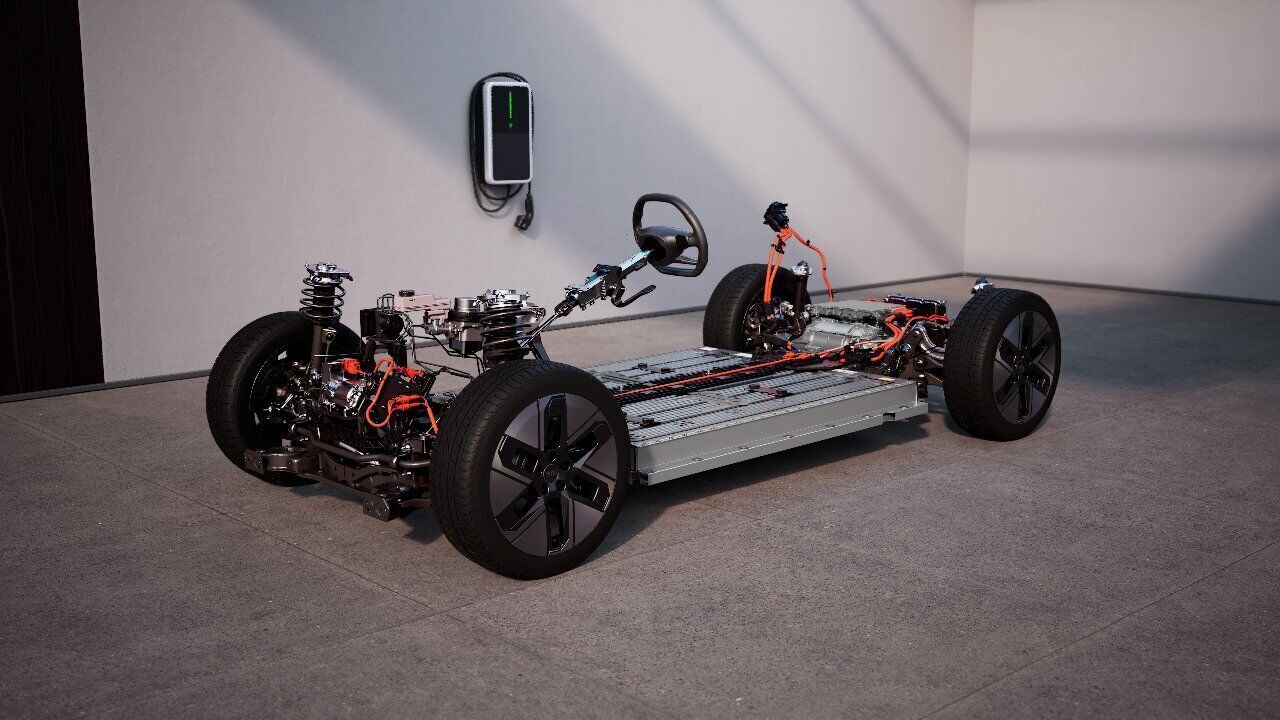
The A2 e-tron uses the latest generation of permanent-magnet synchronous motors - APP350 or APP550 electric motors, depending on the power level. Both motors deliver high power and torque. The power electronics use silicon carbide (SiC) semiconductors for exceptionally low conversion losses. Four regenerative braking levels allow for precise adjustment between efficient coasting and energy recovery – tailored to the driver's preferences
The transmission also contributes to the high efficiency, which is increased by polished gear teeth, friction-optimized bearings, and newly developed low-viscosity oils. The vehicle concept is based on rear-wheel drive: axle load distribution and load transfer during acceleration ensure high traction, while steering remains completely unaffected by the drive system. The A2 e-tron is available in four power levels: from an entry-level variant with 125 kW and 350 Nm to the top model with 240 kW and 545 Nm.
From a city or commuter car to a vehicle for long road trips, the A2 e-tron is highly versatile. This is made possible by the different battery sizes of 52, 61, and 84 kWh. The top-of-the-line version with 240 kWof power and an 84 kWh battery achieves a range of up to 630 kilometers, while the 140 kW variantwith the optional efficiency package consumes just 12.8 kWh per 100 kilometers. This figure makes the Audi A2 e-tron the most efficient Audi of all time.
For the two smaller batteries, Audi uses lithium iron phosphate (LFP) cells – a robust chemistry. They are set up in a cell-to-pack design: the cells are bonded directly into the housing, which results in a higher packing density in more compact installation space.
The 84 kWh nickel manganese cobalt (NMC) battery is based on a modular design and is available only in the A2 e-tron 170 kW and A2 e-tron 240 kW variants. Thanks to the advanced cell chemistry in the LFP batteries, they deliver high performance even at low states of charge and cold outside temperatures.
The cells’ higher energy density also has a positive effect on the spacious feel of the interior: the battery takes up less vertical space, which improves legroom and the seating position in the cabin.
| Technical data | A2 e-tron 125 kW | A2 e-tron 140 kW | A2 e-tron 170 kW | A2 e-tron 240 kW |
| Maximum electric power in kW | 125 | 140 | 170 | 240 |
| Maximum electric torque in Nm | 350 | 350 | 350 | 545 |
| Combined consumption in kWh/100 km | From 13.7 | From 12.8 | From 13.9 | From 14.2 |
| CO2 emissions in g/100 km | 0 | 0 | 0 | 0 |
| Energy efficiency class | A | A | A | A |
| Top speed | 160 | 160 | 160 | 200 |
| Acceleration 0 to 100 km/h in s | 8.8 | 7.9 | 7.0 | 5.7 |
| Maximum range | Up to 423 km | Up to 515 km | Up to 646 km | Up to 630 km |
| Gross battery capacity in kWh | 52 | 61 | 84 | 84 |
| Maximum DC charging capacity in kW | 100 | 105 | 183 | 183 |
| DC charging time 10-80% in minutes | 24 | 26 | 29 | 29 |
Bidirectional charging transforms the compact electric car into a mobile power source. With Vehicle-to-Load (V2L), the A2 e-tron powers electrical devices directly from the vehicle – whether camping gear, tools, or outdoor equipment. Anyone who operates a photovoltaic system at home and has a compatible DC wall box (type recommended by Audi) can also take advantage of Vehicle-to-Home (V2H) in Germany, Austria, and Switzerland.
This allows energy from the high-voltage battery of the A2 e-tron to be supplied to the home via a compatible wall box. The high-voltage battery acts as a storage system for solar power generated at home and can feed surplus energy from the vehicle into the household electrical system. This feature is available in Germany, Austria, and Switzerland. Discharging only occurs when the state of charge is in the optimal range of 20 to 80 percent; if full range is required for the next trip, the “Instant Charge” function can be used to charge to 100 percent. All discharge processes are displayed in the vehicle as a virtual odometer – providing clarity, transparency, and everyday usability.
Right from the first few meters, the A2 e-tron delivers a familiar driving experience: precise, balanced, and effortlessly controllable. In city traffic, its responsiveness can be finely adjusted, making everyday driving noticeably easier. On the highway, stable straight-line tracking and smoothly damped body movements ensure a comfortable ride. In corners, high precision and confident road-holding reinforce the characteristic Audi driving experience.
Depending on requirements, the vehicle is available with either comfort suspension or sport suspension featuring stiffer anti-roll bars. Suspension with damper control is also available as an option. Sport suspension and the suspension with damper control are available for the 170 kW variant.
On the A2 e-tron 240 kW, the suspension with damper control is standard equipment. For the A2 e-tron 140 kW, sport suspension is available as part of the optional efficiency package.
In milliseconds, the suspension with damper control adjusts the damping of each individual shock absorber to the driving style and road conditions. The “comfort,” “balanced,” “efficiency,” and “dynamic” driving modes enable a finely adjusted balance between comfort and dynamic performance – the system increasingly minimizes pitch and roll as the driving mode becomes sportier.
Three regenerative braking levels can be selected using paddles on the steering wheel: D1 decelerates at −0.6 m/s², D2 at −1.0 m/s², and D3 at −1.5 m/s². Setting the gear selector to position B activates one-pedal driving with deceleration to a standstill – a noticeable benefit in urban stop-and-go traffic. The transition between regenerative braking and friction braking is easy to control.
The braking system is designed for stable, reproducible deceleration – on dry roads as well as in wet or snowy conditions. This is supported by an electronic stability control (ESC) system specifically tuned to the A2 e-tron. In the Audi drive select modes “comfort,” “balanced,” and “efficiency,” handling is balanced, while in “dynamic” mode it is noticeably more agile.
Linear steering comes standard. Optional progressive steering with a variable steering ratio is part of the Tech plus package. It comes standard in the top model with 240 kW.
The A2 e-tron is available with 18- to 20-inch alloy wheels. Tire widths from 225 to 235 mm ensure a controlled driving feel across all variants. Even in the entry-level trim, wide tires increase agility while maintaining the same high level of comfort. With larger wheel and tire combinations, wider tires also help generate lateral force, contributing to high steering precision and enhanced driving stability. All tire sizes are available for winter tires as well as summer tires. Efficiency is improved by a special tire with optimized rolling resistance and higher inflation pressure.
The most efficient configuration is the 19-inch setup with aerodynamically optimized wheels, in which the wheel and tire are specifically matched to each other. This wheel size offers a good balance between comfort and performance, while the 20-inch version is a sportier option.
The A2 e-tron features numerous assistance functions typically found in the full-size class. Depending on the vehicle’s specification, Tech, Tech plus, and Tech pro packages are available. Standard equipment includes adaptive cruise control. This assists the driver by regulating speed and maintaining the set distance from the vehicle ahead.
Adaptive cruise control can also adjust the set speed according to detected speed limits and features of the road ahead, such as curves and intersections. Standard features also include a reversing camera, parking system plus with distance display, and side assist with exit warning and rear cross-traffic assist.
The optional adaptive cruise assist plus with emergency assist combines adaptive cruise control with active lane guidance at speeds of up to 210 km/h. Shortly after market launch, the system is set to be enhanced so it can change lanes on highways by itself when the turn signal is triggered.
As an additional feature, adaptive cruise assist plus enables the vehicle to brake automatically at red lights for the first time, coming to a complete standstill at the stop line. If the vehicle is not yet at a stop before the traffic light turns green, the system automatically continues driving. However, if the deceleration exceeds a defined threshold or the vehicle has fully stopped, it will no longer drive on automatically.
The longitudinal and lane guidance systems also use swarm data, meaning the vehicle adjusts its own speed to the average speed of the road. With online data, adaptive cruise assist can maintain the vehicle’s lane even without visible road markings, increasing comfort in rural and urban traffic.
Front cross-traffic assist uses the front camera to extend the field of view at intersections with limited visibility. Front emergency brake assist automatically performs an emergency stop in the event of an imminent head-on collision with vehicles or pedestrians at speeds up to approximately 85 km/h. Swerve assist supports active steering around obstacles at speeds between 30 and 150 km/h.
Within the system limits, emergency assist detects when the driver is inactive. They are prompted to take control of the vehicle through visual, audible, and haptic cues. If they still do not respond, the system takes control of the vehicle, initiates an emergency stop, and places an emergency call.
The optional proactive occupant protection system for the front, sides, and rear detects hazardous situations early. In the event of imminent collisions or emergency braking, the system tightens seat belts, closes windows, and alerts the driver.
Surround-view cameras with 3D modeling and “car wash mode” are optionally available. Car wash mode provides a better view of the car wash tracks, making it easier to position the vehicle. In the 3D environment camera view, the vehicle can be shown as transparent. This makes it possible to see obstacles behind, to the side of, or below the vehicle.
The optional park assist plus maneuvers the vehicle into even the tightest spaces - with the help of ultrasonic sensors and high-resolution cameras. The rear emergency brake assist automatically intervenes if a collision is imminent while the vehicle is in reverse. The maneuver braking function, available at a later date, prevents damage when maneuvering near obstacles such as bollards.
The optional trained parking feature can learn and later repeat up to five maneuvers, such as parking at the driver’s home.
With the remote function via the myAudi app, the parking process can be actively controlled by holding down a button on the smartphone, allowing the maneuver to be monitored from start to finish. Alternatively, the remote function can also be operated from inside the vehicle using the MMI touch display. Reverse assist is also available to help when backing out of tight parking spaces, garages, or dead-end streets, for example. At speeds below 35 km/h, the Audi A2 e-tron can memorize a route of around 50 meters and reverse independently at a speed of around 10 km/h.
The Audi A2 e-tron is a pioneer in the use of recycled materials: depending on the configuration, the Audi A2 e-tron features more than 300 components made from recycled materials, including steel, aluminum, and plastics. More than 100 of these components contain post-consumer recycled materials - reprocessed raw materials taken from sources such as end-of-life vehicles and reused in automotive applications. For example, the rear door module combines steel, plastics, and glass with post-consumer recycled content for the first time. Recycled materials are also used in the interior – a space where recycled materials face particular challenges – with both the optional Softwrap materials and the three optional sports seats’ fabrics made from 100 percent recycled polyester.
Audi is working to reduce the variety of materials used in individual components in order to improve their recyclability. The instrument panel of the Audi A2 e-tron, for example, consists of a less complex mix of materials, making them easier separate at the end of its life cycle. The company’s goal is to reduce the number of different plastics used in a single component and to increasingly rely on monomaterials. These consist of a single material and are significantly easier to recycle.
From the initial concept to mass production, Audi brought the A2 e-tron to market 21 months faster than comparable previous models. Streamlined processes, which enabled earlier product maturity in pre-series production, were among the key factors for this increase in speed.
The company manufactures the new electric car in Ingolstadt, where it is produced in a facility covering approximately 110,000 square meters. Audi manufactures the A2 e-tron bodies alongside those of the Audi A3. This is made possible by the flexible layout of the production lines. Audi uses more than 1,200 manufacturing assets to produce the A2 e-tron, including around 250 robots previously deployed in the production of other Audi models – significantly more than in other production ramp-ups.
For the first time, Audi is applying the “pearl chain” production principle at its Ingolstadt plant. The sequence of customer orders is fixed six days before assembly begins and is then followed across all production areas.
Such production control offers several key advantages. Among other things, it reduces process complexity because a fixed sequence allows the supplier to produce parts and pack them in the designated container in the correct order. It also makes the overall production process more cost-efficient, for example by reducing the space required for parts storage and sequencing.
Additional efficiency gains are made possible by fully automated wheel mounting, and a sophisticated, camera-guided robot control system for so-called bin picking – the process of picking up sheet metal parts that are randomly arranged in the body shop. These innovations are complemented by AI assistants developed in cooperation between the Neckarsulm and Ingolstadt sites as well as the locally operated industrial cloud platform Edge Cloud 4 Production in assembly.
The A2 e-tron will be available to order from fall 2026, with deliveries expected to commence in December 2026. In Germany, the A2 e-tron 125 kW with the 52 kWh battery starts at 38,200 euros. The 61 kWh variant is available from 41,900 euros. The version of the A2 e-tron with 170 kW and an 84 kWh battery costs 48,900 euros. The top model, the A2 e-tron 240 kW, is available for 51,200 euros.
Frequently asked questions
How far canthe Audi A2 e-tron drive on a single charge?
That depends on the battery size and equipment. The A2 e-tron with 170 kW of power and the 84 kWh NMC battery offers a range of up to 646 kilometers according to WLTP.
How fast does the Audi A2 e-tron charge?
The 84 kWh battery supports fast charging at up to 183 kW. Charging from 10 to 80 percent takes 29 minutes. The LFP battery, with a storage capacity of 52 kWh, reaches the same state of charge in 24 minutes at up to 100 kW, while the 61 kWh battery takes 25 minutes at a charging rate of up to 105 kW.
What does bidirectional charging mean?
The A2 e-tron can supply power to external devices such as e-bikes, laptops, and coffee makers (V2L) or to the home power grid via a DC wall box (V2H).
Which driver assist systems are standard in the Audi A2 e-tron?
Emergency brake assist, swerve assist, attention assist, adaptive cruise control (ACC), parking system plus, and a reversing camera are all standard equipment.
Where is the Audi A2 e-tron produced?
The A2 e-tron is produced at the Audi plant in Ingolstadt.