Search
All search results for "dynamic all-wheel steering" (206)

Getting the Hang of It: Drifting with Torque Rear in All-Wheel and Rear Wheel Drive
offer the potential for drifting thanks to special modes. While the V10 engine in the high-performance R8 sports car only powers the rear wheels, the five-cylinder engine in the compact RS 3 sends its power to all four wheels thanks to a quattro system. In this interview, Audi Sport chassis developers Meic Diessner and Roland Waschkau explain how both cars get into the perfect slide.
What are the fundamental differences between the drive concepts of the two vehicles? Meic Diessner: The RS 3 performance edition(((Audi RS 3 Sedan performance edition: Combined fuel consumption in l/100 km (62.1 mi) - NEDC; 9.3 - 8.9 (25.3 – 26.4 US mpg) (WLTP); combined CO2 emissions in g/km:

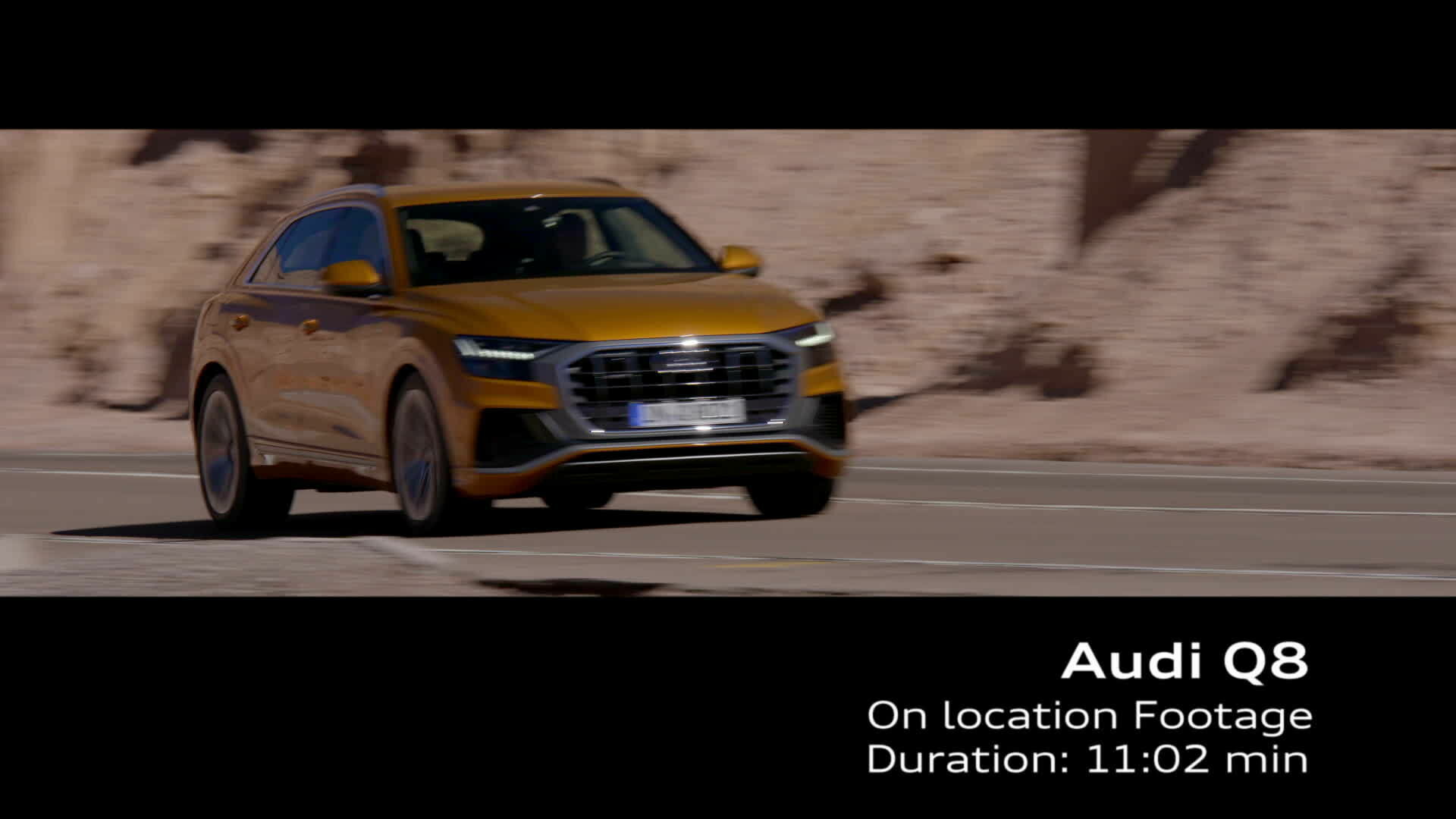
Audi SQ8 TFSI
Audi SQ8 SUV TFSI
Powerful drivetrain: The SQ8 TFSI is powered by a 4.0 TFSI engine delivering 507 hp and 770 Nm of torque. Power is transmitted via a fast-shifting 8-speed tiptronic transmission and the permanent quattro all-wheel drive system. To support driving dynamics, the SQ8 TFSI comes as standard with adaptive air suspension sport and all-wheel steering. The optional advanced suspension package adds a sport differential and electromechanical active roll stabilization (eAWS).
Images
Videos
Engine type V8 engine
Displacement in cc / bore x stroke in mm / compression 3996 / 86.0 x 86.0 / 10.1
Max. power output in kW (PS) / at rpm 373 (507) / 5500
Max. torque in Nm (lb-ft) / at rpm 770 (567.9) / 2000 - 4000
Top speed in km/h (mph) 250 (155.3) (governed)
Acceleration, 0-100 km/h (0-62.1 mph) 4.1
Fuel consumption, combined in l/100 km (US mpg) 12.8 - 11.9 (18

Improved handling: progressive steering and all-wheel steering
and now more direct steering contributes significantly to the comfortable yet equally dynamic handling of the new A6 Avant. Compared to its predecessor, the entire path from the steering wheel to the wheels is designed to be stiffer. This includes the torsion bar at the steering gear, the rigidly bolted steering rack, and the stiffer control arm bushings. Camber on the front axle has also been slightly increased. All in all, these measures result in a noticeably improved steering response and more feedback from the road, which makes for precise and light-footed vehicle handling. The A6 Avant comes standard with electromechanical progressive steering. The steering ratio varies depending on the steering angle: at small steering angles, such as on the highway, the steering is more indirect to prevent any nervous behavior from influencing the steering. At larger steering angles, the ratio is increasingly more direct, reducing the amount of physical effort required to steer in city traffic and

Audi A6 Avant e-hybrid quattro
Audi A6 Avant e-hybrid quattro
With a system output of up to 270 kW, an all-electric range of up to 106 kilometers, and standard all-wheel steering, the Audi A6 Avant e-hybrid quattro combines driving dynamics and comfort. Its interior space supports a wide range of everyday needs and is complemented by extensive standard equipment. The vehicle's aeroacoustics contribute to a quieter driving experience.
Images
Videos
Engine type Inline 4-cylinder eng
Displacement in cc / bore x stroke in mm / compression 1984 / 82.5 x 92.8 / 10.5
Max. power output in kW (PS) / at rpm 185 (252) / 5000 - 6500
Max. torque in Nm (lb-ft) / at rpm 380 (280.3) / 1600 - 4500
Top speed / electrical in km/h (mph) 250 (155.3) (limited) / 140 (87.0)
System acceleration, 0-100 km/h (0-62.1 mph) 6
Electrical range, City (EAER) in km (mi) up to 120 (74.6)
Electrical range, combined (EAER) in km (mi) 95 – 112 (59.0 – 69.6)
Fuel consumption, weighted combined in l/100 km (US mpg) 2.6 – 2.0 (90.5 – 117.6)
Electric power

New portfolio flagship – the Audi Q9 redefines space and comfort as the first of its kind
of its model portfolio. The new Audi Q9 combines spaciousness, precise dynamics, and technological innovations in a single vehicle. Highlights include third-generation curved digital OLED rear lights, individual electric seats in the second row, automatic doors, adaptive driving assistant plus with hands-free driving, and the largest panoramic sunroof ever fitted to an Audi. Sophisticated suspension and quattro all-wheel drive, paired with highly efficient powertrains, guarantee remarkable performance and composure on almost every surface. The SUV will be available to order from the end of July 2026 with prices starting at 108,400 euros for the Q9 TDI

Audi Q8 TFSI e quattro
Audi Q8 SUV TFSI e quattro
In the Q8 plug-in hybrid models, a compact electric motor supports the 3.0 TFSI engine. The new liquid-cooled lithium battery at the rear stores 22 kWh net and 25.9 kWh gross energy. The electric range is up to 90 km. Optional features include all-wheel steering and electromechanical active roll stabilization (eAWS). These systems enhance the vehicle’s dynamic driving characteristics.
Images
Videos
Engine type V6 engine
Displacement in cc / bore x stroke in mm / compression 2995 / 84.5 x 89.0 / 11.2
Max. power output in kW (PS) / at rpm 250 (340) / 5200 - 6400
Max. torque in Nm (lb-ft) / at rpm 500 (368.8) / 1370 - 5200
Top speed / electrical in km/h (mph) 240 (149.1) (limited) / 140 (87.0)
System acceleration, 0-100 km/h (0-62.1 mph) 5.7
Electrical range, City (EAER) in km (mi) 80 - 87 (49.7 - 54.1)
Electrical range, combined (EAER) in km (mi) 73 - 83 (45.4 - 51.6)
Fuel consumption, weighted combined in l/100 km (US mpg) 4.5 - 3.6 (52.3 - 65.3)
Electric power


Broadly talented: the new Audi A6 allroad
suspension with off-road modes, and optimized all-wheel steering Electrified drives and quattro: A6 allroad as plug-in hybrid for the first time and V6 TDI with MHEV plus technology for efficient performance
The new Audi A6 allroad makes a statement. Now in its fifth generation, the all-rounder is more striking than ever: its body, which is 11 centimeters wider, alloy wheels up to 21 inches in diameter, and allroad-specific

The new Audi RS 5: the first performance hybrid provides top driving dynamics
World first in a production model: quattro with Dynamic Torque Control enables electromechanical torque vectoring in the rear transaxle Handling on a new level: electromechanical torque vectoring promises maximum agility, stability, and traction and increases control and manageability, even at the limits of dynamic driving Intelligent function architecture: performance-oriented positioning of the function modules enables all components to work together
The new Audi RS 5 is powered by a modular high-performance plug-in hybrid system. A brand-new rear transaxle with electromechanical torque vectoring gives it superb driving dynamics. We call it quattro with Dynamic Torque Control. This world-first technology is an invisible maestro conducting the transverse torque distribution, shifting torque between the wheels in milliseconds for agile and controlled driving right up to the limit. Brake, turn in, back on the gas just after the apex of the curve: electromechanical torque vectoring in the