Circular economy at Audi
Finite resources call for a change in thinking. Audi is therefore working with partners to keep materials and components in the cycle for as long as possible and is implementing specific measures to further develop these cycles throughout the entire value chain.
How the circular economy makes a difference
For Audi, the circular economy is a key strategy for further developing the use of resources along the value chain, while simultaneously tapping into new business opportunities over the long term. At Audi, the circular economy is built on three key pillars: Product, Business and Partnering.
Pillar 1
Product – The circular economy begins with development
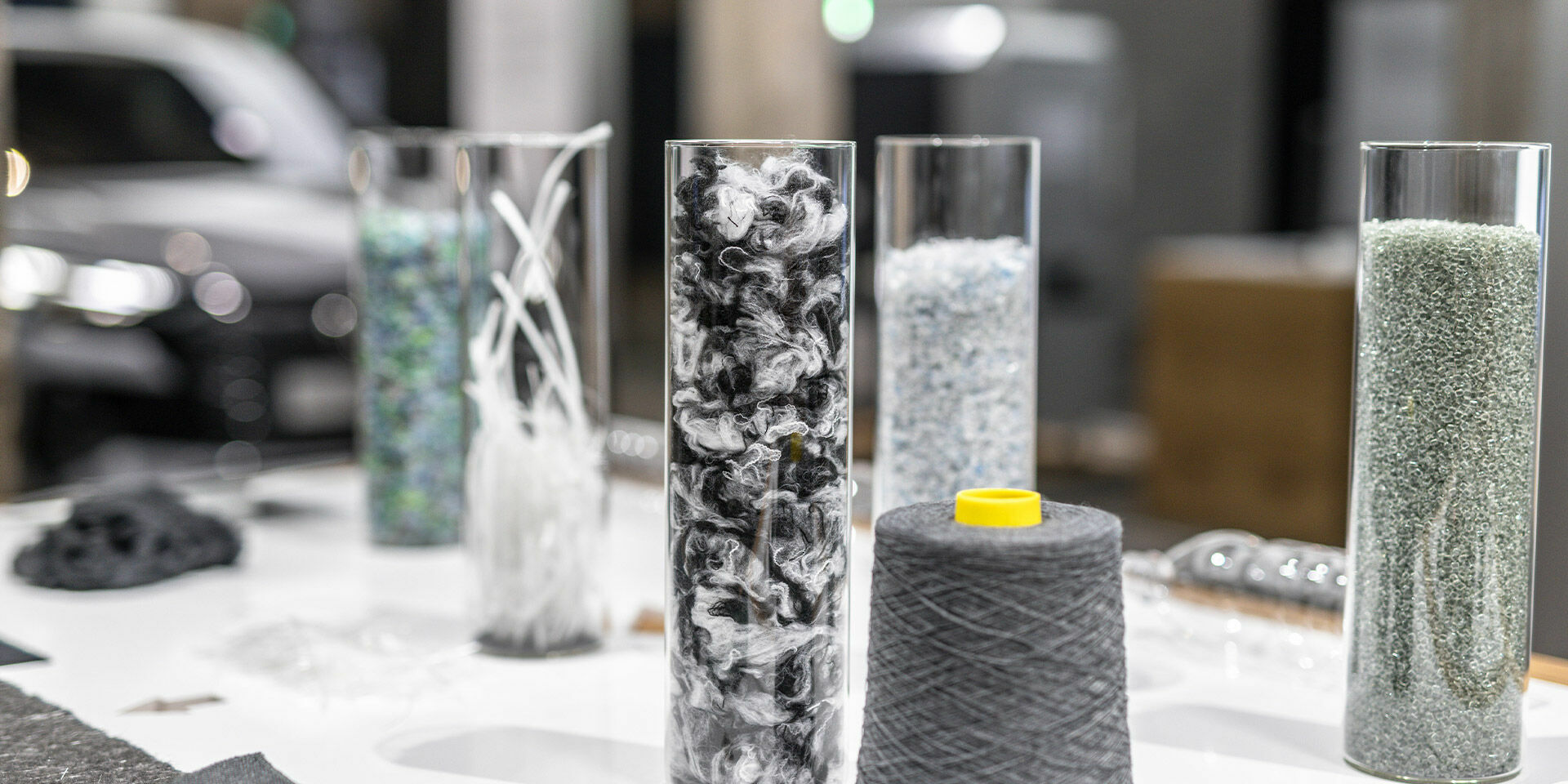
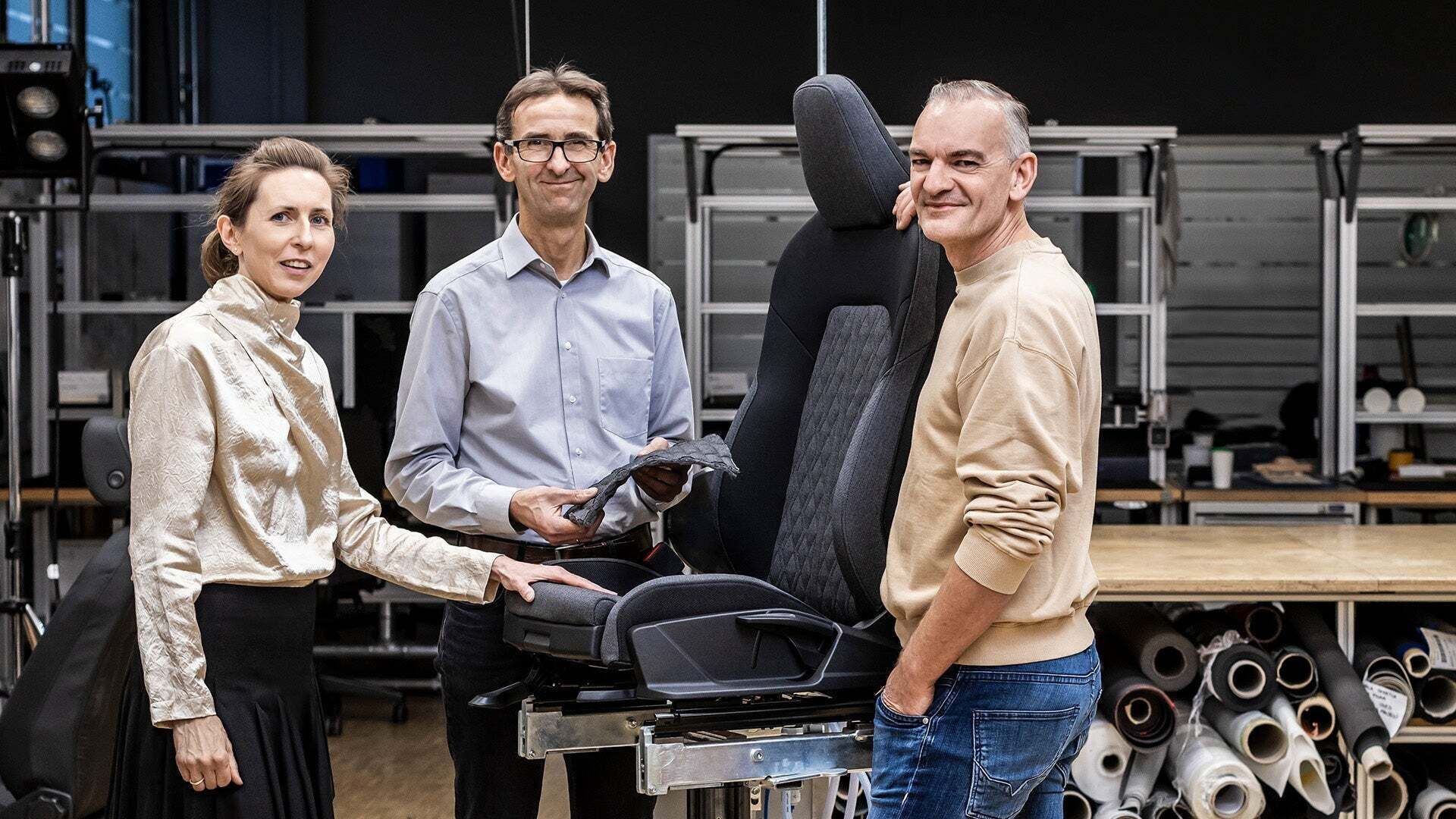
With the next generations of vehicles, Audi will increasingly use materials derived from products that have already been used by consumers, known as post-consumer recycled materials. As these materials must meet the same quality standards, they require, among other things, more extensive sorting than materials recovered directly from production waste. This cycle is simplified by the principle of Design for Circularity: Components are developed as early as the concept phase onwards to make them easier to disassemble, repair and recycle at a later stage. As a result, Audi creates components whose future circularity is built into the product from the very beginning.

Pillar 2
Business – The circular economy as a value driver
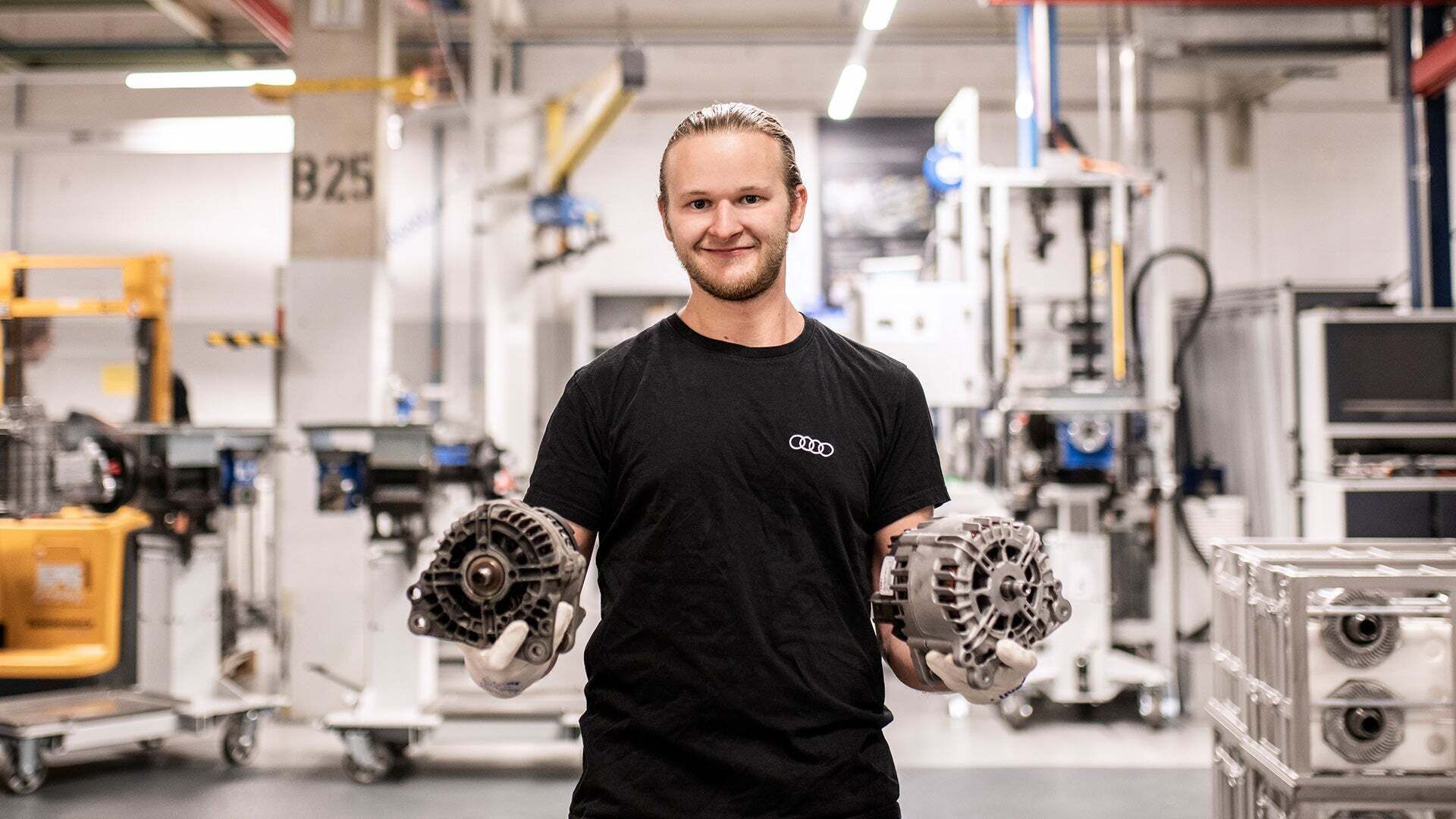
The goal is to establish long-term business models that conserve resources while also creating value. A good example of this are the so-called “Audi Genuine Exchange Parts” – a remanufacturing program for powertrain components, electronic components, electric motors and virtual cockpits.
Pillar 3
Partnering – Circularity requires collaboration

Management approach
Goals of the Audi circular economy strategy
> Product: Reducing the use of primary materials through the use of secondary materials
> Business: Growth through circular business models
Policies
Selected measures
Embedding CE product requirements into the development process:
Development teams are supported through handbooks, material guidelines and web-based training. This enables requirements such as durability, repairability, ease of disassembly and recyclability to be systematically considered in the concept phase of components.
Mandatory use of recycled materials:
Internal target values for the proportion of secondary material and post-consumer secondary material were defined at whole vehicle level in 2023 and at component level in 2024 and anchored in the company.
Implementation example of Design for Circularity:
Audi uses monomaterials from a single material family for its seat upholstery. Wherever technically feasible and ecologically and economically viable, the upholstery, nonwoven fabric, adhesives and fastening elements are increasingly made of recyclable-grade polyester. This means that production offcuts can be recycled directly and materials can be returned to the cycle multiple times at the end of the product life cycle.
Implementation example of recycled material:
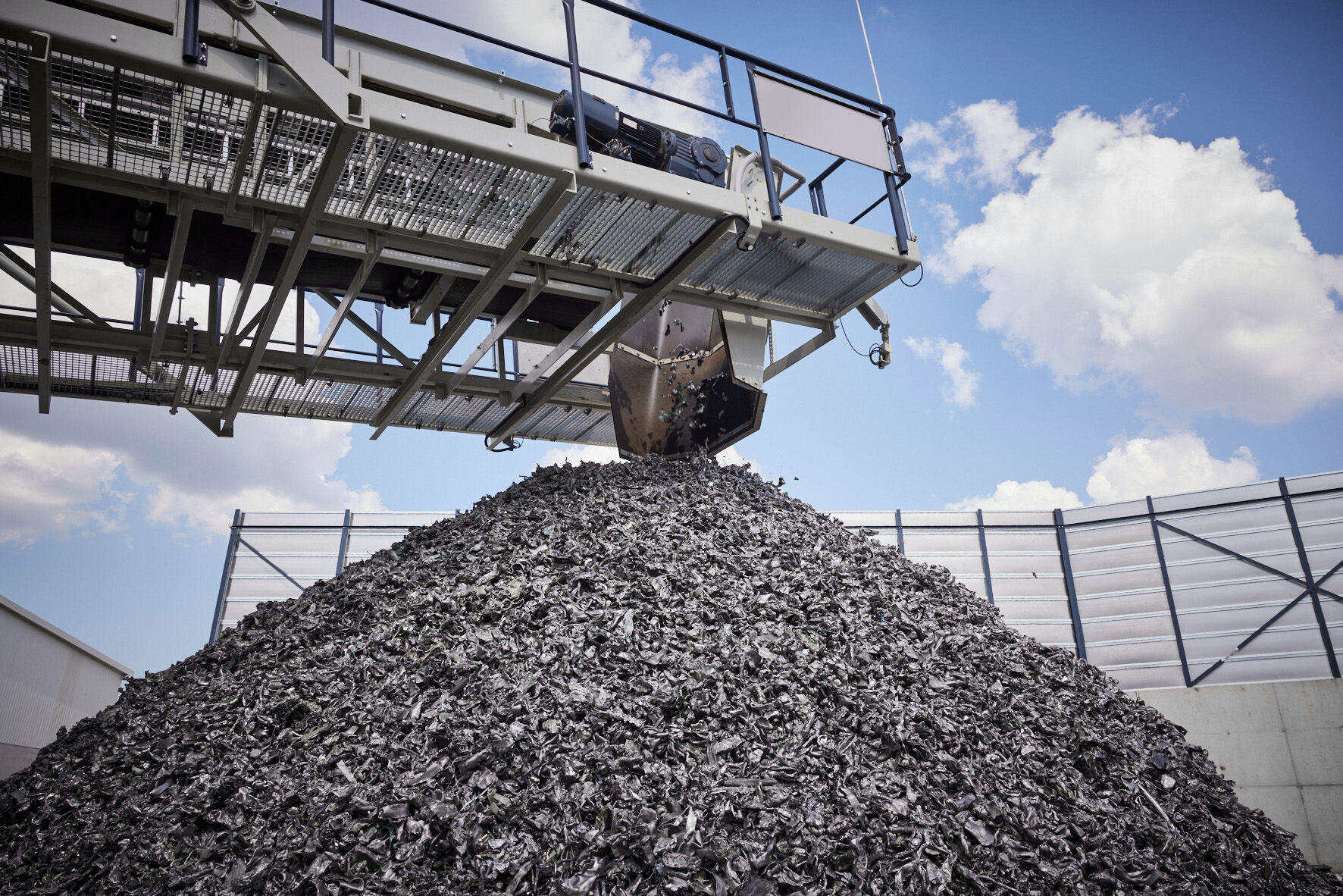
In the Audi Q6 e-tron, a proportion of the steel used for the exterior roof section is scrap steel from post-consumer sources. Such materials are also used for selected parts (for example, the roof frame) of the Audi A6 e-tron and the Audi A2 e-tron.
Implementation example of partnering:
As a member of the Ellen MacArthur Foundation, Audi is committed to further developing its Design for Circularity activities, among other things.
ESG key figures
Key figures | Unit | 2025 | 2024 | 2023 |
| Ressource inflows | ||||
| Weight of products used and of technicaland biological materials – Combustion vehicles | t | 1,472,886 | – | – |
| Weight of products used and of technicaland biological materials – Electric vehicles | t | 434,840 | – | – |
| Weight of used, reused or recycled secondarycomponents, products and materials – Combustion vehicles | t | 251,848 – 384,876 | – | – |
| Weight of used, reused or recycled secondarycomponents, products and materials – Electric vehicles | t | 49,320 – 93,976 | – | – |
| Proportion of used, reused or recycled secondarymaterials, products and materials as a percentageof total weight – Combustion vehicles | % | 17.10 – 26.13 | – | – |
| Proportion of used, reused or recycled secondarymaterials, products and materials as a percentageof total weight – Electric vehicles | % | 11.34 – 21.61 | – | – |
| Recycling | ||||
| Total amount of recycled waste | t | 428,011 | 371,822 | – |
| Recyclable waste – preparation for reuse | t | 18,579 | – | – |
| Total amount of non-recycled waste | t | 20,324 | 21,628 | – |
| Percentage of non-recycled waste | % | 4.35 | 5.13 | – |
| Metallic waste | t | 318,546 | 278,757 | 302,817 |