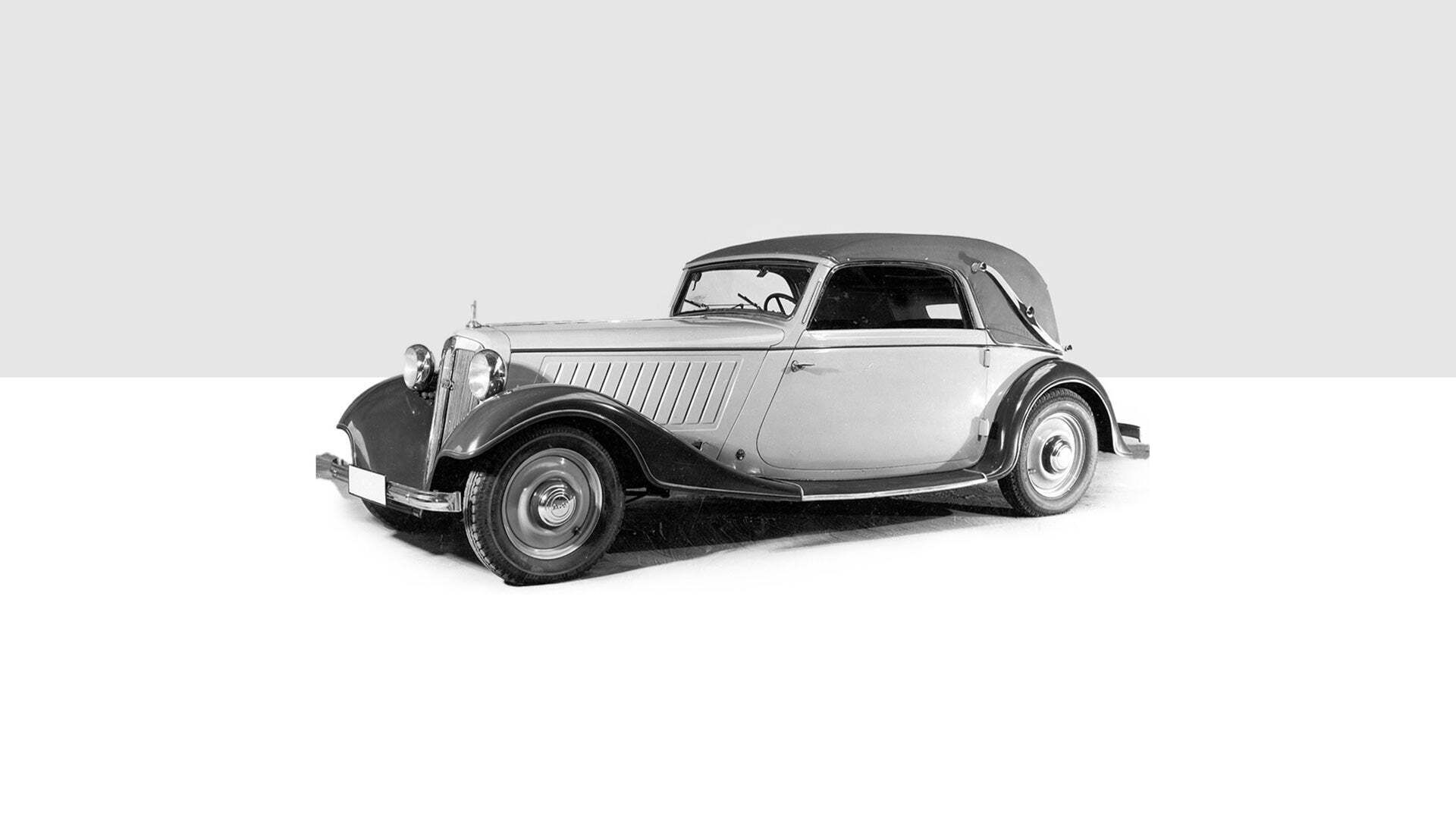
United to form Auto Union AG
With the onset of the global economic crisis, the automotive market collapsed and many companies from the pioneering days of the motorcar disappeared. In 1932, at the initiative of Saxony’s state bank, the four manufacturers Audi, DKW, Horch and Wanderer joined forces to form Auto Union AG, in order to ensure their survival as a group. They succeeded in doing so by exploiting synergies in development and production and by cleverly carving up the market segments between the individual brands.
Contents
Audi Front UW (1933-1934)
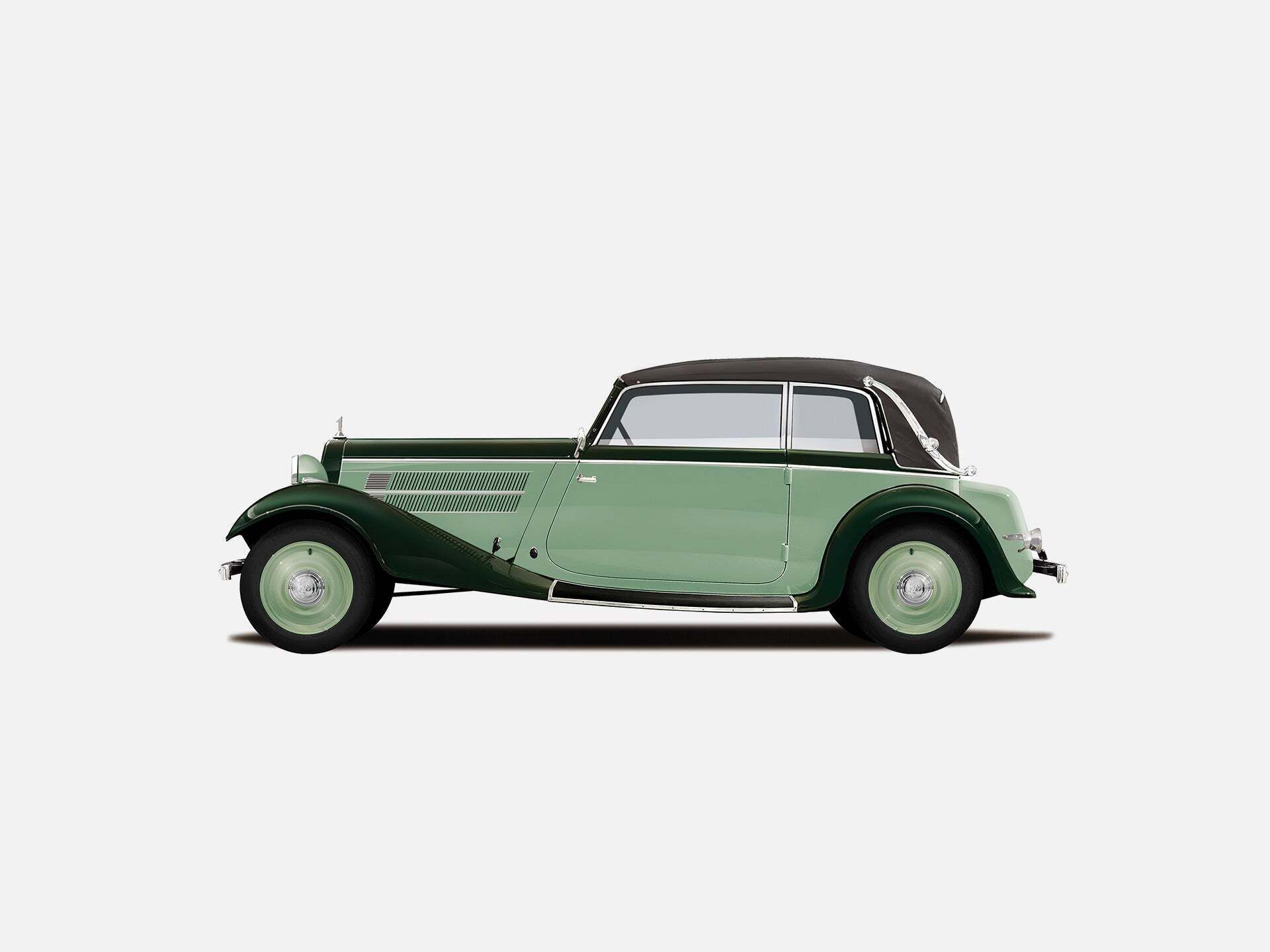
The Audi Front UW with front-wheel drive, for reasons of efficiency, was produced at the Horch factory in Zwickau. Its engine, which came from sister company Wanderer, had been developed by Ferdinand Porsche back in 1931. Since the transmission was installed at the front, the car was also known as the “reverse Wanderer.”
Audi Front UW:
- Engine: Petrol engine, 6 inline cylinders
- Displacement: 1,963 cm³
- Power output: 40 PS at 3,500 rpm
- Top speed: 100 km/h
- Length/width/height: 4,500/1,650/1,575 mm
- Unladen weight: 1,300 kg
Horch 853 (1935-1937)
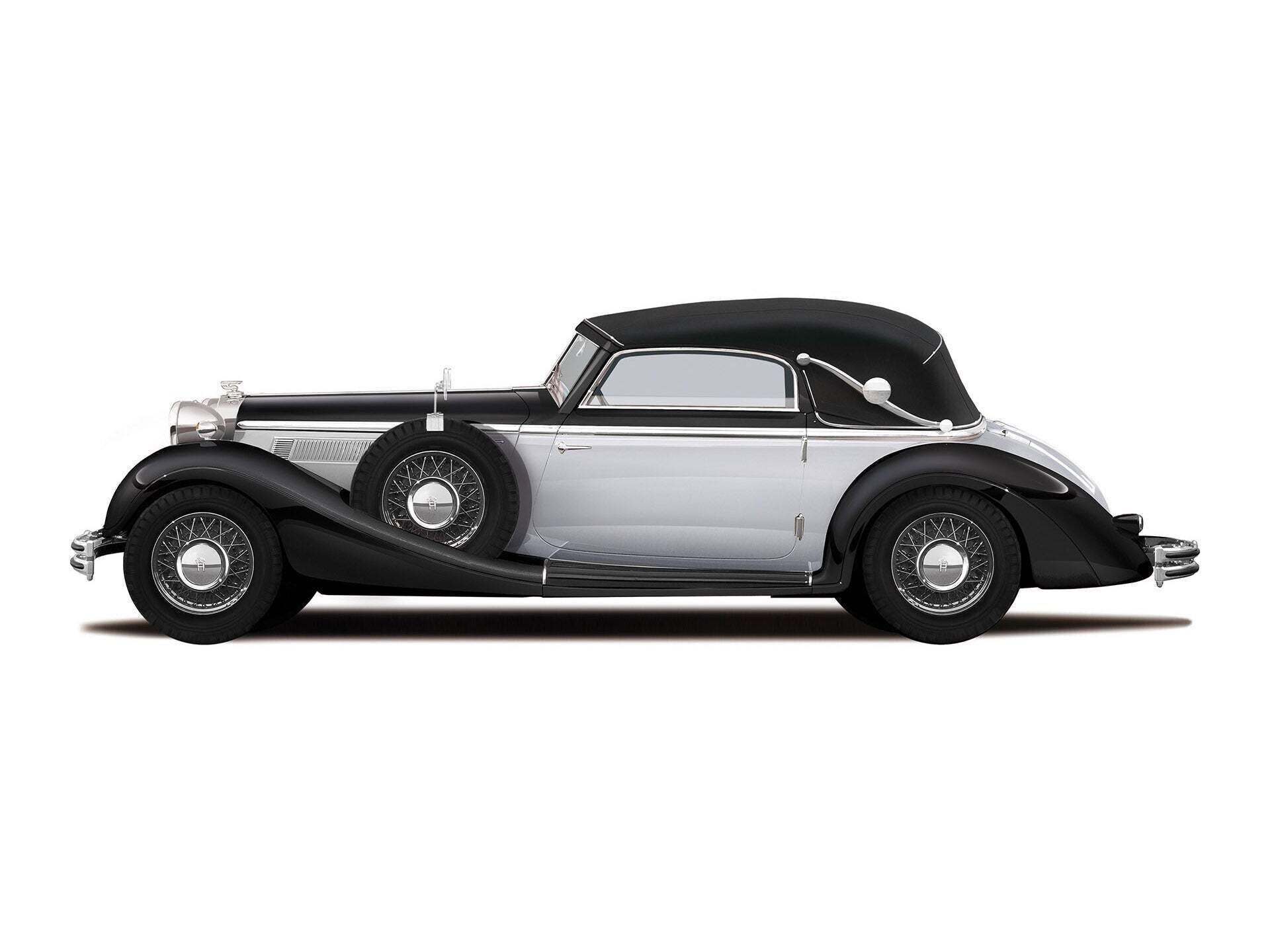
This sports cabriolet, with its luxurious interior and a 5-litre engine with vertical shaft, was designed to meet the highest standards and became a great success. It was manufactured at the Horch factory in Zwickau and could be equipped with an optional overdrive gearbox.
Horch 853:
- Engine: Petrol engine, 8 inline cylinders
- Displacement: 4,944 cm³
- Power output: 100 PS at 3,400 rpm
- Top speed: 135 km/h
- Length/width/height: 5,350/1,830/1,550 mm
- Unladen weight: 2650 kg
Wanderer W 25 K (1936-1938)
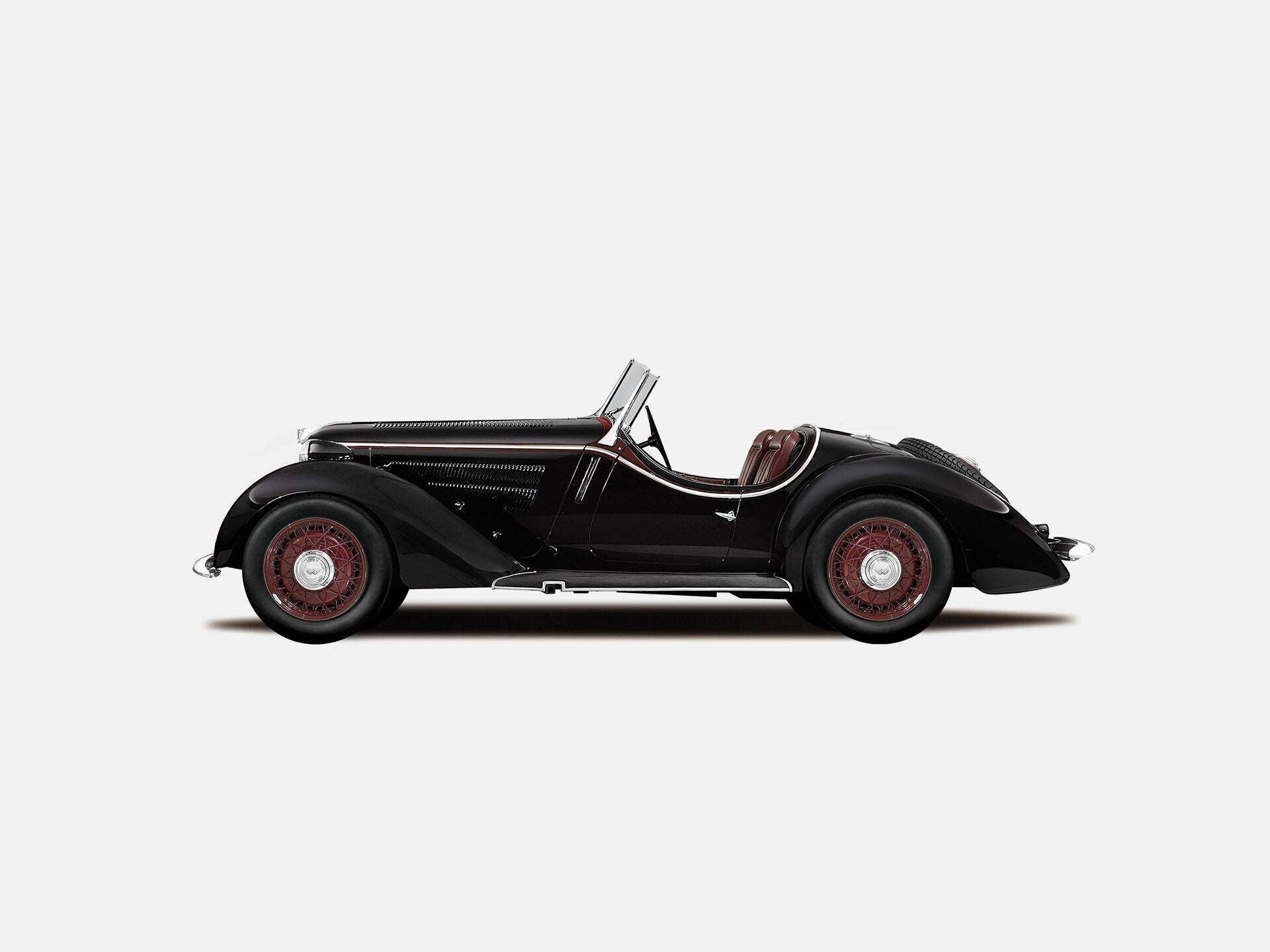
The W 25 K, the sportiest of the Wanderer models, was designed to rival the competition in this prestigious market segment from 1936. It was available as a roadster or a cabriolet. To boost performance, its engine was supercharged with a Roots compressor, giving it an output of around 85 PS.
Wanderer W 25 K:
- Engine: Petrol engine, 6 inline cylinders with compressor
- Displacement: 1,963 cm³
- Power output: 85 PS at 4,000 rpm
- Top speed: 145 km/h
- Length/width/height: 4,360/1,670/1,390 mm (roadster)
- Unladen weight: 1,175 kg (roadster)
DKW F 5 (1935-1938)
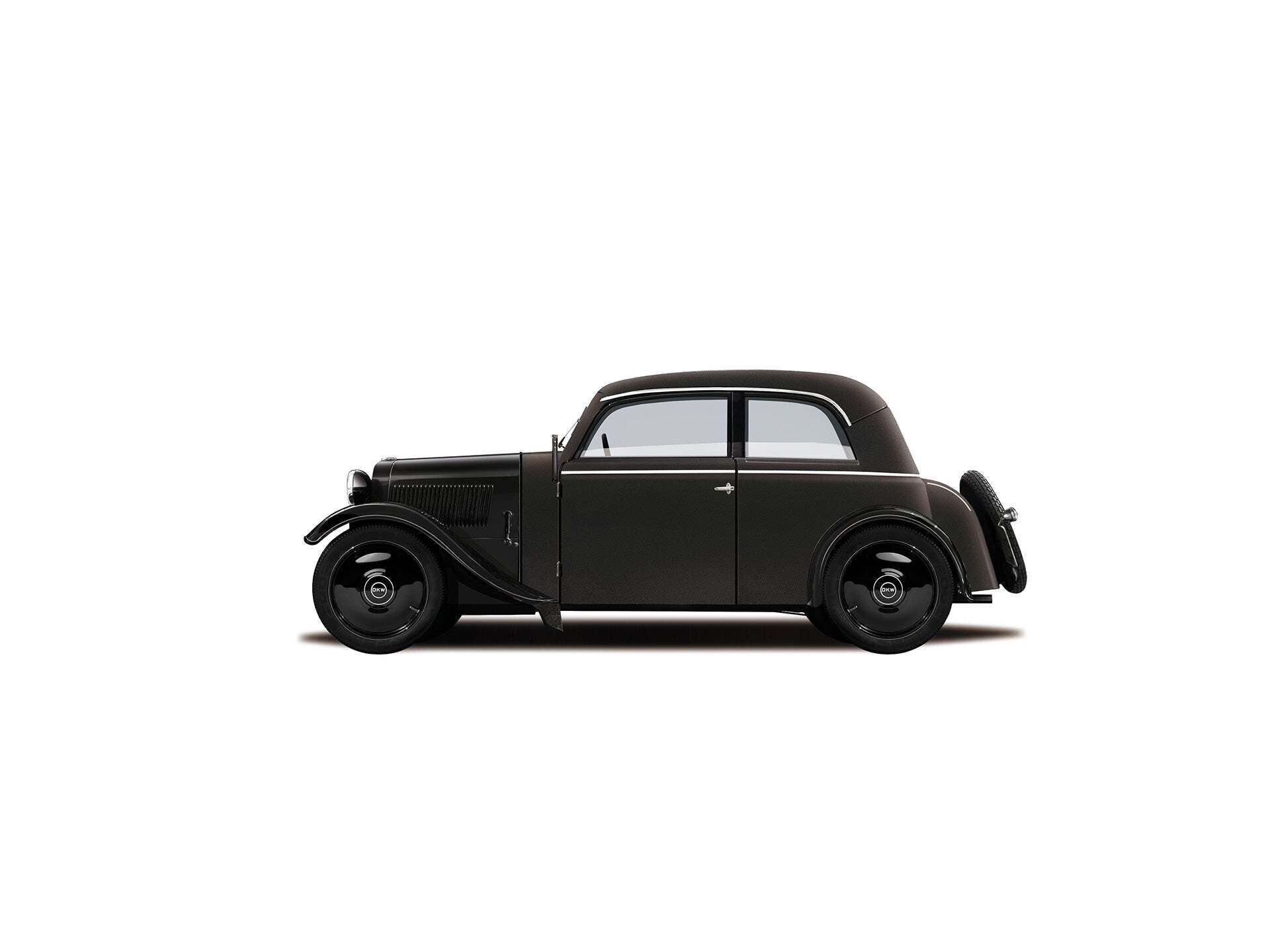
DKW compact cars gave a large number of people – by the standards of the time – access to private transport. The DKW F 5 was available as an entry-level model, called the “Reichsklasse”, and in two higher-spec versions, the “Meisterklasse” and the “Front-Luxus”, as well as in a range of different body styles.
DKW F 5 Meisterklasse:
- Engine: Two-stroke petrol engine, 2 inline cylinders, transversely mounted
- Displacement: 690 cm³
- Power output: 20 PS at 3,500 rpm
- Top speed: 85 km/h
- Length/width/height: 4,000/1,450/1,470 mm (limousine)
- Unladen weight: 800 kg (limousine)